For nearly a decade, the rhythmic pulse of Dead by Daylight has been sustained by a delicate dance between the familiar and the novel. The Entity's realm has long thrived on this alternating current, one moment birthing nightmares wholly its own, the next weaving the iconic terrors of other worlds into its macabre tapestry. While the primal thrill of original horrors never fades, there is an undeniable magic when a beloved figure from cinema, television, or gaming steps into the perpetual twilight. The community's heart beats for both, and the developers, in their wisdom, have learned to listen to its twin rhythms. After a season dominated by the chilling whispers of crossovers, a new light pierces the fog—not from a movie screen, but from the page of a troubled writer's manuscript.
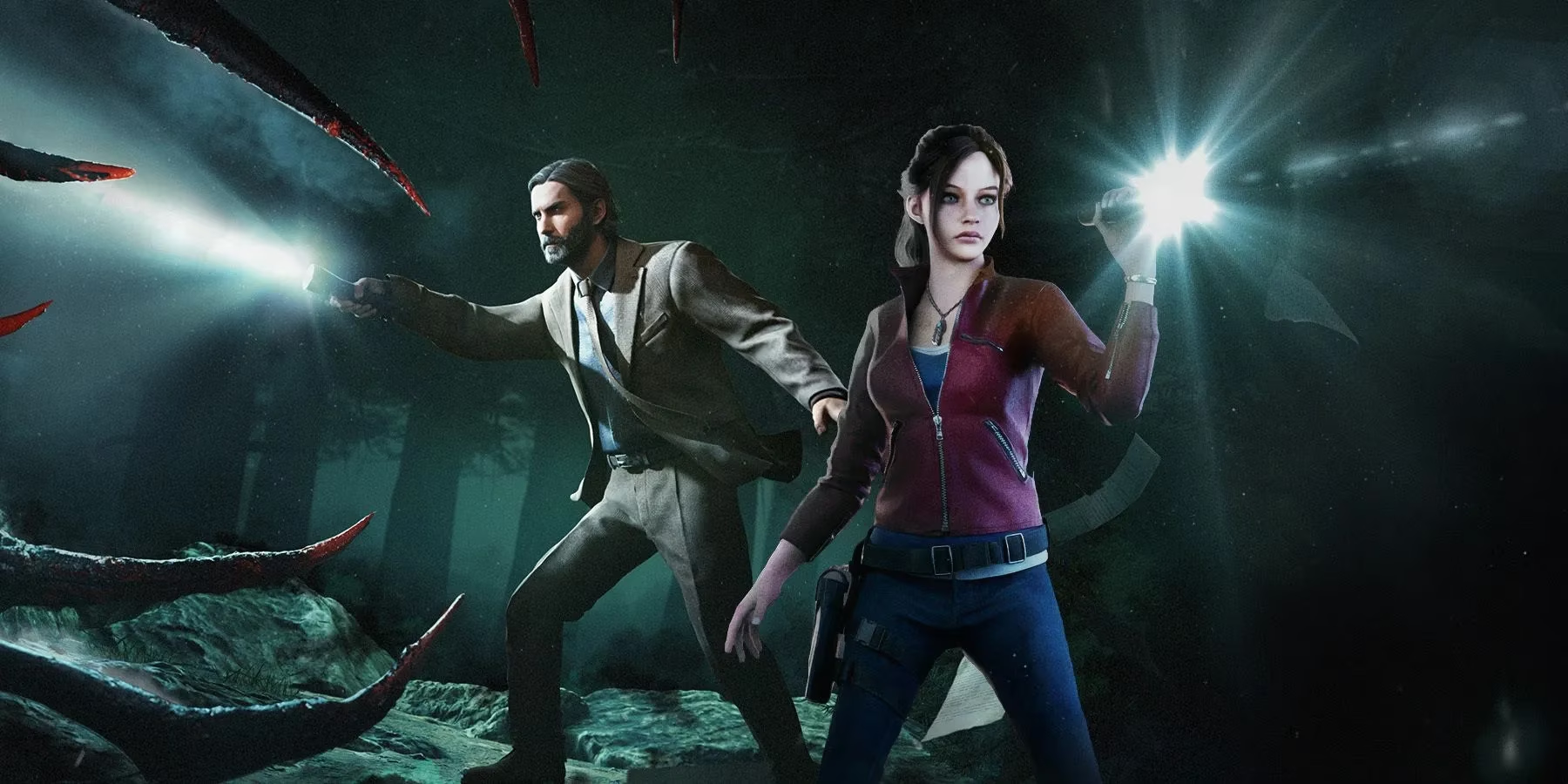
The precedent for deep, multi-layered collaborations was masterfully set in the summer of 2021. The arrival of the Resident Evil chapter was not a mere cameo; it was an invasion. It demonstrated that a video game license could offer the same rich, expansive potential as any film franchise. This was no simple skin or name-drop. The chapter delivered a terrifyingly authentic experience:
-
The Nemesis 🧟♂️, a towering, relentless force of bioweaponry, became an instant classic among Killers.
-
Two legendary Survivors, Leon S. Kennedy and Jill Valentine, brought their unique resilience to the trial.
-
A suite of Perks that felt ripped directly from Raccoon City, allowing players to embody their survival instincts.
Yet, even with such a comprehensive package, it felt like a beginning, not an end. The world of Resident Evil was too vast, its roster of heroes and monsters too iconic, to be contained in a single offering. The developers at Behaviour Interactive clearly shared this sentiment. In a move that delighted fans, they returned to the well just over a year later with "Project W." This second chapter proved the model's viability, introducing:
-
The cunning Albert Wesker as a Killer whose speed and arrogance changed the game's meta.
-
The resourceful duo of Ada Wong and Rebecca Chambers, expanding the Survivor roster with distinct personalities and playstyles.
This two-part saga established a powerful blueprint: a major gaming universe could sustain multiple, meaningful chapters, each deepening the connection and exploring new facets of the lore. It transformed crossovers from events into epochs.
Now, as the calendar turns to 2026, the spotlight shifts from viral outbreaks to the darkness of a writer's mind. The arrival of Alan Wake as a Survivor is a moment of poetic brilliance. No longer battling the Taken in the woods of Bright Falls, he now navigates a more abstract, yet equally perilous, nightmare. His design, echoing the acclaimed visual style of Alan Wake 2, is a love letter to fans. His Perks are not just abilities; they are extensions of his character:
| Perk Name | Effect | Thematic Connection |
|---|---|---|
| Champion of Light | Empowers the flashlight, slowing blinded Killers more. | The writer's weapon is light, battling the darkness literally and metaphorically. |
| Boon: Illumination | Reveals auras of generators and chests to allies in range. | A beacon of hope and clarity in the confusing fog, much like his prose. |
| Deadline | Increases Skill Check frequency when injured. | The pressure of creation, the frantic typing to finish a story against all odds. |
He is poised to be a fan-favorite, a Survivor whose mechanics tell a story. Yet, his solitary entry into the Fog feels like a compelling first chapter in a much larger book. The world of the Remedy Connected Universe is ripe with potential that a single Survivor slot can only hint at. The blueprint from Raccoon City shows what is possible. Imagine a future where the story continues:
-
Saga Anderson 🕵️♀️, the pragmatic FBI agent, could join as a co-Survivor, bringing Perks focused on investigation and deduction.
-
The ultimate antagonist, Mr. Scratch—Alan's dark doppelgänger—is a Killer concept waiting to happen. His powers could revolve around manipulation, illusion, and driving Survivors mad with doubt.
-
And what of the Oldest House? Jesse Faden from Control, wielding a Service Weapon that changes form, could introduce mechanics never before seen in the Entity's realm. The Board itself might find the Fog an interesting... anomaly.
The light of Alan's flashlight has illuminated a path. It shows that crossovers with deep, narrative-driven game universes are not mere transactions but partnerships in storytelling. The success of the Resident Evil expansions proved these stories can have sequels. As players guide Alan through his latest, most surreal draft in the Trials, one can almost hear the whisper of pages turning, not to an end, but to a thrilling new volume. The future of Dead by Daylight's crossovers looks brighter than ever, shining with the promise of more lights, more darkness, and more stories yet to be told.
Comments