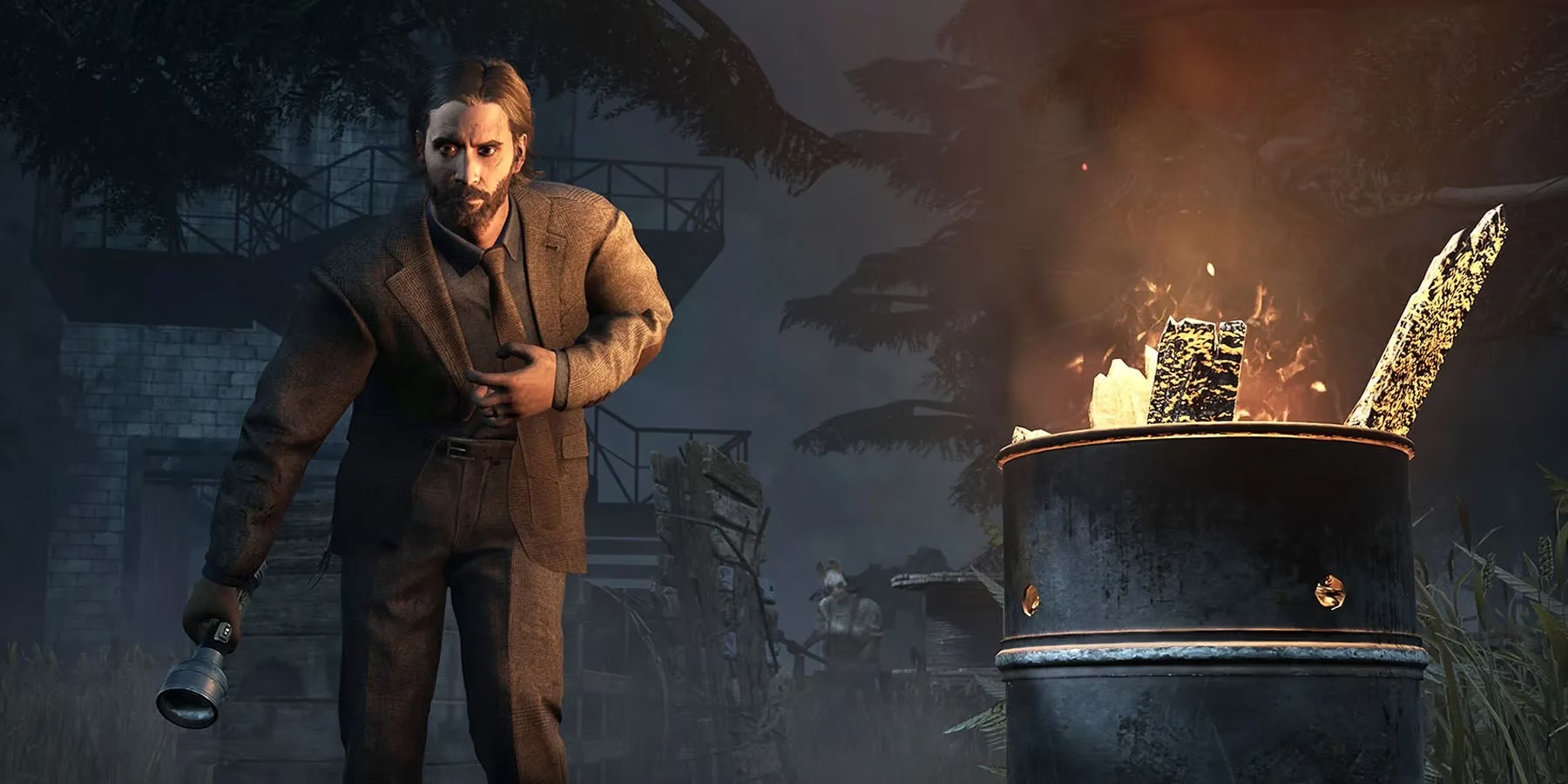
The darkness had been his prison for thirteen long years, a labyrinth of shifting nightmares sculpted from his own tortured prose. Now, in 2026, the celebrated and tormented author Alan Wake steps from the ink-black waters of one terrifying dimension into another. His arrival in the ever-expanding roster of Dead by Daylight as a survivor in the Chapter 30.5 update feels less like a crossover and more like a homecoming—a chillingly perfect convergence of two horror universes that share a deep, resonant DNA. For Alan, survival is not a new concept; it is the very fabric of his existence since his disappearance into the Dark Place. His inclusion, as developers from both Remedy and Behaviour Interactive attest, was a natural, almost inevitable evolution, a meeting of minds and monsters where the lines between cosmic horror and psychological terror beautifully blur.
A Survivor Forged in Darkness
Alan Wake does not come to the Entity's Realm as a novice. He arrives as a veteran of unimaginable psychological warfare. "He's been trapped in the Dark Place for thirteen years," explains Alan Wake 2 game director Kyle Rowley, his words echoing the character's profound resilience. "He's been trying to survive for thirteen years, trying to figure out ways to overcome these horrible entities that are coming after him. I think as a survivor for thirteen years, moving into a survivor for DBD is a perfect fit… He's probably one of the most experienced survivors in your roster after all he's been through." This experience is not merely narrative flavor; it directly translates into a unique and potent skillset within the game's brutal economy of hope and despair. His perks are not arbitrary powers but extensions of his core identity: a writer who manipulates reality and a survivor who wields light as his only weapon against the dark.
Thematic Symbiosis: Light, Dark, and Unreality
The synergy between the worlds of Alan Wake and Dead by Daylight runs far deeper than surface-level horror aesthetics. Both are built upon foundational pillars that mirror each other with uncanny precision:
-
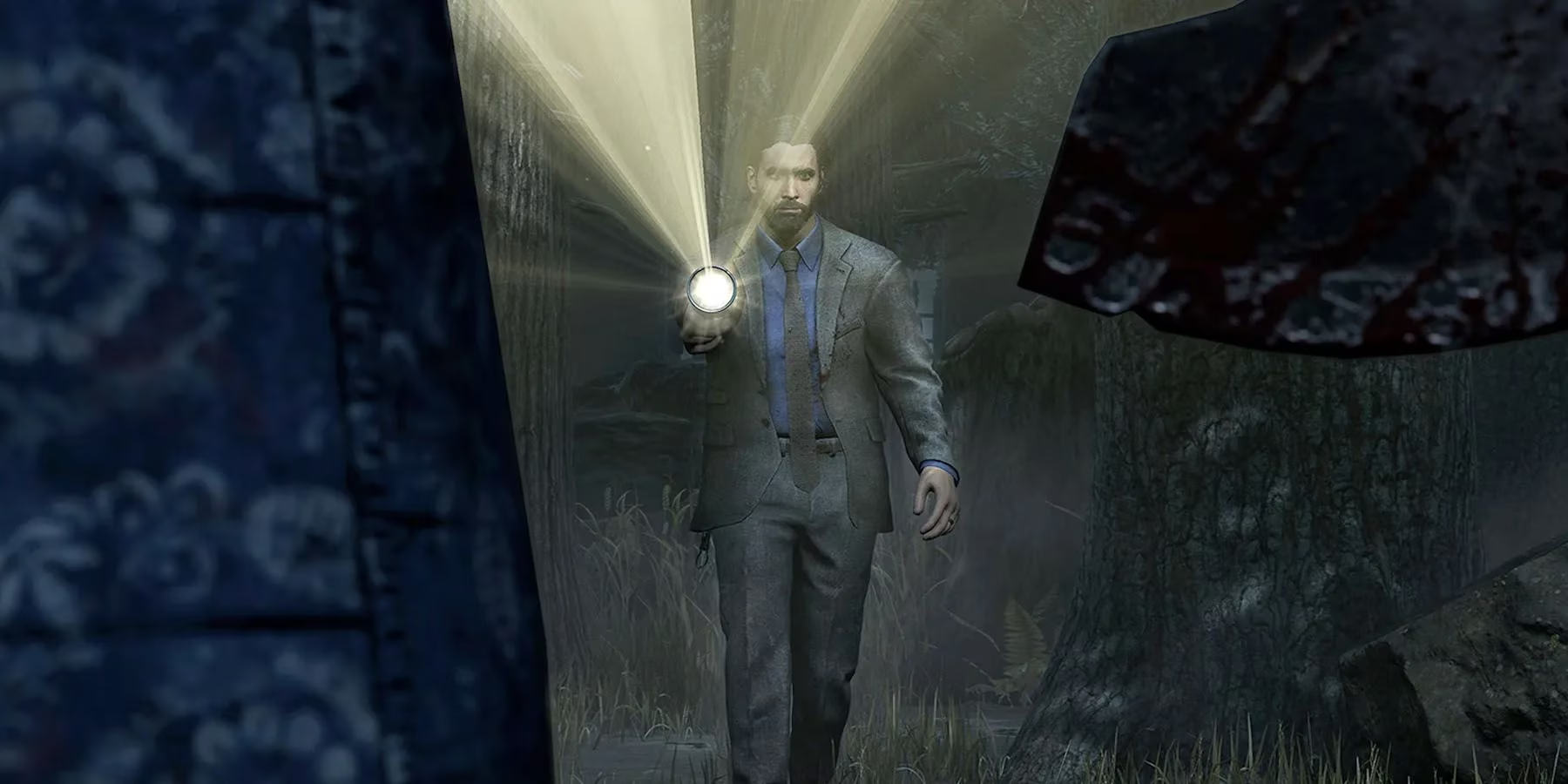
🕯️ The Duality of Light & Darkness: In both universes, light is not just illumination; it is a tangible force for protection, a weapon, and a symbol of fragile hope against an overwhelming, supernatural dark. Alan's iconic flashlight thus becomes a powerful narrative and gameplay bridge.
-
🌀 The Nature of the Nightmare: Both realms are recursive, looping prisons. The Dark Place crafts personalized nightmares from the psyche of its inhabitants, while the Entity's Realm is a curated hellscape designed to feed on fear. As Rowley and DBD's senior creative director Dave Richard discussed, both use art and media as conduits for horror, twisting creation into torment.
-
❓ Questioning Reality: Psychological unease and the blurring of lines between what is real and what is fabricated permeate both experiences. This shared ambiguity is not a bug but a core feature, inviting players to become theorists and detectives in their own right.
This last point opens a fascinating metaphysical loop. Richard highlighted the elegant "chicken-and-egg" problem the crossover creates: "What's happening here? Is it Alan Wake writing the reality of the entity? Is it the entity's realm that's poking a hole into the Dark Place and getting Alan Wake? What's actually happening is out for theory. Fans can decide." This interpretive space is sacred to both franchises, which are, as Rowley notes, more mystery-driven than narrative-driven, posing questions that linger long after the controller is set down.
A Writer's Arsenal: Translating Lore into Gameplay
From a design perspective, Alan's integration was remarkably seamless. His perks are a masterclass in character translation, each one a direct reflection of his history and abilities.
| Perk Name | Inspiration & Effect | Gameplay/Narrative Tie |
|---|---|---|
| Champion of Light | Alan's relentless use of light as a weapon and shield. | Boosts movement speed while shining his flashlight; the beam can also slow killers. It makes his flashlight a true tactical beacon, altering the chase's dynamics. |
| Deadline | The pressure of a writer facing an impossible deadline, channeling stress into focus. | Activates when injured, dramatically increasing the frequency of skill checks during healing or generator repairs. It turns desperation into a potential for greater efficiency. |
| Boon: Illumination (Example extrapolation) | The power of written words to reveal hidden truths and paths. | Could reveal the auras of chests, generators, or even killer belongings within a Boon Totem's range, tying into his authorial insight. |
"Every time we go through the process of creating perks for characters, we identify their core pillars," Richard elaborated. "What type of abilities they usually have in their own media, and how it can translate into gameplay elements in Dead by Daylight. I think Alan has been one of the smoothest experiences in creating the perks because of what Alan's been living, his skillset, and what happens in DBD." His toolkit feels inherently his, not a generic survivor template.
Among Fellow Artists in the Fog
Alan does not walk alone into the fog-shrouded campgrounds. He finds a strange kinship with the other survivors. Richard pointed out that many of Dead by Daylight's survivors share an artistic or creative mindset—painters, musicians, writers, and performers whose creativity is exploited by the Entity. This makes Alan's presence thematically coherent. He is not an outlier but perhaps the ultimate example of the Entity's preferred prey: those who build worlds, now forced to survive within a nightmare built from their own kind of magic. The threats he faces, from artistic creations made manifest to relentless, personalized hunters, are horrifyingly familiar echoes of his time in the Dark Place.
An Enduring Legacy of Fear
As players in 2026 guide Alan Wake through his latest ordeal, flashlight beam cutting through the oppressive gloom, they participate in a unique moment in horror gaming. This crossover is a celebration of the genre, as DBD brand manager Michelle Reade noted, but it is also a profound narrative experiment. It asks players to consider the architecture of fear itself. Is any nightmare truly original, or are they all variations on themes of darkness, pursuit, and the struggle for a light that may forever be just out of reach?
Alan's journey in the Entity's Realm is more than just another chapter in Dead by Daylight; it is a testament to the power of cohesive world-building and character depth. His story—of a man who fought darkness with words and light for over a decade—finds a new, terrifyingly apt canvas here. The flashlight's glow is a little brighter, the skill checks a little more frequent, and the mystery a little deeper with his arrival. In the end, Alan Wake was always meant to be here, in this endless night, writing his next desperate page not on paper, but in the very fabric of another realm's eternal nightmare. The question he—and the players—must now answer is not how to escape the story, but how to survive long enough to write a better ending.
Comments