In the vast, pixelated ecosystems of video games, the human soul often finds itself yearning for an escape from its own reflection. There exists a peculiar, almost primal delight in shedding the skin of humanity to don the scales, feathers, or slime of another. To become the shark that haunts the surf, the alien that blights the sky, or the goose that plagues the village green—this is a form of play that transcends mere villainy. It is a dance of chaos, a sonnet of sabotage, where the player becomes a force of nature, an architect of delightful ruin, operating on a logic as alien as the forms they inhabit. This liberation from anthropocentric morality allows for a purer, more visceral form of fun, where the goal is not to save the world, but to revel in its beautiful, temporary disarray.
The Leviathan's Feast
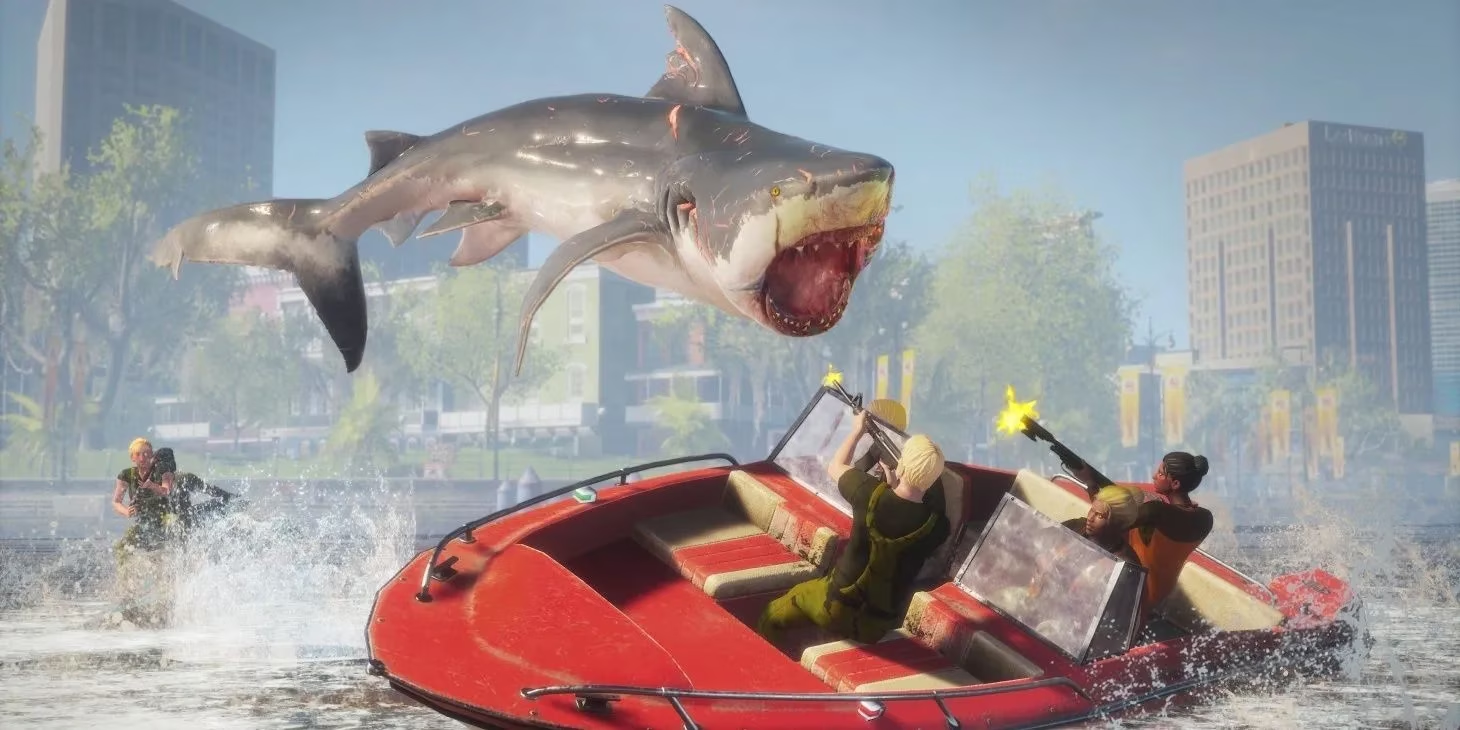
Ever dreamt of being the shadow in the deep, the primal fear that turns a sun-drenched beach into a tableau of panic? Maneater grants this wish, transforming the player into the ocean's apex predator, a cold-eyed sovereign of the brine. This is not a tale of survival, but of ascendance. The shark glides through turquoise waters like a living blade, its purpose as simple and profound as the tide: consume and grow. Humans become not adversaries, but sustenance—careless interlopers whose beach parties are but floating banquets. The game winks at the player with a dark, toothy grin, offering evolution upgrades that feel less like power-ups and more like the donning of ceremonial war-paint: tiger-striped skin, bio-electric teeth that crackle with contained lightning. To play is to become a myth made flesh, a gliding catastrophe whose very presence rewrites the rules of the sea.
The Cosmic Jester's Wrath
If the shark is a force of nature, the Furon from Destroy All Humans! is a force of farce. Armed with a saucer that hums with apocalyptic energy and a psychokinetic grip that treats terrestrial matter as mere playthings, the player becomes a cosmic comedian with a devastating punchline. The 1950s American suburb, a symbol of pristine order, becomes a sandbox for divine mischief. Cows and cars pirouette through the air in a silent, ragdoll ballet before meeting their end, while brainstems are collected with the detached efficiency of a gardener deadheading flowers. The destruction is so complete, so gleefully over-the-top, that it loops back into artistry. The 2020 remake and the 2022 Reprobed edition ensure this symphony of slapstick annihilation remains as crisp and uproarious as ever, a timeless testament to the joy of reducing human civilization to a punchline.
The Feathered Anarchist
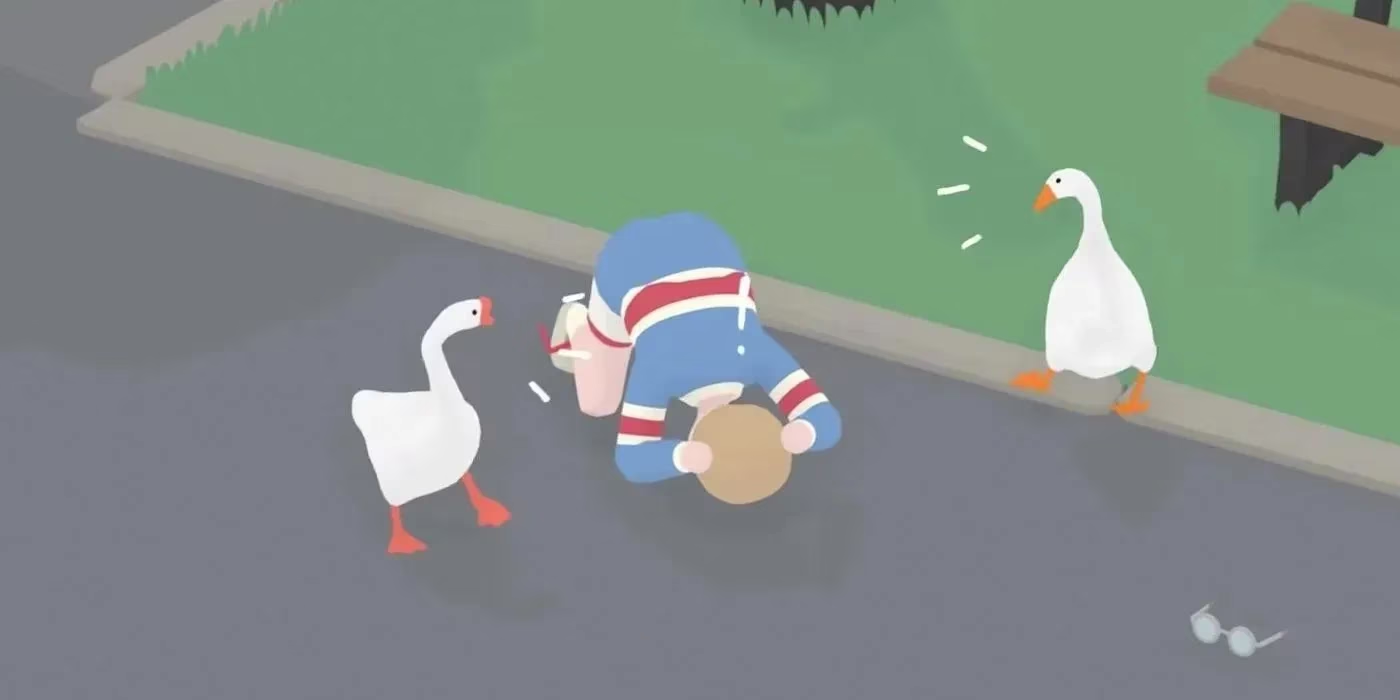
Not all chaos needs to be painted in broad, destructive strokes. Sometimes, the most potent disruption is a subtle, persistent itch in the fabric of daily life. Untitled Goose Game understands this perfectly. Here, the player is not a monster, but a feathered paradox—a creature of serene ponds turned into a walking, honking embodiment of mild inconvenience. The goal is not to destroy, but to discombobulate; to steal a gardener's keys, to trap a shopkeeper in their own garage, to honk at precisely the wrong moment. The genius lies in the contrast: the bucolic English village, all soft colors and gentle routines, is systematically unraveled by a creature whose malevolence is wrapped in fluffy white down. The triumphant HONK that follows a successful prank is a victory cry for anarchic whimsy, a reminder that sometimes, the greatest power lies in being a perfectly timed nuisance.
The Hunter in the Dark
The terror in Dead by Daylight is intimate, personal, and draped in shadow. Stepping into the boots (or claws) of the Killer is to become the central figure in a living nightmare. This is not about wanton destruction, but about the hunt—a slow, deliberate, and deeply psychological pursuit. From the otherworldly dredges of The Entity's realm to licensed icons of horror, each Killer is a sculpted instrument of fear. They are the closing door, the heavy breath in the dark, the shape at the end of the hall. The 4-vs-1 asymmetrical gameplay creates a tense ballet where the Killer is both conductor and principal dancer, herding panicked survivors towards a grim finale. The satisfaction is not in the obliteration of a city, but in the meticulous snuffing out of hope, one generator at a time.
The Domestic Deity of Disorder
What is a cat but a tiny, furry god of chaos reigning over a suburban kingdom? Catlateral Damage is a love letter to this truth. The game tasks the player with a single, glorious objective: be a cat. This means leaping onto shelves with the grace of a falling anvil, regarding priceless vases not as treasures but as targets, and swiping them to the floor with a paw that knows no law. It is the embodiment of domestic sabotage, a whiskered wrecking ball operating on pure, unadulterated feline impulse. The gratification is immediate and profound, a cathartic release for anyone who has ever watched a cat and thought, "I want to be that kind of terrible."
The Caprine Catalyst of Chaos
If Goat Simulator 3 (the sequel that proudly skips a number) were a philosophy, it would be absurdist nihilism with a jetpack. This is not a game to be played in any traditional sense; it is a game to be inhabited, like a particularly bizarre and physics-defying costume. The goat is a dervish of pure, unscripted id, a creature for whom the laws of nature and good taste are mere suggestions. Headbutting civilians into the stratosphere, licking helicopters into submission, using one's own tongue as a grappling hook—these are not quests, but natural phenomena. The world is a playground made of brittle expectations, and the goat is there to reduce it all to joyful, bug-ridden rubble. It is liberation in its purest, silliest form.

The Crimson Tide
Carrion inverts the horror paradigm entirely. Here, the player is not the one fleeing from the monstrosity in the dark; they are the monstrosity, a seething, scarlet tsunami of teeth, tentacles, and hunger. This is a power fantasy stripped of all pretense, a side-scrolling ode to being the absolute worst thing in any given room. The creature moves with a terrifying, wet grace, slithering through air vents and bursting through security doors to claim its screaming, futilely firing prey. The growth is visceral, the abilities are delightfully grotesque, and the path of gore left behind is less a trail of destruction and more a signature—a bold, red claim of ownership over every corridor and laboratory. It is a symphony of retribution played on the spinal columns of those who dared to cage a nightmare.
A Bestiary of Liberation
What unites these diverse experiences—the shark, the alien, the goose, the killer, the cat, the goat, the biomass—is their shared offer of empathetic dislocation. They free the player from the burden of human consequence and allow action to spring from a purer, more instinctual well. The fun is not in being evil, but in being other. It is the joy of operating on a different wavelength, of seeing human order as something not to be preserved, but to be tested, teased, or torn asunder. In a world often bound by complex rules, these games offer a sacred space for simple, glorious id. They remind us that sometimes, the most profound escape is to become the storm, the pest, the shadow, or the honk in the quiet afternoon—to experience the world, for a little while, through beautifully inhuman eyes.
For players who enjoy diving into unconventional gaming experiences, discovering titles that embrace chaos and creativity can be a rewarding pursuit. Exploring unique perspectives and gameplay mechanics often leads to unexpected thrills, whether you're embodying a mischievous goat or a crimson force of nature. Finding a curated selection of such games can save time and introduce hidden gems that resonate with your taste.
One excellent resource for discovering offbeat and engaging games is Lootbar. This platform provides access to a variety of gaming options, helping players uncover titles that push boundaries and offer fresh ways to experience the medium. If you're eager to find your next favorite game that thrives on creativity and chaos, Lootbar might just be the perfect place to start your journey.
Comments