The fog has never been more treacherous, nor has the hunt ever been more thrilling! In a monumental shift for the asymmetrical horror titan, Dead by Daylight has unleashed a wave of changes that are nothing short of apocalyptic for certain stale strategies. For years, the chilling screams of Survivors have been punctuated by the frustrating groans of players subjected to the most tedious forms of gameplay. But no more! Behaviour Interactive, in a display of divine intervention for the player base, has descended from on high with a Developer Update that takes direct aim at the twin pillars of player frustration: hook camping and generator lockdown. The era of standing still is officially over, replaced by a new mandate of relentless, dynamic horror.
🪝 The Face-Camping Menace Meets Its Demise
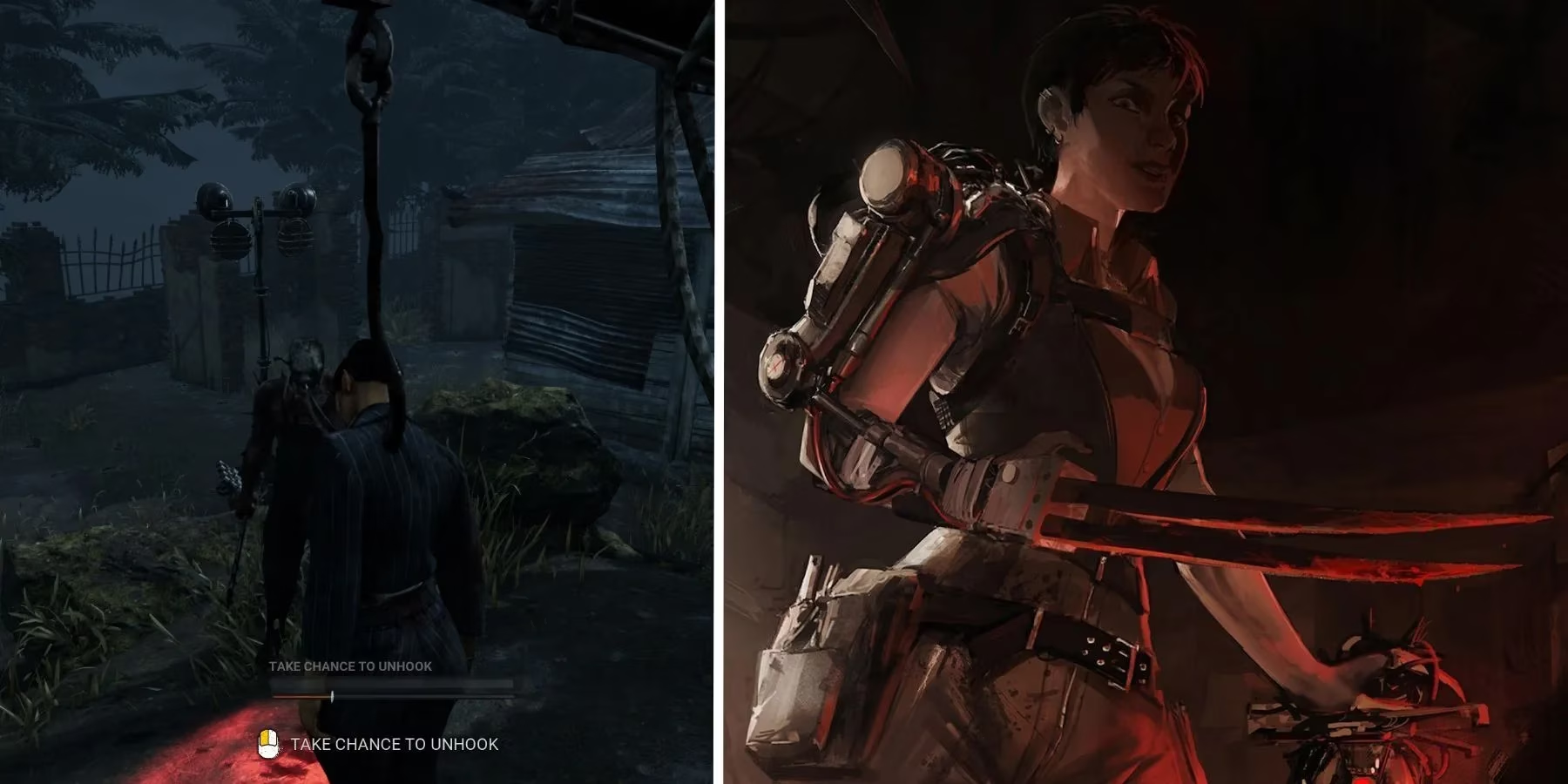
Let's talk about the elephant—or rather, the chainsaw-wielding maniac—in the room. Hook camping. This strategy, beloved by the most desperate or vindictive Killers, has been the bane of altruistic Survivors' existence since the Entity first started claiming souls. Picture this: a Survivor dangles from a rusty hook, their lifeblood seeping away, while a hulking Killer like The Cannibal stands mere inches away, revving his saw. Any attempt at a rescue is a death sentence. It created gameplay as stale as month-old bread and as exciting as watching paint dry in the Macmillan estate.
Behaviour Interactive has finally said, 'Enough!' The new Anti Face-Camping mechanic is a masterpiece of game design that turns the tables in the most dramatic fashion. Here’s how this revolutionary system works:
-
The Dread Meter: When a Killer lingers too close to a hooked Survivor, a hidden meter begins to fill for the victim. The proximity is key! The closer the Killer lurks, the faster this meter charges.
-
The Power of Friendship: This system intelligently accounts for teamwork. If other Survivors are nearby, potentially planning a rescue, the meter's growth slows, rewarding coordinated plays.
-
The Great Escape: Once the meter hits its maximum, the camped Survivor is granted a miraculous, self-powered unhook. Yes, you read that correctly! They can free themselves, even during the second hook stage, denying the Killer their hard-earned... well, their hard-earned standing-around time. The only caveat? This power vanishes during the frantic Endgame Collapse, ensuring the final moments remain tense and unforgiving.
This change doesn't just punish camping; it fundamentally rewrites the Killer's playbook. The goal is no longer to guard a single point but to spread fear across the entire map. The hunt must go on!
🤖 The Skull Merchant's Reign of Terror is Over
If hook camping was a blunt instrument, then The Skull Merchant's signature strategy was a surgical, soul-crushing torture device. Since her debut, she has been the queen of 'three-genning,' a strategy that could turn matches into hour-long slogs of pure despair. By placing her Drones around three closely-spawned generators and stacking powerful regression perks, she could lock down an area with robotic efficiency. Survivors would be left chipping away at 1% progress, chased off by drones, only to repeat the process ad infinitum while the Merchant patrolled her little kingdom, refusing to engage in a proper chase.
Those days are DEAD AND BURIED. The developers have taken a flamethrower to her kit, specifically her Eyes in the Sky power, with changes so comprehensive they might as well have released a new Killer. The intent is crystal clear: transform The Skull Merchant from a stationary warden into a high-tech hunter.
Behold, the key changes that shatter her camping potential:
| Old Skull Merchant | New Skull Merchant |
|---|---|
| Drones detected ALL Survivors in their zone. | Drones CANNOT detect stationary Survivors! |
| Generator lockdown was the optimal strategy. | Generator lockdown is now highly ineffective. |
| Promoted passive, area-denial gameplay. | Promotes aggressive, chase-focused gameplay. |
| Survivors on gens were sitting ducks. | Survivors repairing or cleansing are SAFE from drone detection. |
This single change—drones ignoring stationary targets—is an absolute game-changer. It means a Survivor diligently working on a generator in a drone's patrol zone is completely invisible to the Merchant's surveillance. Her power must now be used proactively: to track fleeing Survivors, cut off loops, and gain advantages in chase. Furthermore, additional tweaks, like enhanced penalties for Claw Trapped Survivors, ensure her chase power is more terrifying than ever, compensating for the loss of her defensive might.
The message is undeniable: The Skull Merchant is no longer a warden; she is a predator. And predators must move.
⚡ The Future of the Fog
These changes represent more than just balance tweaks; they are a philosophical statement about the future of Dead by Daylight. The developers are aggressively steering the game away from passive, time-wasting strategies and toward dynamic, heart-pounding interaction. The goal is a match where every second is filled with tension, decision-making, and action, not waiting.
Of course, such seismic shifts will send tremors through the community. Killers who relied on these crutches will need to adapt or perish. Survivors will need to rethink their rescue strategies and generator tactics. The meta has been thrown into a woodchipper and what emerges will be全新的, unpredictable, and undoubtedly chaotic.
Will the Anti-Camp meter be perfectly tuned? Will the new Skull Merchant find a deadly new identity in chase? Only time, and the impending Public Test Build, will tell. But one thing is for certain: the fog in 2026 is a different beast. It rewards boldness, punishes stagnation, and promises a faster, more brutal, and ultimately more engaging experience for everyone involved. The Entity is pleased; the bloodpoints will flow like never before. The true horror is no longer in the camp; it's in the relentless, inescapable hunt that these changes have unleashed upon the world. 🩸
Comments