In the shadowy corridors of the horror gaming landscape, Dead by Daylight has undergone a profound transformation with its 2026 update, Chapter 31: All Things Wicked. This latest installment represents not just new content, but a philosophical shift in how terror is engineered. Moving beyond the established formula of jump-scares and frantic chases, developer Behaviour Interactive has plunged players into the unsettling waters of analog horror—a genre paradoxically born from digital proliferation. The update introduces a chilling new Killer known only as The Unknown, a resilient Survivor named Sable Ward, and the nostalgically eerie setting of Greenville Square. For a game that has long thrived on visceral, immediate fear, this chapter explores the more insidious terror of what lingers just beyond perception, in the static between frames and the whispers beneath distorted audio.
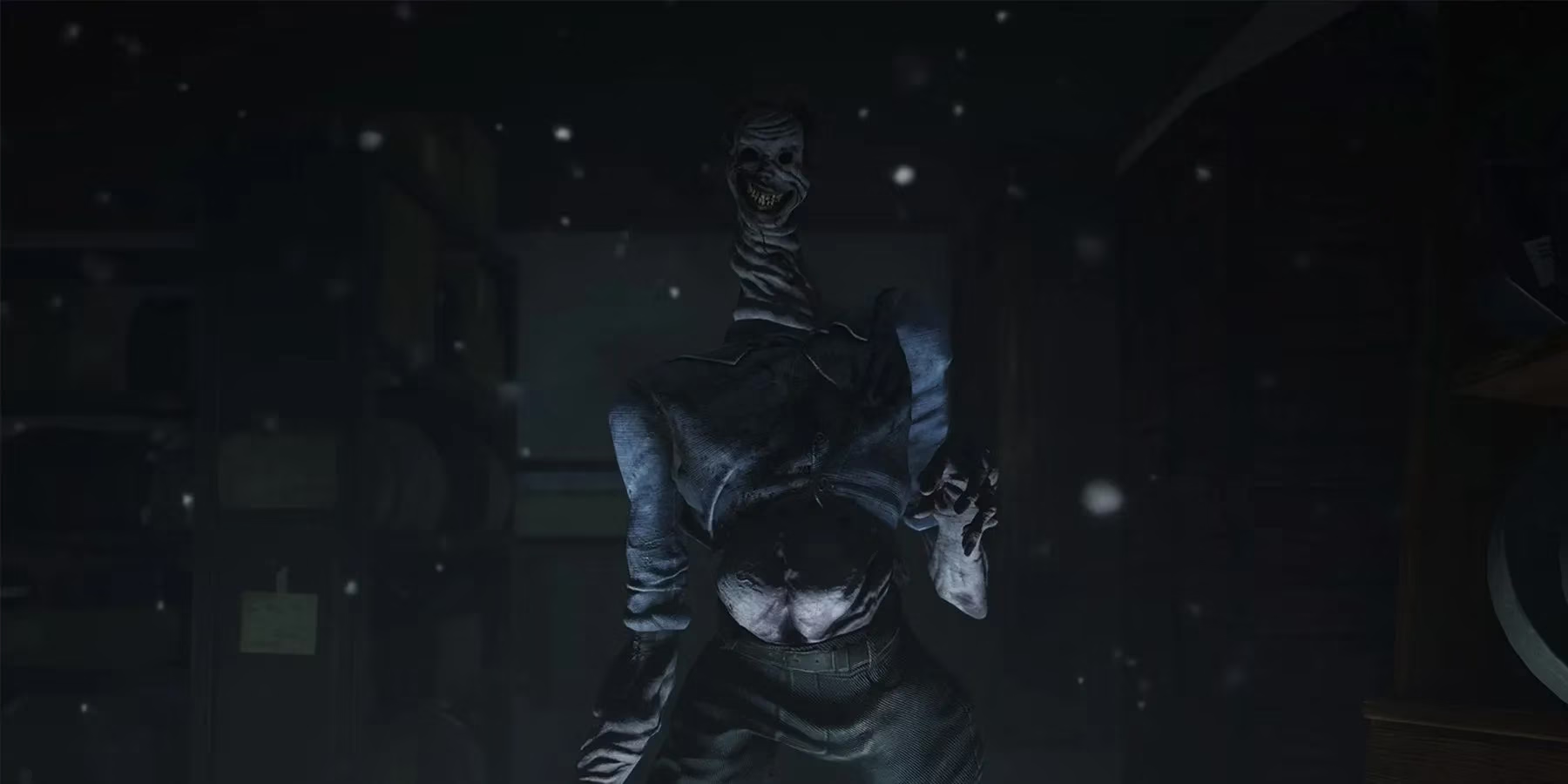
At the heart of this evolution lies a deliberate embrace of misdirection and cognitive dissonance. Creative director Dave Richard described analog horror as dealing with "really bizarre or cryptic types of horror that is also very visceral." This philosophy manifests in The Unknown, a being that operates like a virus in the game's visual code, corrupting the player's sense of reality itself. Unlike previous Killers who rely on physical prowess or supernatural abilities, The Unknown's power is epistemological—it attacks the Survivors' ability to know what is true. Throughout the map, it spawns hallucinatory "husks," inert copies of itself that may be harmless illusions one moment and the vessel for a deadly teleportation the next. This mechanic transforms the trial into a constant exercise in doubt, where every shadowy corner and still figure becomes a potential threat, turning the game world into a hall of mirrors where every reflection might step out of the glass.
Killer designer Nicolas Barrière-Kucharski emphasized the thematic depth this approach unlocks: "Analog horror has such a root in sustained horror—something that envelopes you and permeates you... It forces us to reckon with the persistent unknowns and darkness around us." In 2026, this resonates powerfully. In an era of information overload and algorithmic certainty, The Unknown represents the terrifying return of the inexplicable. Its gameplay is a slow-burn psychological assault, perfectly complementing perks like Insidious, which rewards stationary stealth. A Killer standing perfectly still might be a player waiting in ambush, or it might be just another hollow husk—a dilemma that paralyzes Survivors with indecision.
The Analog Aesthetic: Building Greenville Square
The new map, Greenville Square, serves as the perfect stage for this analog nightmare. It is a love letter to a very specific era of horror, drawing direct inspiration from the small-town Americana of Stephen King's fictional Derry. The environment is meticulously crafted to evoke the late 80s and early 90s, a period caught between analog nostalgia and the dawn of the digital age.
Key locations within the map include:
-
The Starlight Cinema: A decaying movie theater with a broken marquee, its lobby littered with faded VHS tape boxes and torn movie posters.
-
Pixel Paradise Arcade: An arcade filled with CRT monitors flickering with static, the ghosts of pixelated games glitching in and out of existence.
-
The Town Square Gazebo: The central landmark, surrounded by shops with rolled-up newspapers and old rotary phones, all bathed in the sickly glow of sodium-vapor streetlights.
This setting does more than provide visual flair; it actively contributes to the horror. The analog media scattered throughout—the tapes, the arcade machines, the static-filled TVs—are not just set dressing. They are artifacts of a technology that fails to fully capture or explain the horror that infects Greenville. They represent humanity's limited tools breaking down in the face of The Unknown, much like the distorted footage in The Blair Witch Project or the corrupted transmissions in Archive 81. The map itself feels like a forgotten broadcast slowly being consumed by interference, a tangible manifestation of the genre's core theme.
Sable Ward: The Survivor in the Static
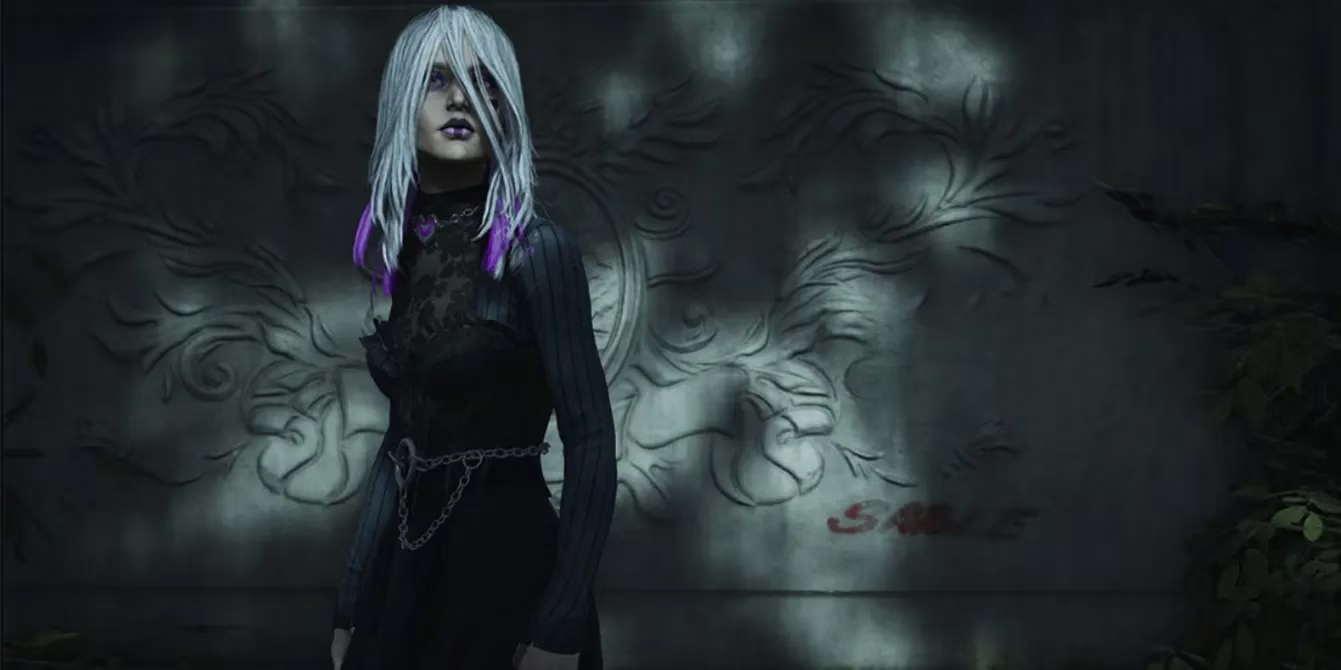
Countering this existential threat is the new Survivor, Sable Ward. Her character design and lore are deeply intertwined with the analog horror theme. A former film student obsessed with documenting unexplained phenomena, Sable arrived in Greenville to investigate local legends and found herself trapped in the Entity's realm. Her personal perks reflect a mind trained to look for patterns and truths in chaos:
| Perk Name | Effect | Thematic Connection |
|---|---|---|
| Final Cut | Grants a brief speed boost after completing a generator repair. | The satisfaction of capturing the perfect shot or solving a puzzle. |
| Behind the Lens | Slightly increases the efficiency of healing other Survivors when within the Killer's Terror Radius. | A filmmaker's focus and calm under pressure. |
| Archival Instinct | Reveals the aura of the Killer for 3 seconds when a generator is completed by you or a nearby ally. | The researcher's moment of discovery, piecing together clues. |
Sable represents the human drive to document and understand, making her the perfect foil to The Unknown, which embodies everything that cannot be understood. Her struggle is the player's struggle: to apply reason and courage against a force that deliberately undermines both.
The Legacy and Future of Fear in Dead by Daylight
Chapter 31: All Things Wicked marks a significant maturation for Dead by Daylight. By integrating analog horror, Behaviour Interactive has tapped into a contemporary vein of fear that feels both nostalgic and freshly relevant. It leverages the universal anxiety of glitches, corrupted files, and lost signals—experiences common in our digital age—and weaponizes them. The update proves that in 2026, true horror isn't always about a monster you can see; sometimes, it's about the dreadful certainty that you are being watched by something you cannot see, recorded by a technology that cannot comprehend it, and hunted in a reality that may not be entirely real. The game has successfully built a bridge between the tactile dread of vintage media and the pervasive anxieties of the modern connected world, ensuring that the terror of The Unknown and Greenville Square will linger in players' minds long after the trial has ended, like the persistent hum of a disconnected landline.
Comments