As a dedicated player who has spent countless hours in the fog, I've watched the landscape of live service gaming evolve dramatically. While on the surface, my beloved Dead by Daylight and the cultural juggernaut Fortnite seem worlds apart—one a tense horror cat-and-mouse game, the other a vibrant, building-filled battle royale—their shared DNA as long-running live service titles is undeniable. Both have thrived on regular content drops, engaging battle passes, and savvy crossovers. However, in 2026, the visual gap between them has become starkly apparent, and it's a lesson Dead by Daylight can no longer afford to ignore if it wants to remain a terrifying and immersive experience for veterans and newcomers alike.
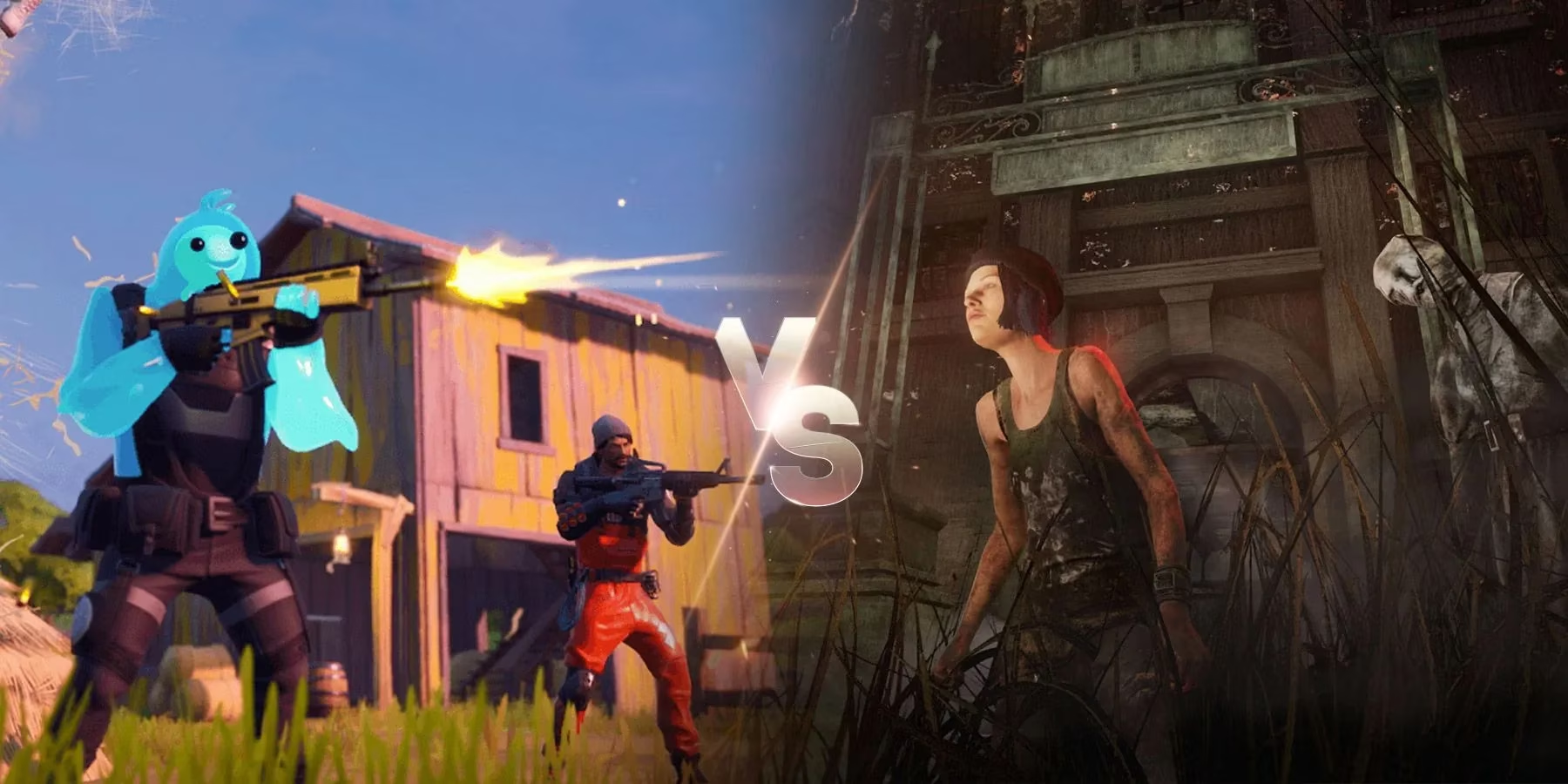
Let's be clear: Dead by Daylight has done many things right to sustain its community. The steady stream of new Killers and Survivors, the thrilling licensed chapters, and the rewarding progression systems have kept the hooks sharp and the generators humming. These elements are the backbone of any successful live service, and Behaviour Interactive has mastered them. Yet, when I boot up the game today, I can't help but feel a sense of visual dissonance. The game's aesthetic, while iconic, is showing its age in a way that directly impacts the core horror fantasy. While the gameplay is as tense as ever, the presentation sometimes struggles to sell the fear.
This is where Fortnite's playbook becomes essential reading. Epic Games' title is virtually unrecognizable from its 2017 debut, not just in terms of mechanics but in its sheer visual fidelity. The transition to Unreal Engine 5 was a watershed moment, bringing luminescent ray-traced lighting, incredibly detailed textures, and fluid animations that make the island feel alive. Crucially, these weren't one-off events; Fortnite has implemented consistent, meaningful graphical enhancements with nearly every major chapter. This commitment has allowed it to feel perpetually modern, ensuring it never looks like a relic from a past gaming era—a challenge for any game approaching a decade of service.
Dead by Daylight's last major visual overhaul, The Realm Beyond, landed back in 2021. At the time, it was a revelation! Maps like the Autohaven Wreckers and Macmillan Estate received stunning facelifts, character models gained new detail, and the overall atmosphere became denser and more foreboding. I still remember the thrill of seeing the improved blood effects from Prestige rewards. But in the five years since, the gaming world has moved on. We've been terrified by the photorealistic necromorphs of the Dead Space remake, stalked through the hauntingly beautiful forests of Alan Wake 2, and witnessed the raw visual power of current-gen exclusives.
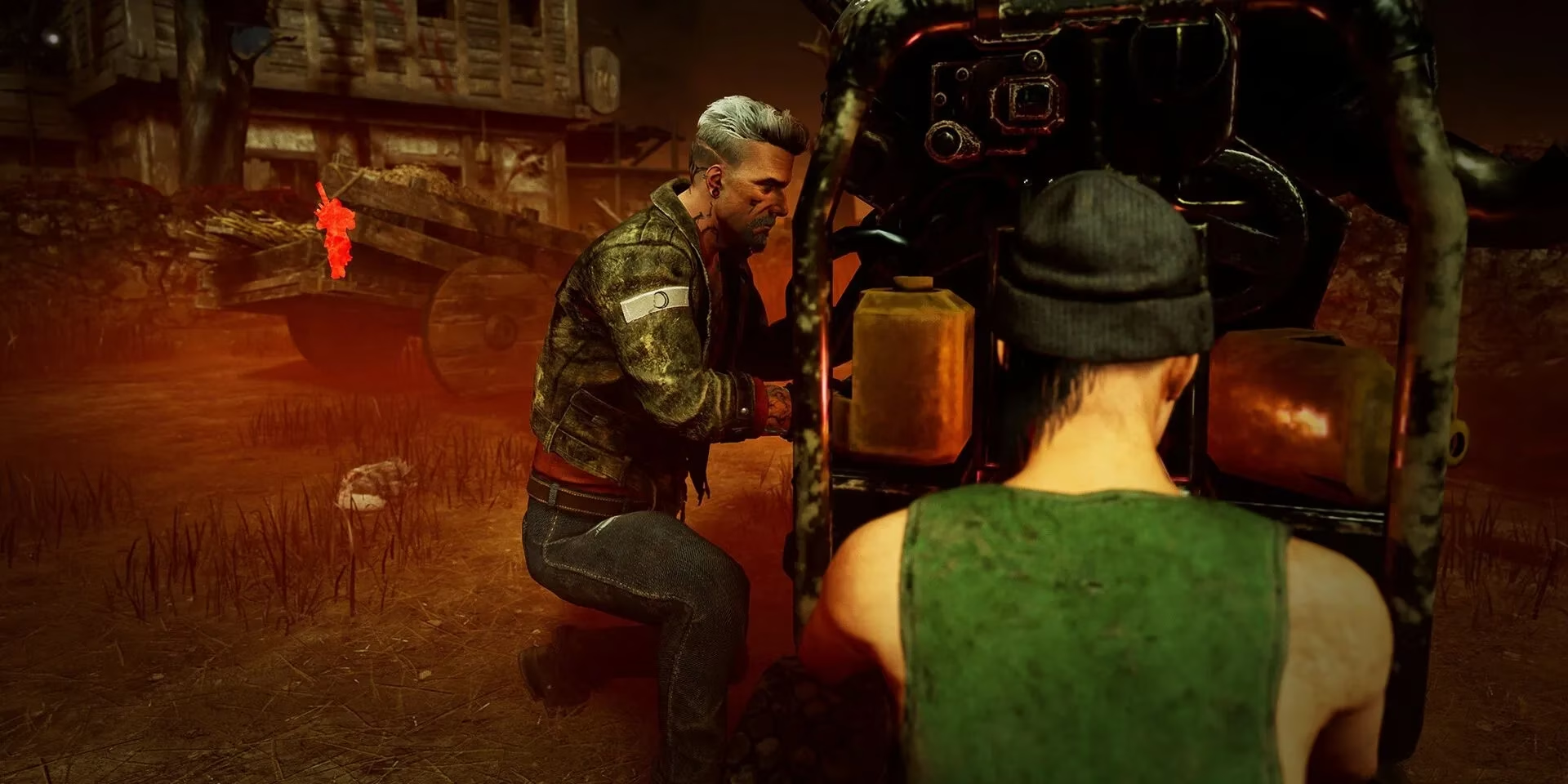
Returning to the Entity's realm after such experiences highlights specific pain points:
-
Character Model Fidelity: Facial animations and textures can appear stiff and dated, especially during close-up moments like mori executions or hook struggles. The emotional terror is sometimes lost in the lack of detail.
-
Environmental Polish: While maps have good atmosphere, certain assets—generators, walls, foliage—lack the physical texture and wear that next-gen horror excels at. A rotting wooden plank should feel rotten.
-
Animation and Interaction Clarity: The infamous "hook not-quite-piercing" animation is a small but persistent immersion breaker. More fluid and brutal animations for basic actions would heighten the impact tremendously.
-
Audio-Visual Synergy: The screams of Survivors are a key audio cue, but pairing them with more visceral, detailed visual reactions from both victims and Killers would deepen the horror.
The argument isn't that Dead by Daylight needs to abandon its stylized look for hyper-realism. Its aesthetic is part of its charm. The argument is that it needs to elevate that style to modern standards. A more frequent, iterative approach to graphics updates, inspired by Fortnite, is the key. We don't necessarily need another monolithic, years-in-the-making overhaul like The Realm Beyond all at once. Instead, imagine smaller, regular visual patches:
| Potential Update Focus | Benefit to Gameplay & Immersion |
|---|---|
| Annual "Killer & Survivor" Visual Pass | Updates models, textures, and animations for 2-3 older characters each year, keeping the roster feeling fresh and frightening. |
| Map Texture & Lighting Refreshes | Rotating visual updates for 1-2 legacy maps per season, enhancing atmosphere without full reworks. |
| VFX & Blood System 2.0 | More dynamic blood splatter, better trail visuals, and improved spell/ability effects for Killers like The Artist or The Onryō. |
| UI/UX Polish | Modernizing menus, icons, and in-game HUD elements to feel snappier and more integrated with the game's world. |
Why is this so critical for DbD specifically? Because horror is an emotion heavily reliant on suspension of disbelief. A more visually convincing world makes the threat of The Huntress's hatchet or The Dredge's emergence from a locker feel more tangible and, therefore, more frightening. In 2026, players expect a certain level of visual polish, and falling behind can make a game feel less credible, no matter how strong its core loop is.
Furthermore, Dead by Daylight is built on Unreal Engine. The tools and technology for dramatic visual improvement are there. While a full leap to Unreal Engine 5 might be a monumental task, leveraging more of the engine's modern capabilities is a logical next step. The payoff would be immense: a scarier, more immersive, and more competitive game that honors its legacy while boldly looking toward its future.
As a player who wants to see Dead by Daylight thrive for another decade, the path forward is clear. Learn from the best in the live service business. Embrace a culture of continuous visual evolution. The Realm Beyond proved it's possible. Now, it's time to make that progress perpetual. The future of horror gaming is not just about new characters and maps—it's about presenting them in a world that feels alive, terrifying, and visually worthy of our fear. The Entity's realm deserves nothing less.
Comments