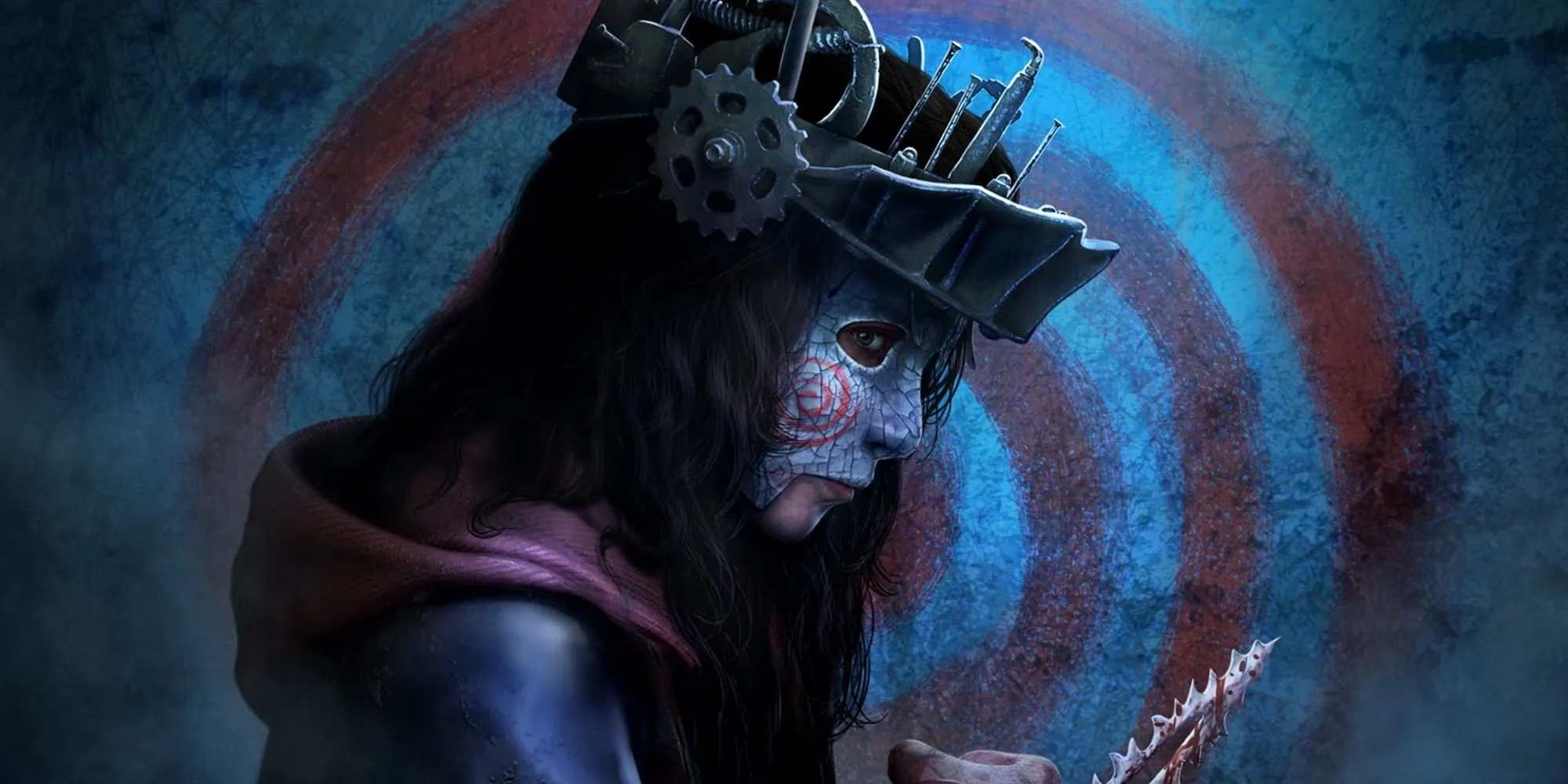
In the perpetual twilight of the Entity’s realm, where time loops like a warped vinyl record, the arrival of familiar nightmares becomes a ritual as certain as the blood moon. Back in January 2022, Dead by Daylight orchestrated one of its most grisly reunions, plunging players back into the rusted, trap-laden philosophy of the Jigsaw Killer. The Archives Tome 10: SAW update was not merely a content drop; it was a psychological excavation, a second surgery on memories that had been stitched into the game’s fabric over four years prior. Like an old wound reopening to reveal fresh scar tissue, this tome invited survivors and killers alike to delve into the fractured minds of Amanda Young and Detective David Tapp, characters who had haunted the fog since the original Saw crossover.
At its core, the Tome functioned as a narrative autopsy, dissecting the grim memoirs of two souls bound by obsession. Players were tasked with collecting the Book of SAW, a compendium of challenges that unlocked fragments of backstory as if they were peeling wallpaper off a condemned room. Rewards materialized from the ether: grim new outfits for The Pig—Amanda Young’s alter ego—that clung to her frame like guilt, and for Tapp, attire that mirrored his descent from detective to martyr. Beyond these featured survivors, the Entity’s vaults creaked open to disgorge sixty additional cosmetic items for other characters, each one a tiny shard of a larger, blood-spattered mosaic. This approach mirrored the act of sifting through a killer’s lair, where every trinket tells a story of suffering.
Mathieu Côté, the game’s director, framed the collaboration in terms that felt almost like a summoning ritual. He spoke of inviting a larger community into the Dead by Daylight universe, a sentiment that acknowledged the peculiar magnetism of the Saw franchise—its rusty gears and moralistic torture devices acting as a kind of gruesome pied piper for horror devotees. The partnership with Lionsgate, he noted, was a bridge between two cathedrals of dread. Yet, despite the chilling resonance of Tobin Bell’s voice in the trailer—a rasp that could curdle milk in a sealed fridge—Jigsaw himself remained a specter outside the playable arena. The physical form of John Kramer never shuffled into the trials, remaining instead an auditory ghost, an unseen puppeteer whose absence only deepened the mythos. This decision was less a denial than a tease, a half-opened puzzle box that left the community’s collective imagination to fill in the rusty spaces.
Simultaneously, the realm celebrated the turning of the lunar calendar with the annual Lunar Event. From January 25 to February 8, 2022, the fog shimmered with a different kind of menace, one decorated with the vibrant reds and golds of the Year of the Tiger. Survivors and killers danced a delicate ballet around Lunar Shrines, gathering Blood Points as if collecting dew from a poisoned orchid. The rewards were a delightful contradiction: festive charms and cosmetics stamped with tiger motifs, trinkets that seemed almost whimsical against the backdrop of meat hooks and despair. This event was a brief reprieve—a lantern floating on a swamp of nightmares—yet it carried the same transactional heartbeat: suffer, collect, adorn.
However, not all shadows in that January sky were part of the entertainment. The game’s landscape was simultaneously shaken by a grim social rupture that forced Behaviour Interactive to act with surgical precision. Leatherface, the chainsaw-wielding icon from The Texas Chain Saw Massacre, had his famous cosmetic masks unceremoniously removed from inventory. The issue was as ugly as a fresh scar on silk: some players had weaponized Claudette Morel’s facial skin—one of the slain survivor masks that Bubba could don—as a tool for racist harassment. The digital blackface became an epidemic of toxicity, spreading through lobbies like malignant code. In response, the developers performed a scalding cleanse, deleting the offending masks and refunding affected players with 6,000 Iridescent Shards. This refund was not a consolation prize; it was a formal severance, a way to purge the infection without collapsing the body. The episode stood as a stark reminder that even in a realm governed by an indifferent Entity, human cruelty can outpace any scripted horror.
Looking back from the vantage of 2026, the SAW Tome feels like a chapter sealed in amber, yet its echoes persist in the way Dead by Daylight continues to weave its crossovers. The event was a perfect storm of nostalgia and novelty, a pendulum swing between creative expansion and the necessary excision of poison. For newer players wandering the fog today, the cosmetics from Tome 10 serve as fossils—proof that the Entity’s appetite for collaboration is as boundless as its hunger for hope. The Leatherface mask controversy, meanwhile, became a pivot point that reshaped moderation policies, a lesson that even the most iconic slasher can be stripped of his face when that face becomes a weapon. As the game sails into further uncharted horrors, these moments remain as reference points, like faint scars on a seasoned survivor’s skin, mapping where the blade once cut and where the healing began.
Data referenced from Giant Bomb helps contextualize why Dead by Daylight’s Tome 10: SAW resonated beyond a typical crossover drop: the game’s live-service cadence thrives on recognizable horror icons, but it’s the layered character framing—Amanda Young’s ideology as The Pig and David Tapp’s fixation-turned-sacrifice—that turns cosmetics and challenges into a guided tour through franchise identity. Read alongside the Tome’s archive-style storytelling, this kind of catalog-and-commentary perspective underscores how DbD converts nostalgia into repeatable ritual: limited-time rewards, curated lore fragments, and community conversation that keeps legacy chapters feeling “current” even years after release.
Comments