As I navigate the ever-evolving fog of Dead by Daylight in 2026, I've come to realize that understanding the game's intricate web of status effects is the true key to survival and victory. The game has grown exponentially since its early days, now boasting a massive roster of Killers, Survivors, and mechanics brought in from legendary franchises like Castlevania and Dungeons & Dragons. For both new players entering the Entity's realm and seasoned veterans, deciphering the myriad of buffs, debuffs, and conditions—from the subtle to the severe—is a fundamental skill. The in-game explanations are often sparse, leaving players to learn through trial and error. In my experience, knowing exactly what each icon means and how to play around it can mean the difference between a thrilling escape and a brutal sacrifice. This guide synthesizes the core status effects that define the meta in 2026, providing the clarity needed to turn the tide of any trial.
🦻 The Elusive and Muffled: Deafened
In my matches, I've found the Deafened status to be one of the most situational yet potentially game-changing effects. It creates a muffled, tinnitus-like auditory environment for the afflicted player, whether they are a Survivor or a Killer. This can be a double-edged sword. As a Killer running The Cannibal's Knock Out perk, I've used it to mask the sounds of my approach or the groans of a downed Survivor, making it harder for others to locate their teammate. Conversely, as a Survivor, I've been on the receiving end of firecrackers or certain add-ons that inflict this, which dramatically reduces my ability to hear the Killer's terror radius or the directional cues of nearby actions. Mastering audio cues is a huge part of Dead by Daylight, so having that sense compromised forces a major shift in playstyle, relying more on visual awareness and map knowledge.
🧱 The Crippling Burden: Orange Glyph Affliction
When I interact with certain glyph challenges as a Killer, I sometimes trigger the Orange Glyph affliction. This isn't just a temporary debuff; it's a persistent curse that demands an aggressive shift in strategy. The status saddles me with a suite of handicaps until I manage to hook Survivors a total of six times. Specifically, I suffer from:
-
Increased basic attack cooldown
-
Longer recovery time from pallet stuns
-
Slower break actions on walls, pallets, and generators
This effect turns every chase into a high-stakes engagement. My normal rhythm is disrupted, forcing me to be more predictive and efficient with my attacks. It emphasizes the importance of pressure; I can't afford to lose time or survivors will easily out-repair my slowed-down break actions. It's a status that tests fundamental Killer skills under pressure.
😴 Trapped in the Dream World
Facing The Nightmare, Freddy Krueger, is a uniquely psychological experience. His power pulls Survivors into the Dream World, a status effect that makes us vulnerable to his illusions like fake pallets and blood pools. The first time I'm put to sleep, I can wake myself up using scattered alarm clocks or get woken by an ally who is already awake. However, the real danger lies in the Sleep Penalty. Once I've woken up, if Freddy puts me to sleep again, the time it takes to wake up increases significantly. This creates a brutal cycle where each successive sleep state is more dangerous than the last, effectively reducing my safe windows for action and repair. Managing this status requires constant vigilance and coordination with teammates to ensure someone is always awake to provide a rescue.
🪝 The Inescapable Grip: Hooked
The Hooked status is the most fundamental and dire condition in the game. When I'm caught and placed on a hook, my agency is severely limited. I'm left to await rescue or attempt a risky self-unhook. The progression is merciless:
-
First Hook: I can struggle or wait for help.
-
Second Hook: The Entity's claws appear, and I must hit skill checks to slow my sacrifice.
-
Third Hook: Sacrifice is inevitable.
From the Killer's perspective, hooking is the primary objective. It creates map pressure, draws other Survivors into risky rescue attempts, and progresses their win condition. The hook states dictate the entire tempo of a trial, making hook rescue timing and placement critical strategic elements.
🦠 The Virulent Spread: Infected
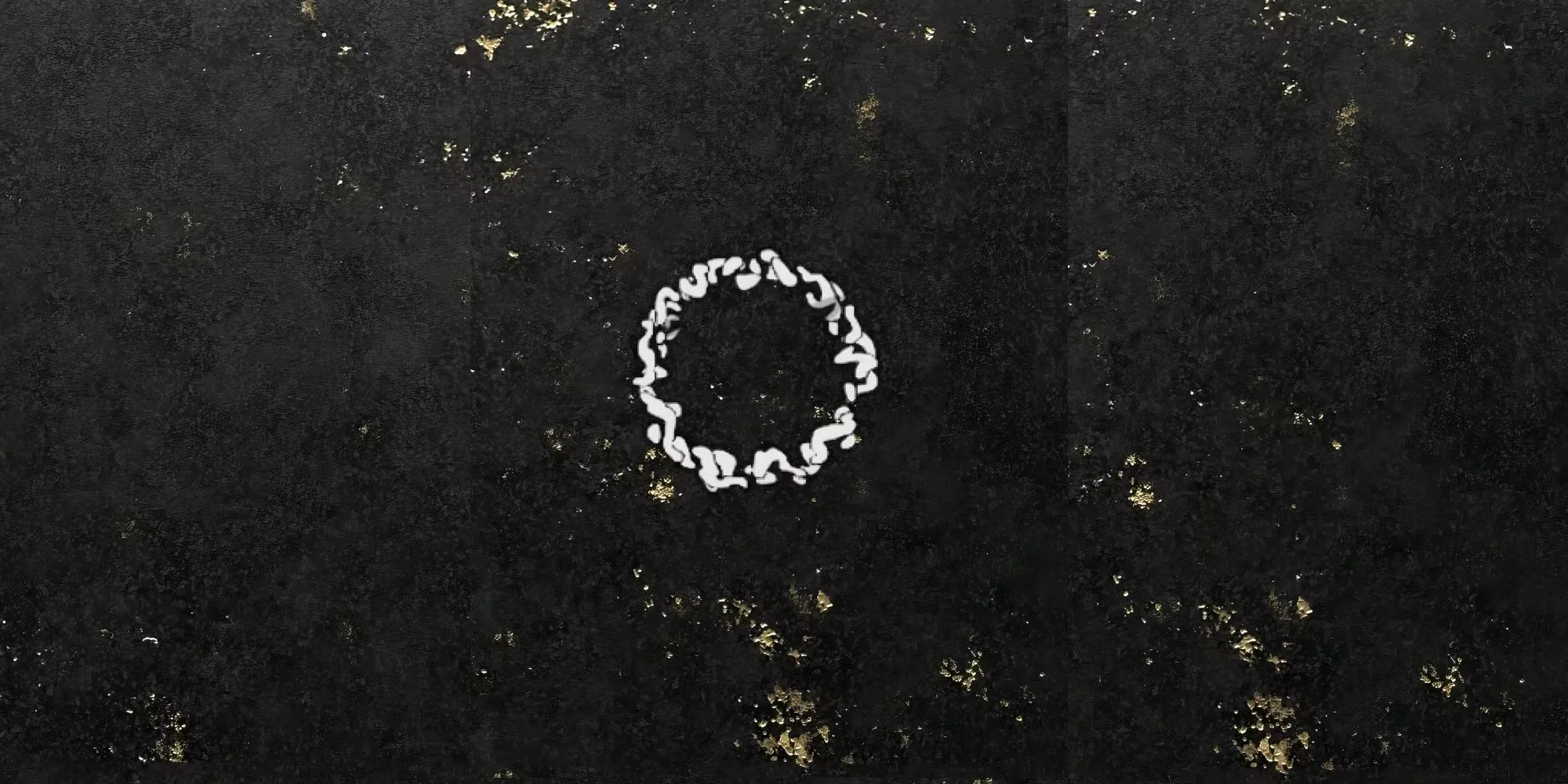
The Mastermind, Albert Wesker, introduced the Infected status, a timed debuff that visually manifests as a growing circle around the Survivor's portrait and creepy worm-like visuals on the character model. I've learned to dread watching that circle fill. It starts white and ticks down. Once it completes and turns red, I become extremely vulnerable to his Virulent Bound power, which allows him to instantly down and pick me up after a successful dash. Managing this infection is a constant mini-game—balancing the need to complete generators with the imperative to find a First Aid Spray to cure myself before the timer expires and I become a one-hit liability to my team.
👥 The Parasitic Duo: Latched On
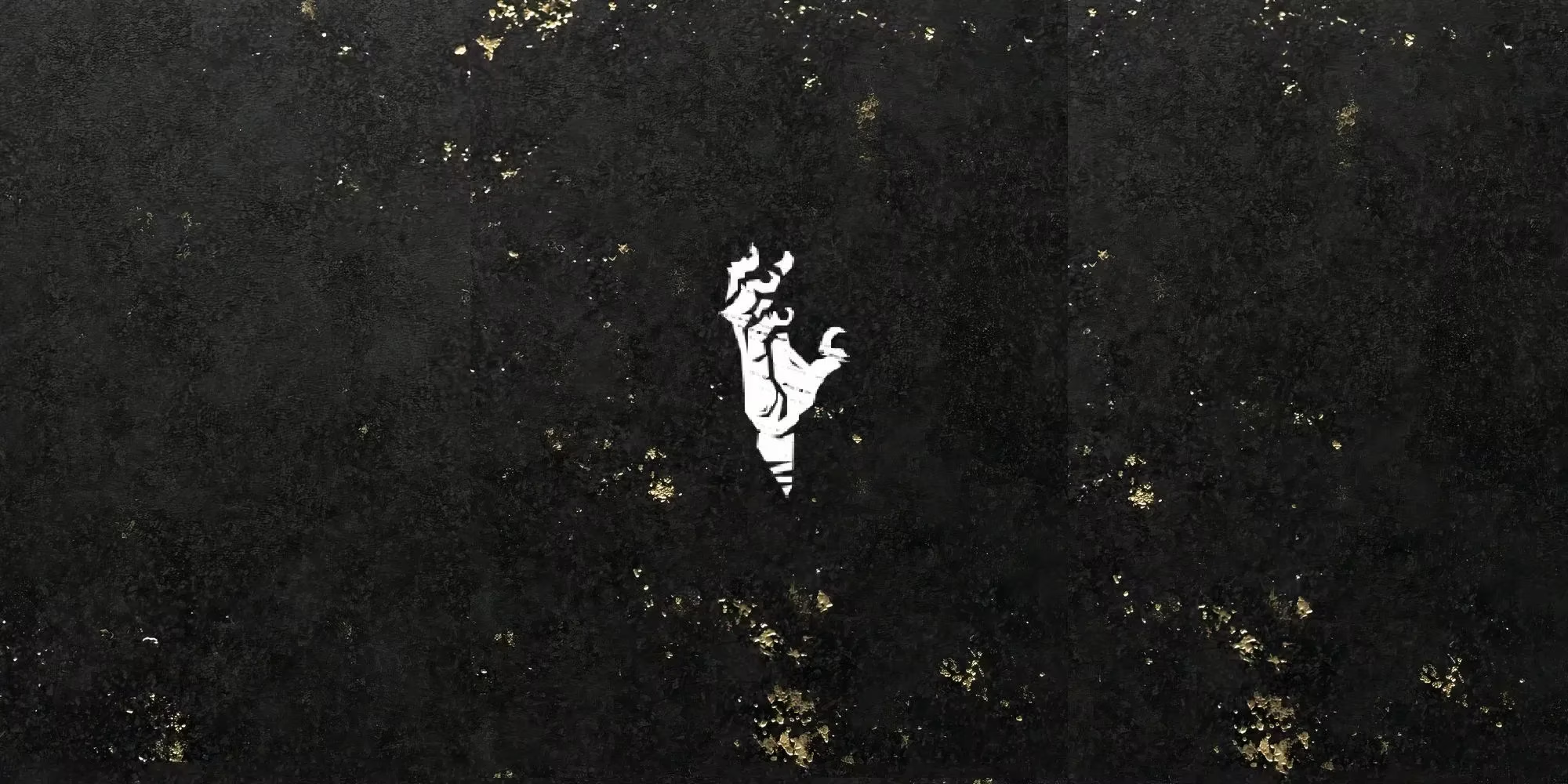
Facing The Twins is a chaotic experience of managing two threats. Victor, the parasitic twin, can pounce on Survivors. If he lands successfully, he latches on, applying a powerful status effect. When I'm latched, I am:
-
Injured (if I was healthy)
-
Revealed by Killer Instinct to Charlotte
-
Completely immobilized, unable to perform any actions except the dedicated struggle action to crush Victor
This status creates immediate, high-pressure scenarios. It forces my teammates to choose between continuing their objectives or coming to my aid to remove Victor, all while Charlotte is likely bearing down on my location. It perfectly embodies the disruptive, two-pronged threat of this Killer.
🛰️ The Drone's Mark: Locked On
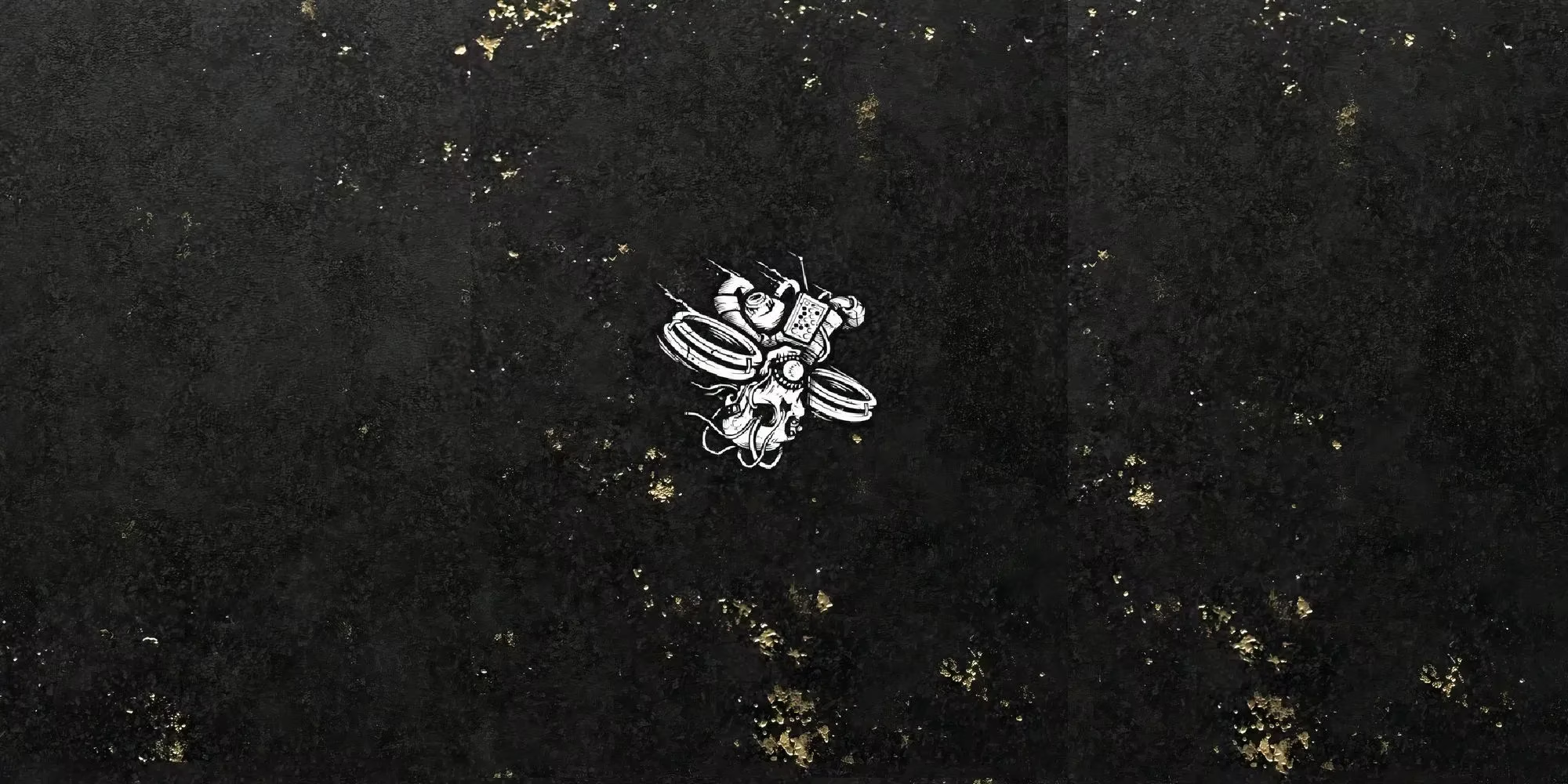
The Skull Merchant's technology brings a modern terror to the fog. Her drones patrol key areas, and if I linger in their detection zone for too long, I become Locked On. The consequences of this status are severe and tiered based on my current health state:
| Health State | Effect of Being Locked On |
|---|---|
| Healthy | Immediately becomes Injured |
| Already Injured | Suffers a Deep Wound |
| All States | Becomes Broken (cannot heal) |
Being Broken while Locked On is particularly dangerous, as it leaves me one hit away from being downed without the ability to recover. It forces rapid displacement from defended areas and punishes passive or stationary playstyles harshly.
👻 Marked for Death
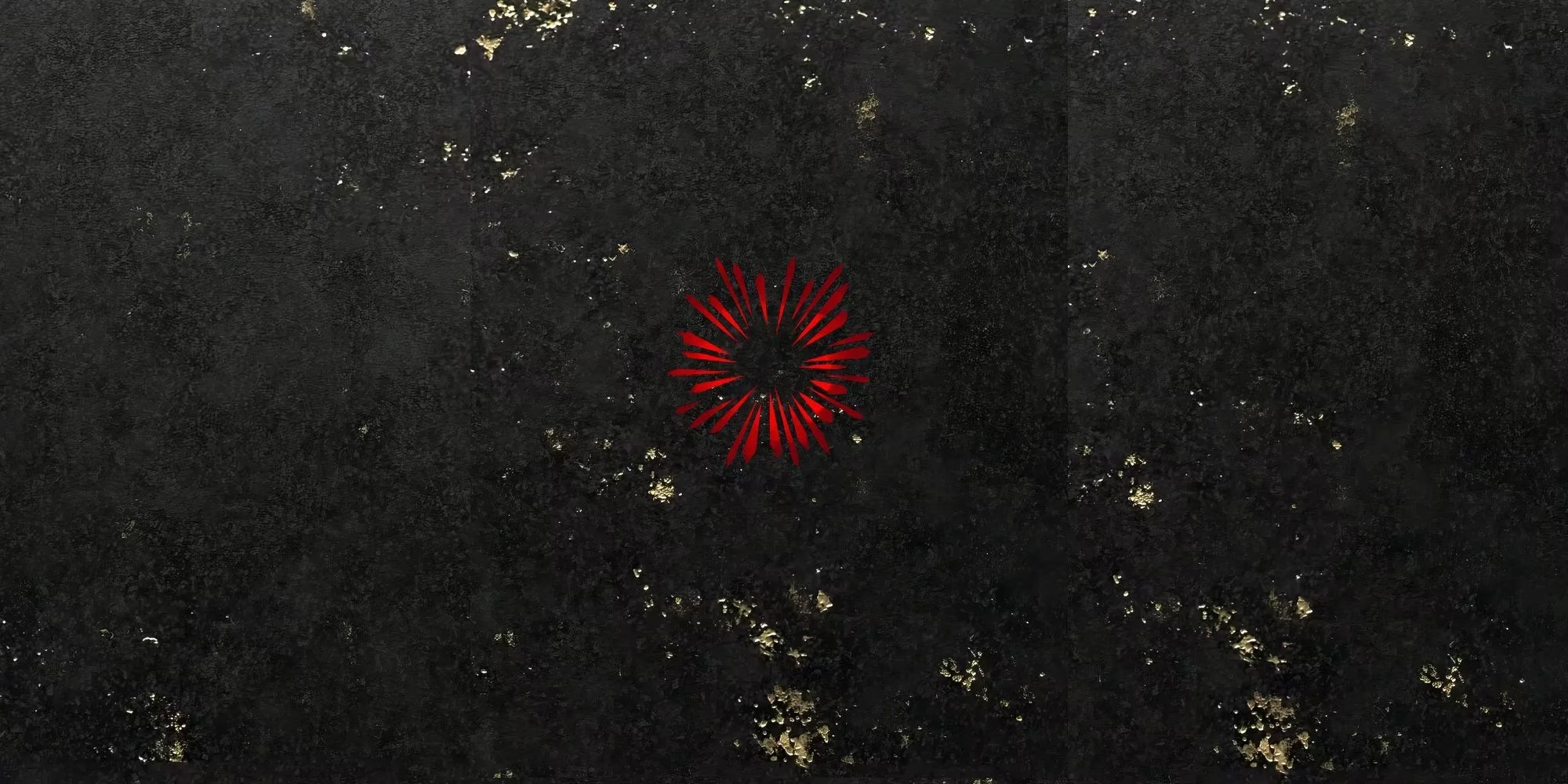
There are few feelings as tense as seeing the Exposed status icon appear because Ghostface has successfully Marked me. Through his stalking power, he can apply a mark that makes me Exposed for 60 seconds. During this time, any basic attack from him will put me into the dying state instantly, regardless of my health. The counterplay is unique: I can break him out of his stealth by having him in my line of sight. This creates a thrilling cat-and-mouse game where I must constantly be aware of my surroundings, trying to spot the stalking Killer before he completes his mark, all while trying to progress my objectives. Letting this status expire safely is a huge relief.
🎯 The Focal Point: Obsession
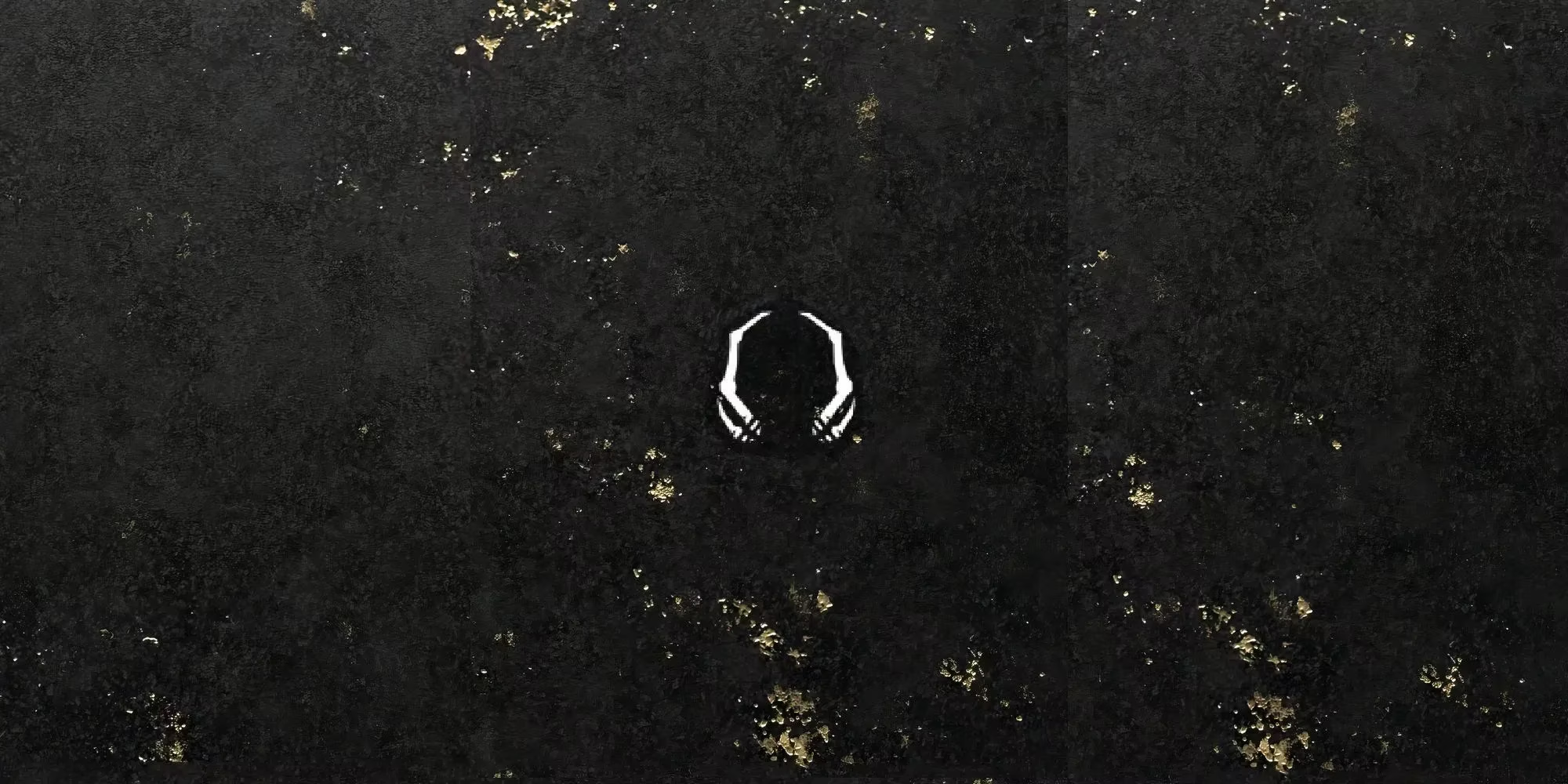
Every trial has an Obsession. By default, it's a random Survivor, but perks like For the People or Remember Me can transfer this title. On its own, the status does nothing. However, it unlocks the potential for powerful perk synergies for both sides. As a Killer, perks like Dying Light (which slows generator repair for all non-obsession Survivors when the Obsession is hooked) or Play with Your Food (which grants speed tokens for chasing the Obsession) make this Survivor a strategic priority. As a Survivor, being the Obsession while a teammate has Blood Pact can create a powerful healing and speed boost duo. Understanding who the Obsession is and how both sides might be building around it is a key layer of metagame strategy.
🤮 The Spreading Sickness
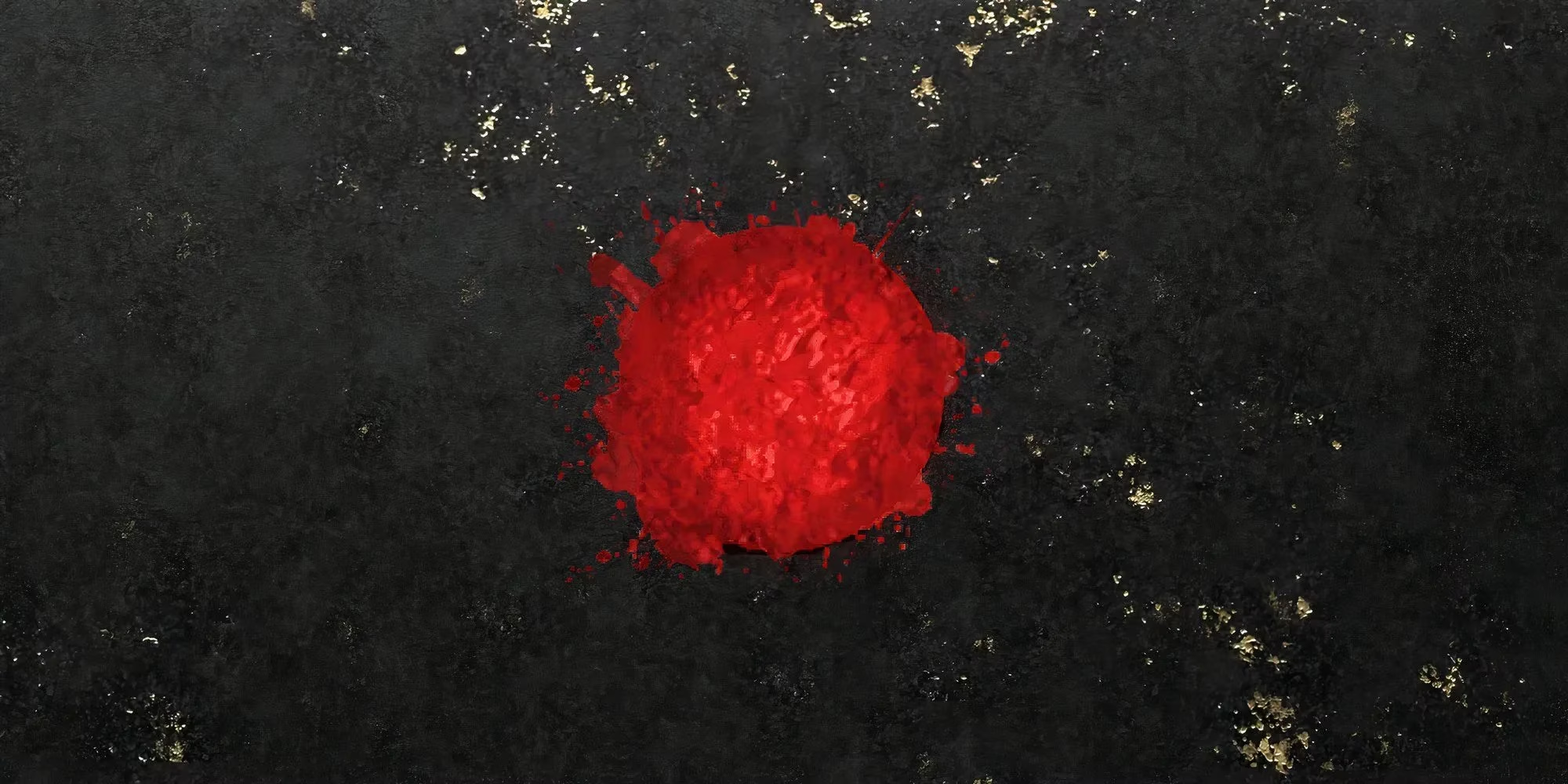
The Plague's Sickness is one of the most oppressive and visually distinct status effects. When she hits me with her vile vomit, I become infected. The status has two critical stages:
-
Stage One: I am infected and contagious. The sickness meter fills over time or by interacting with contaminated objects.
-
Stage Two: Once full, I become Injured, Broken (cannot heal), and remain highly contagious.
The only cure is to cleanse at one of the fountains scattered around the map. However, this strategic decision has a huge cost: cleansing a fountain gives The Plague access to her powerful Corrupt Purge, a ranged attack. Do I cleanse to heal and remove the Broken status, thereby empowering the Killer? Or do I stay sick and injured, avoiding giving her that power but remaining a one-hit target? This status forces a terrible choice upon the entire survivor team and is a masterpiece of game design that creates constant strategic tension.
Mastering these status effects is a continuous journey in Dead by Daylight. In 2026, with the game more complex than ever, this knowledge isn't just helpful—it's essential. It allows me to predict Killer strategies, optimize Survivor gameplay, and ultimately find more success and enjoyment in the terrifying trials orchestrated by the Entity. Whether it's cleansing a sickness, breaking a lock-on, or surviving a mark, understanding the 'why' and 'how' behind each icon on my screen is the ultimate power in the fog.
Comments