As a dedicated horror gaming enthusiast who has been following the genre for over a decade, I've witnessed numerous crossovers between games, but few have intrigued me as much as the recent intersection between Dead by Daylight and the Remedy Connected Universe. Looking back from 2026, it's fascinating to see how these connections have evolved and expanded the boundaries of horror gaming narratives. I still remember when Dead by Daylight first started its crossover journey back in October 2016 - who would have thought that ten years later, we'd be seeing such sophisticated narrative integration between completely different gaming universes?
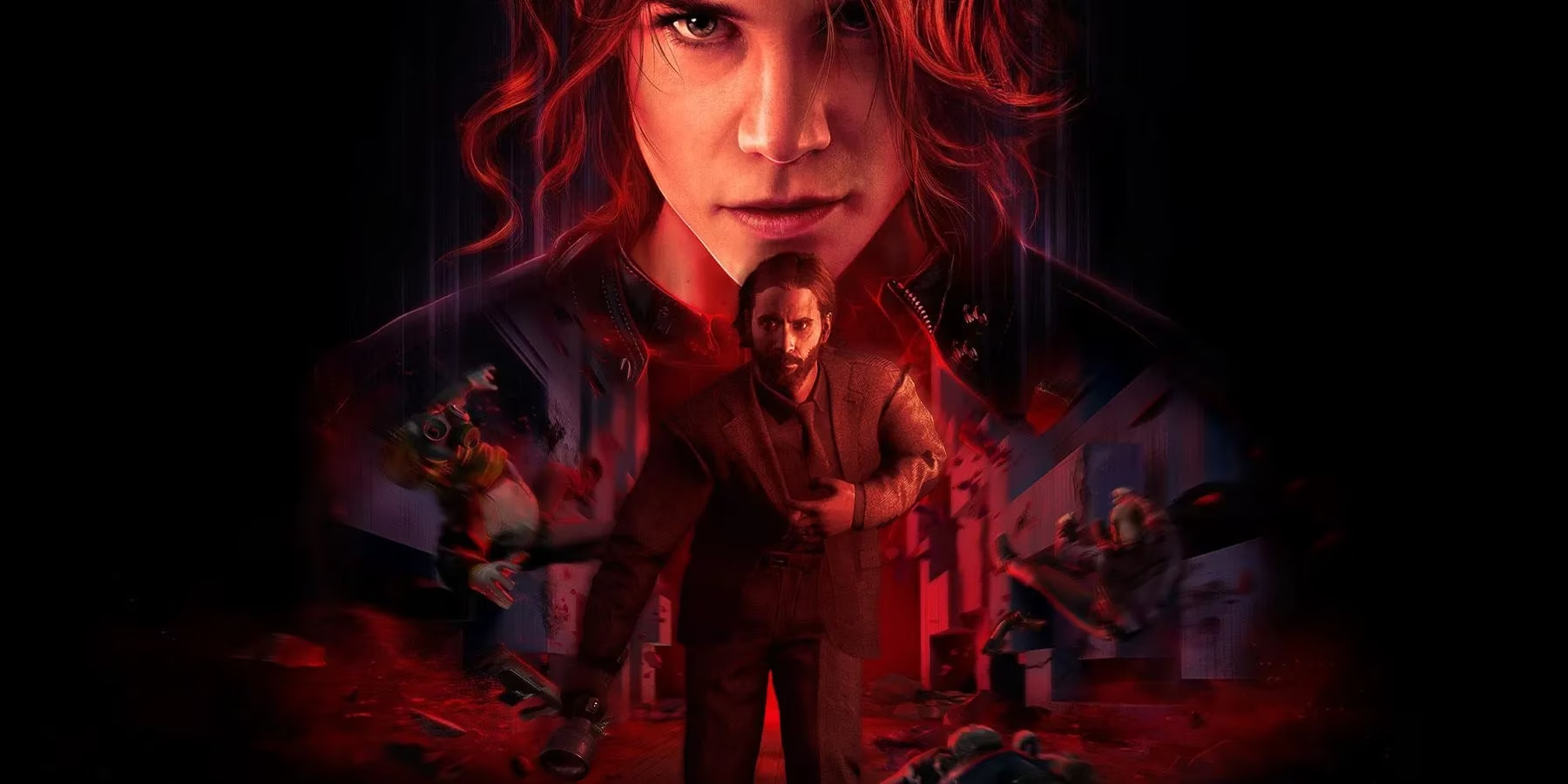
The moment I heard about Alan Wake joining Dead by Daylight's Trials in January 2024, I knew something special was brewing. I've been playing Dead by Daylight since its early days, watching it grow from a simple horror survival game into a massive platform that hosts characters from every corner of horror fiction. From my first encounter with Michael Myers to battling Xenomorphs, each crossover brought something unique, but the Alan Wake addition felt different - it wasn't just another licensed character; it was a gateway into something much bigger.
What truly fascinated me was how this crossover connected to the broader Remedy Connected Universe. I still vividly recall playing Control in 2019 and discovering that document about Bright Falls - that moment sent shivers down my spine! As someone who had completed Alan Wake multiple times, finding that connection felt like discovering a secret passage between two worlds I loved. The realization that these games existed in the same universe transformed how I approached both narratives.
My experience with the Remedyverse connections:
-
Control's AWE DLC - The first major crossover that truly blew my mind
-
Alan Wake 2's FBC integration - Seeing how seamlessly the Bureau fit into Bright Falls
-
Character cameos - Spotting Jesse Faden and Casper Darling references
-
Narrative threads - How each game's story enhanced the other
When I first loaded up Dead by Daylight after the Alan Wake crossover, I was immediately struck by how perfectly his flashlight-focused perks matched his character. The attention to detail was incredible - it felt like I was actually playing as Alan Wake, not just a generic survivor with his skin. This wasn't just a cosmetic addition; it was a character translation that respected the source material while fitting perfectly into Dead by Daylight's mechanics.
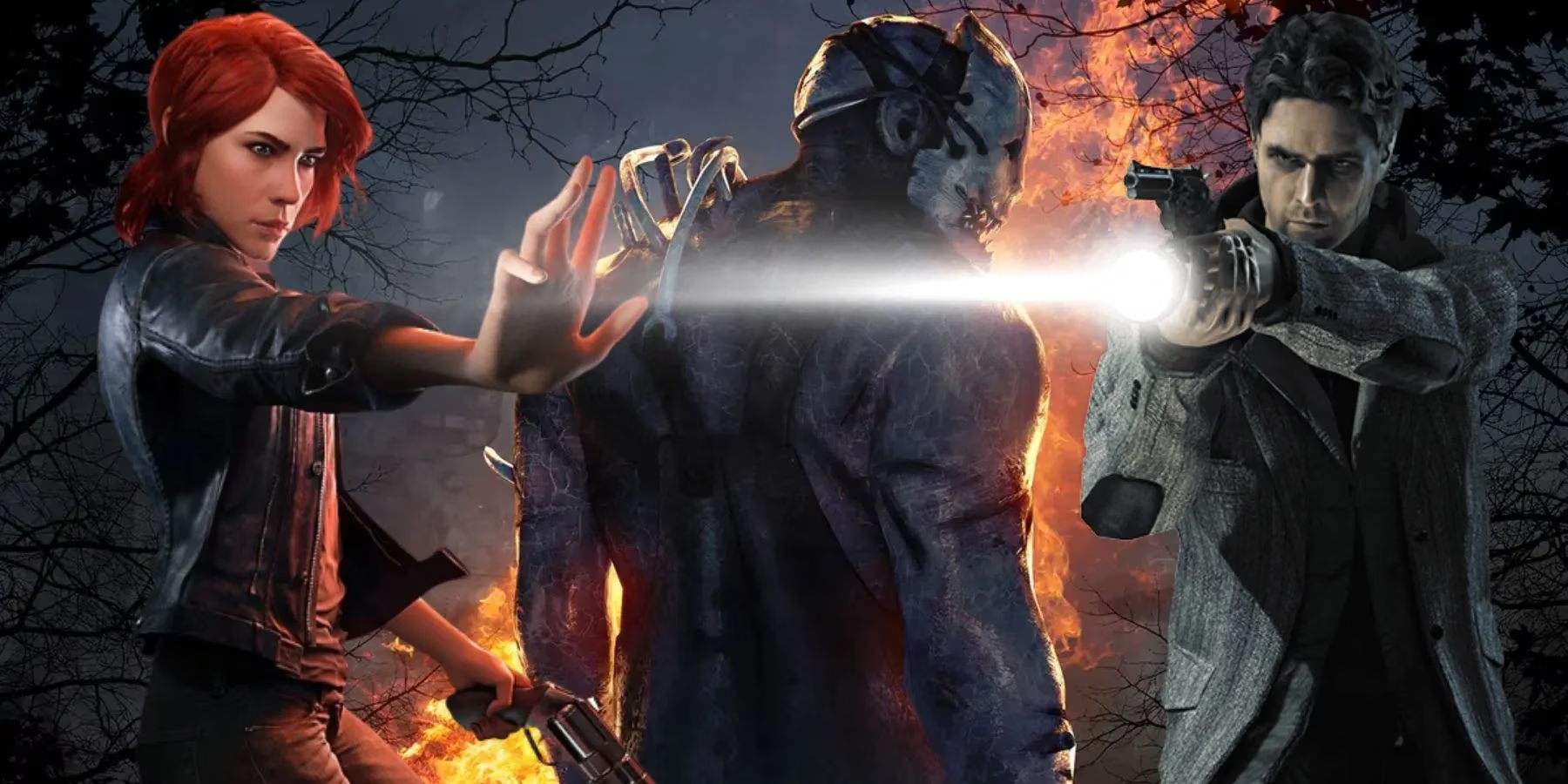
As I played through matches with Alan Wake, I couldn't help but think about how this crossover could fit within the Remedy Connected Universe's lore. The Dark Place's loops that trap Alan in never-ending cycles - what if one of those loops was a Dead by Daylight Trial? The Entity's realm and The Dark Place share so many thematic similarities: both are extradimensional spaces that trap people in repetitive, nightmarish scenarios. From my perspective as a long-time fan of both franchises, this crossover felt less like a marketing ploy and more like a natural extension of both universes.
What makes this crossover so significant, looking back from 2026, is how it represents a new era of gaming crossovers. We're no longer just seeing character skins or simple references - we're witnessing genuine narrative integration between completely different gaming universes. The Remedy Connected Universe has shown how to do this right, balancing fan service with meaningful storytelling that enhances rather than detracts from the core experience.
Why this crossover works so well:
-
Narrative compatibility - Both universes deal with supernatural entities and trapped characters
-
Character authenticity - Alan Wake's abilities translate perfectly to Dead by Daylight's mechanics
-
Lore integration - The crossover makes sense within both universes' established rules
-
Fan respect - It treats both fanbases with intelligence and care
Playing as Alan Wake in Dead by Daylight made me appreciate how far both games have come. Dead by Daylight has evolved from a simple multiplayer horror game into a platform that hosts some of horror's most iconic characters, while Remedy's universe has grown from isolated stories into a richly interconnected narrative tapestry. As someone who has been there from the beginning, watching these developments unfold has been one of the most rewarding experiences of my gaming career.
The brilliance of this crossover, from my current 2026 perspective, is how it opened doors for future narrative possibilities. Since 2024, we've seen more sophisticated crossovers between games, but this one set the standard. It proved that crossovers could be more than just cameos - they could be meaningful narrative connections that enrich both universes. When I play the latest Remedy Connected Universe games now, I still look for those subtle Dead by Daylight references, wondering if we'll see more explicit connections in future installments.
What I love most about this entire situation is how it represents the collaborative nature of modern gaming. Different studios, different genres, different player bases - yet they can come together to create something that honors all parties involved. As a player, I feel respected when developers put this much thought into their crossovers. It's not about quick cash grabs; it's about creating genuine connections between worlds that fans love.
Reflecting on my journey through these connected universes, I'm excited to see where this trend leads. Will we see more Dead by Daylight characters appearing in Remedy games? Could The Entity itself become part of the Remedy Connected Universe? Only time will tell, but as someone who has witnessed this evolution firsthand, I can confidently say that the future of horror gaming crossovers looks brighter (and darker) than ever before.
Comments