The year is 2026, and the Entity's realm remains as impenetrable and terrifying as ever. As a player who has spent countless hours in its fog-shrouded domains, I've come to know these survivors not just as avatars on a screen, but as echoes of souls caught in a cosmic web. The Entity, a force as inscrutable as a black hole's event horizon, doesn't just kidnap; it curates. It plucks individuals at the precise moment their lives are most defined by struggle, fear, or obsession, weaving them into the fabric of its endless, sadistic game. Each trial is a crucible, and each survivor carries the weight of a past life into the terror of the present.
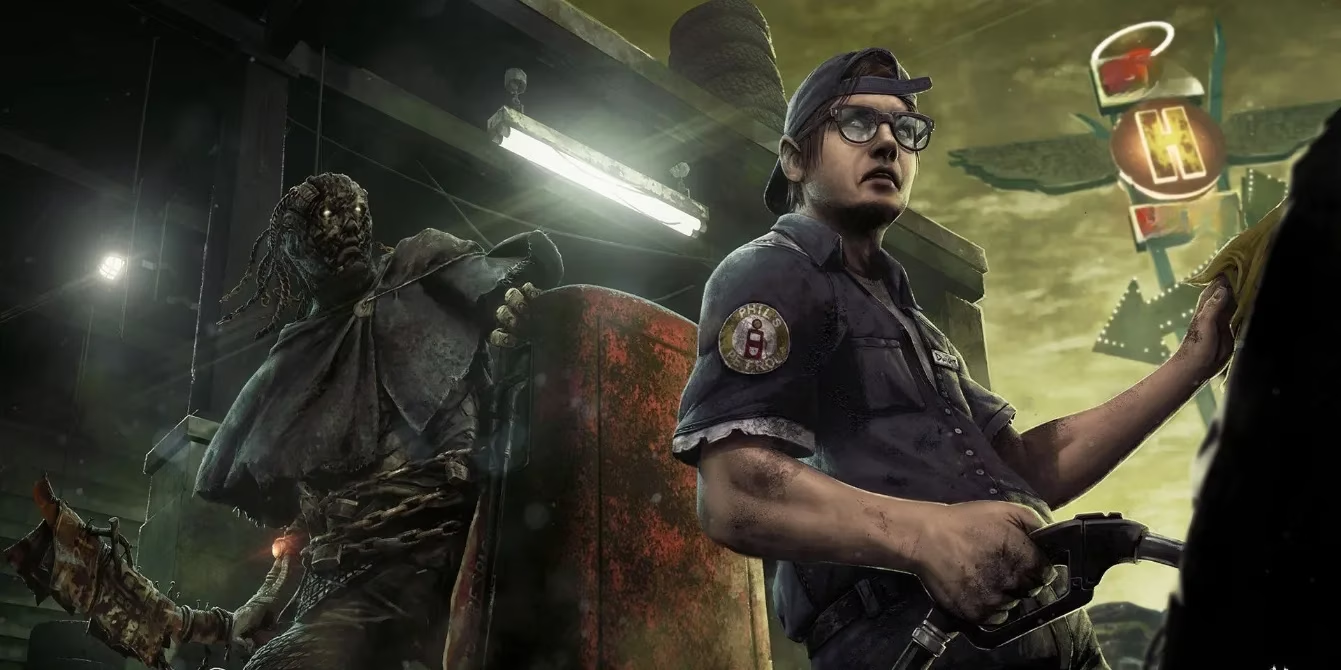
My journey often begins with a figure who feels like a mirror to many of us: Dwight Fairfield. In my hands, he's transformed from the archetypal office outcast into something more. His story is one of profound, quiet tragedy. Abandoned by his colleagues during a team-building retreat—left alone in the woods after a single sip of illicit moonshine—his capture feels less like a supernatural abduction and more like the final, cruel punchline to a life of being overlooked. Yet, here in the Entity's realm, he found a purpose that eluded him in the mundane world. His Leader perk isn't just a game mechanic; it's the manifestation of a latent strength, a blossoming of character like a flower forcing its way through cracked concrete. He coordinates repairs, his voice a steady beacon in the panic. To me, Dwight represents the potential for leadership in the most unexpected places, his nervous energy refined into focused determination under pressure.
Then there are those who bring their own unique magic to the trials. Mikaela Reid entered my roster with the subtlety of a storm. A storyteller whose narratives became so potent they bled into reality, her descent into the fog was a performance without an audience. One moment she was captivating a crowd at a Halloween festival, the next, swallowed by an inky darkness. Her connection to the arcane has fundamentally altered how we approach the trials. Her Boon perks are like sowing seeds of sanctuary in a poisoned field. Placing a Boon: Circle of Healing is an act of rebellion, a small pocket of light and mending against the overwhelming darkness. She taught me that survival isn't just about running and hiding; it can be about reshaping the very battlefield, turning the Entity's realm against itself, one blessed totem at a time.
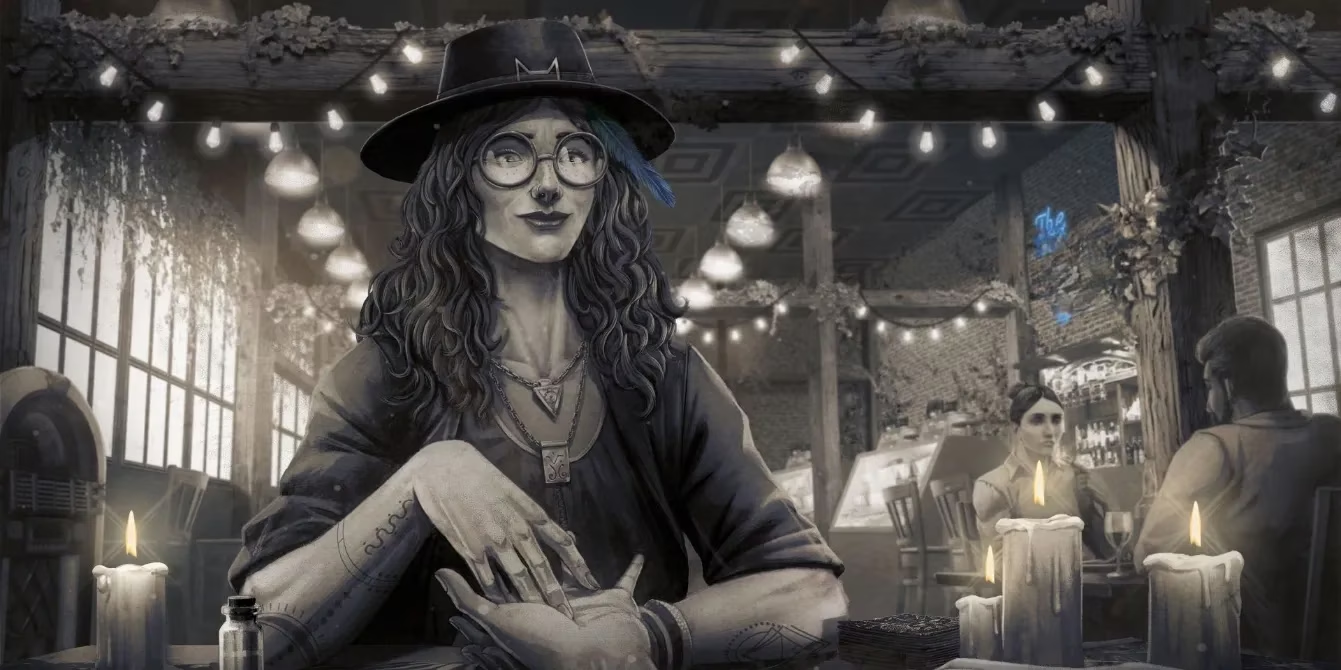
The Entity's tastes are eclectic, drawing in those already dancing on the edge of its world. Élodie Rakoto was a seeker of forbidden knowledge long before her capture. Her childhood encounter with an occult symbol—a strange circle that seemingly erased her parents—set her on a path that was always destined to intersect with the Entity. Her capture was not a random snatching but a culmination. Using her own blood to recreate that fateful symbol in a moment of desperation was like sending up a flare directly into the void; of course the Entity answered. Playing as Élodie feels different. Her Deception perk is a masterful feint, a magician's trick played on the most dangerous of audiences. She turns lockers into tactical illusions, and her resilience is that of a seasoned explorer. She doesn't just survive the trials; she navigates them, treating the macabre landscapes as another dangerous ruin to be studied and outsmarted.
Perhaps the most gripping narrative belongs to Detective David Tapp. His arrival in the fog feels less like an abduction and more like a transfer. A man consumed by the hunt for the Jigsaw Killer, his mortal life ended not in retirement but in violent, unresolved pursuit. The Entity didn't need to break his spirit; it was already honed to a single, razor-edged point: justice. Waking in the realm, for Tapp, was simply reporting for a new, darker beat. His perks are pure, unadulterated tenacity. Tenacity allows him to crawl from danger with a predator's grim focus, while Detective's Hunch is the manifestation of his life's work—a sudden, intuitive map of objectives, as if the clues of the trial are whispering only to him. Playing Tapp is to embrace a relentless, grinding willpower. He is not fast or flashy, but he is indefatigable, a bulldog in a world of specters. His presence is a reminder that some obsessions are so powerful they transcend death itself.
Over the years, these characters have evolved from mere perks and backstories into companions in terror. Their struggles resonate because they are human struggles—of inadequacy, loss, curiosity, and obsession—magnified under a supernatural lens. The Entity's realm is a distorted reflection of our own world, where personal demons are given flesh and form in the shape of Killers. Surviving here is a collaborative act of defiance. We mend generators not just as a game objective, but as a symbolic rejection of the darkness, creating sparks of light in an endless night. We heal each other's wounds, a silent pact against the overwhelming cruelty of our situation.
The meta-game has shifted dramatically by 2026. Boon totems, introduced by survivors like Mikaela, have created new strategic layers, turning passive hiding spots into active zones of contention. Meanwhile, the gritty perseverance of survivors like Tapp and Dwight ensures that the core loop of rescue and repair remains a tense, human drama. Each trial is a story, and we, the players, are its authors—writing tales of narrow escapes, tragic sacrifices, and occasional, hard-won victories against impossible odds. In the end, Dead by Daylight's true horror isn't just in the chase; it's in the profound, empathetic connection we forge with these lost souls, fighting for a dawn they will never see, in a fog that never lifts.
Comments