In the ever-evolving landscape of asymmetrical horror games, two titans have dominated the scene for years: Dead By Daylight and The Texas Chain Saw Massacre. As we look at the genre in 2026, I find myself reflecting on the distinct flavors these games offer. While Dead By Daylight established the modern template, The Texas Chain Saw Massacre has carved out its own niche, presenting a faster, more visceral, and tactically varied experience that feels like a breath of fresh, albeit terrifying, air. The core question for players isn't simply which is 'better,' but which type of horror experience they crave—a calculated, meta-driven chess match or a chaotic, heart-pounding scramble for survival.
🎯 The Core Gameplay Loop: Strategic Chess vs. Chaotic Scramble
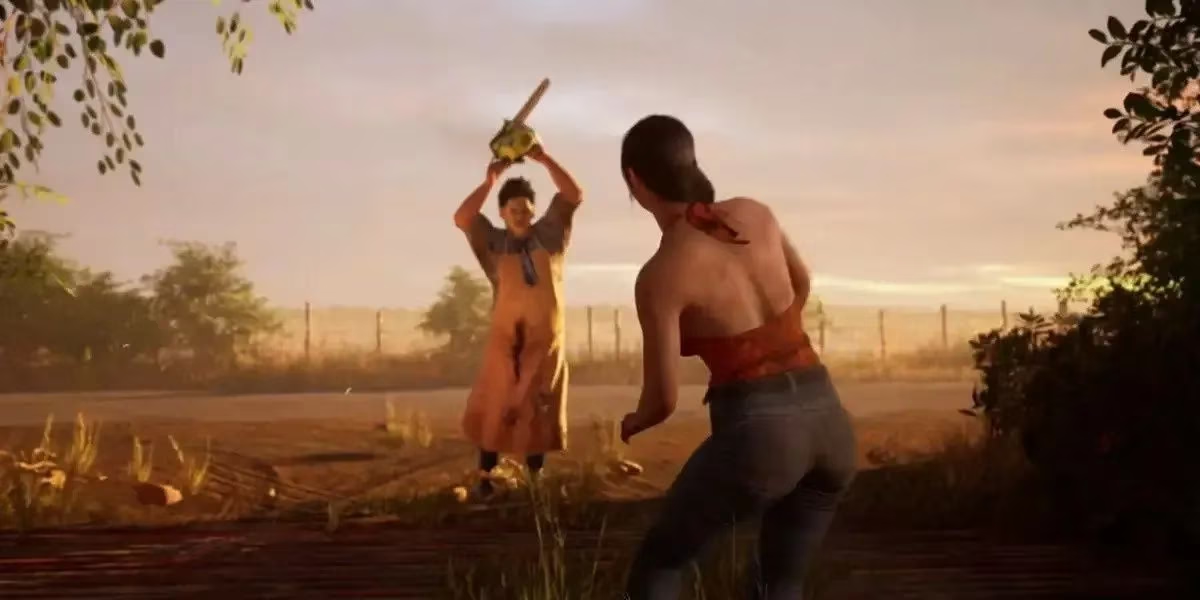
From the moment a match begins, the philosophical differences are stark. Dead By Daylight is a methodical, almost ritualistic 1v4. Its pacing can be like a slow-burning fuse, with long stretches of tension building as the Killer patrols and Survivors work on generators. In contrast, The Texas Chain Saw Massacre kicks off like a startled hornet's nest. With three Killers (the Family) hunting four Victims, the pressure is immediate and unrelenting. The very structure of a 3v4 creates a dynamic where the balance isn't just about numbers; it's about constant, overwhelming pressure. The Victims may have more tools and escape routes at their disposal, but they are perpetually outnumbered, making every decision feel critical.
🔍 The Art of the Chase: Predetermined Paths vs. Dynamic Arenas
This is where The Texas Chain Saw Massacre truly diverges. In Dead By Daylight, a chase often follows a familiar script: loop around pallets and windows until one side makes a mistake. It's a duel with established rules. TCM, however, turns the chase into a dynamic, multi-layered pursuit. The environment is not just a backdrop; it's a weapon. Victims can unlock shortcuts, vault through gaps, and use the labyrinthine maps to their advantage. Conversely, the Family can be proactive—locking doors, setting traps like a spider weaving its web, and coordinating to cut off escape routes. A chase in TCM is less of a loop and more of a desperate, evolving puzzle where the walls themselves seem to conspire against you.
👥 The Killer Experience: Lonely Hunter vs. Coordinated Pack
Playing Killer in Dead By Daylight can sometimes feel like being a lighthouse keeper on a foggy night—long periods of solitude punctuated by brief flashes of action. The search for Survivors can be isolating. The Texas Chain Saw Massacre obliterates this loneliness. Playing as a member of the Family is a team sport. Constant communication, setting up the map before Victims escape their restraints, and feeding Grandpa to enhance your senses create a cohesive, engaging loop. You're never truly idle; there's always a trap to set, a door to padlock, or a blood trail to follow. This makes the Killer role feel less like a solitary predator and more like part of a hunting party, which is a fantastic and engaging shift.
| Aspect | Dead By Daylight | The Texas Chain Saw Massacre |
|---|---|---|
| Pacing | Slow, strategic build-up | Fast, immediate pressure |
| Killer Role | Often solitary, search-heavy | Team-based, constantly active |
| Escape Methods | Primarily generators (1 main method) | Multiple routes (Fuse, Valve, Car, etc.) |
| Final Survivor | Extreme disadvantage, often doomed | Can be easier due to split focus of Family |
| Progression | Perks via Bloodweb (randomized) | Perks level up through use (direct) |
🚪 Exits and Endgames: Singular Focus vs. Varied Desperation
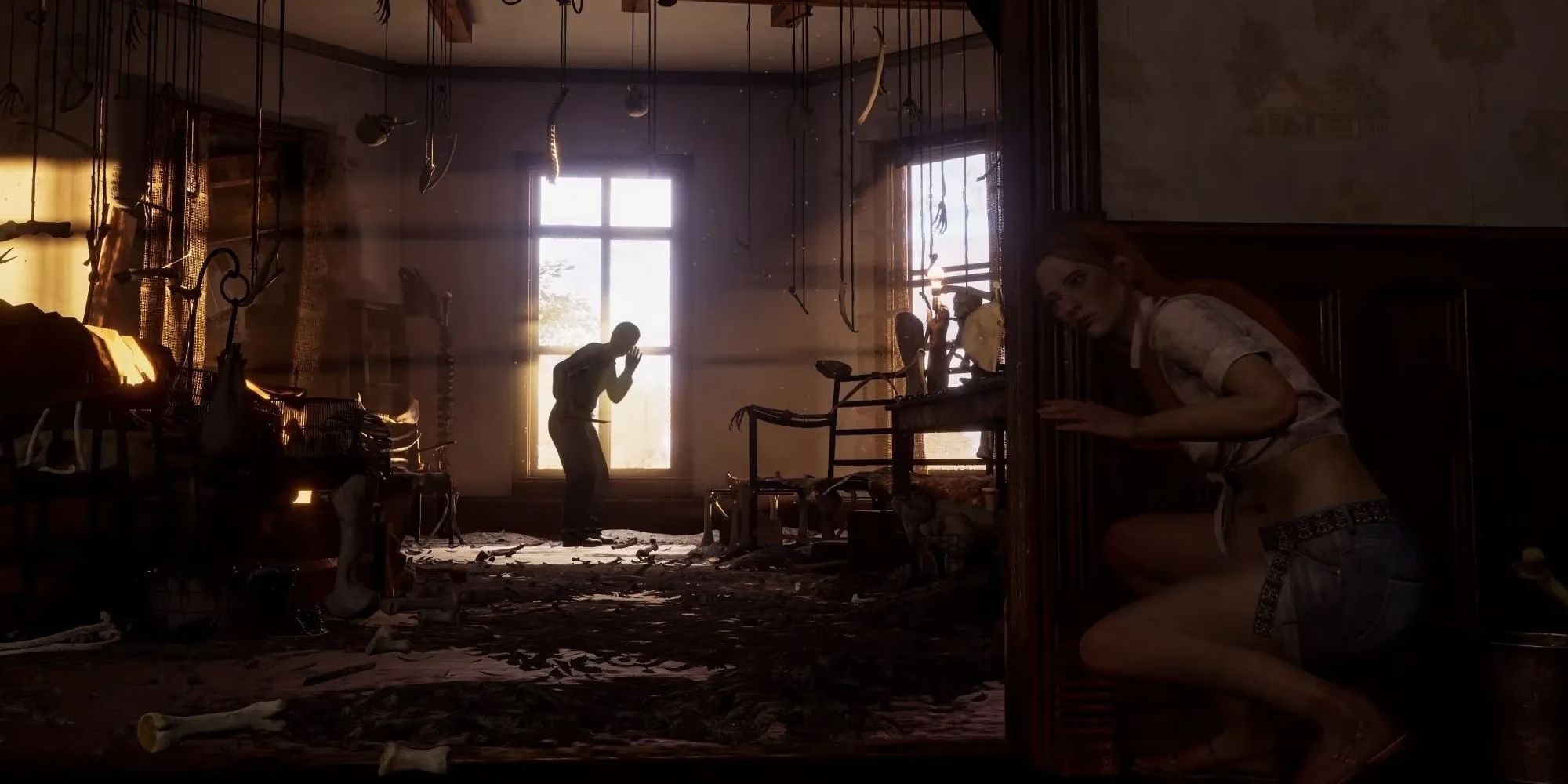
The endgame in both titles highlights their design philosophies. Dead By Daylight funnels all Survivors toward one primary objective: power the generators. While a last-resort Hatch exists, it's a consolation prize for a lone survivor. This creates a predictable, if tense, climax. The Texas Chain Saw Massacre, however, offers multiple escape avenues—the pressure valve, the car battery, the fuse box for the basement exit. This variety is like having multiple emergency exits in a burning building; it changes your strategy every match and prevents gameplay from becoming a repetitive chore. Furthermore, the final moments of a TCM match are uniquely harrowing. As Victims bleed out and Grandpa's senses heighten, the match timer isn't just a clock; it's a visceral representation of your life draining away, forcing a frantic, climactic scramble.
📈 Progression and Accessibility: Grinding Gacha vs. Organic Growth
Character progression is another key differentiator. Dead By Daylight uses its iconic Bloodweb, a system that can feel as capricious as a slot machine, doling out perk tiers and items with an element of randomness. The Texas Chain Saw Massacre opts for a more straightforward, player-agency-driven model: you level up the perks you actually use. This creates a more organic connection to your character's development and lowers the barrier to entry significantly. There's a clear, direct line between your actions and your power growth, which is immensely satisfying.
🎨 Atmosphere and Meta: Calculated Creepy vs. Instinctual Terror
Graphically, The Texas Chain Saw Massacre is a masterclass in oppressive atmosphere. Its grimy, sun-bleached visuals and dense foliage perfectly recreate the gritty feel of the 1974 film, making the Sawyer homestead a character in itself. More importantly, TCM manages its 'meta'—the collection of most effective strategies—differently. While Dead By Daylight can sometimes feel ruled by specific, overpowered perk combinations (its meta is a finely-tuned engine that dictates the flow of most high-level play), TCM places a heavier emphasis on raw skill, map knowledge, and teamwork. This makes it far more accessible to newcomers; you aren't immediately crushed for not having the 'right' build, allowing the sheer terror of the hunt to take center stage.
⏳ The Verdict: Two Sides of the Same Terrifying Coin
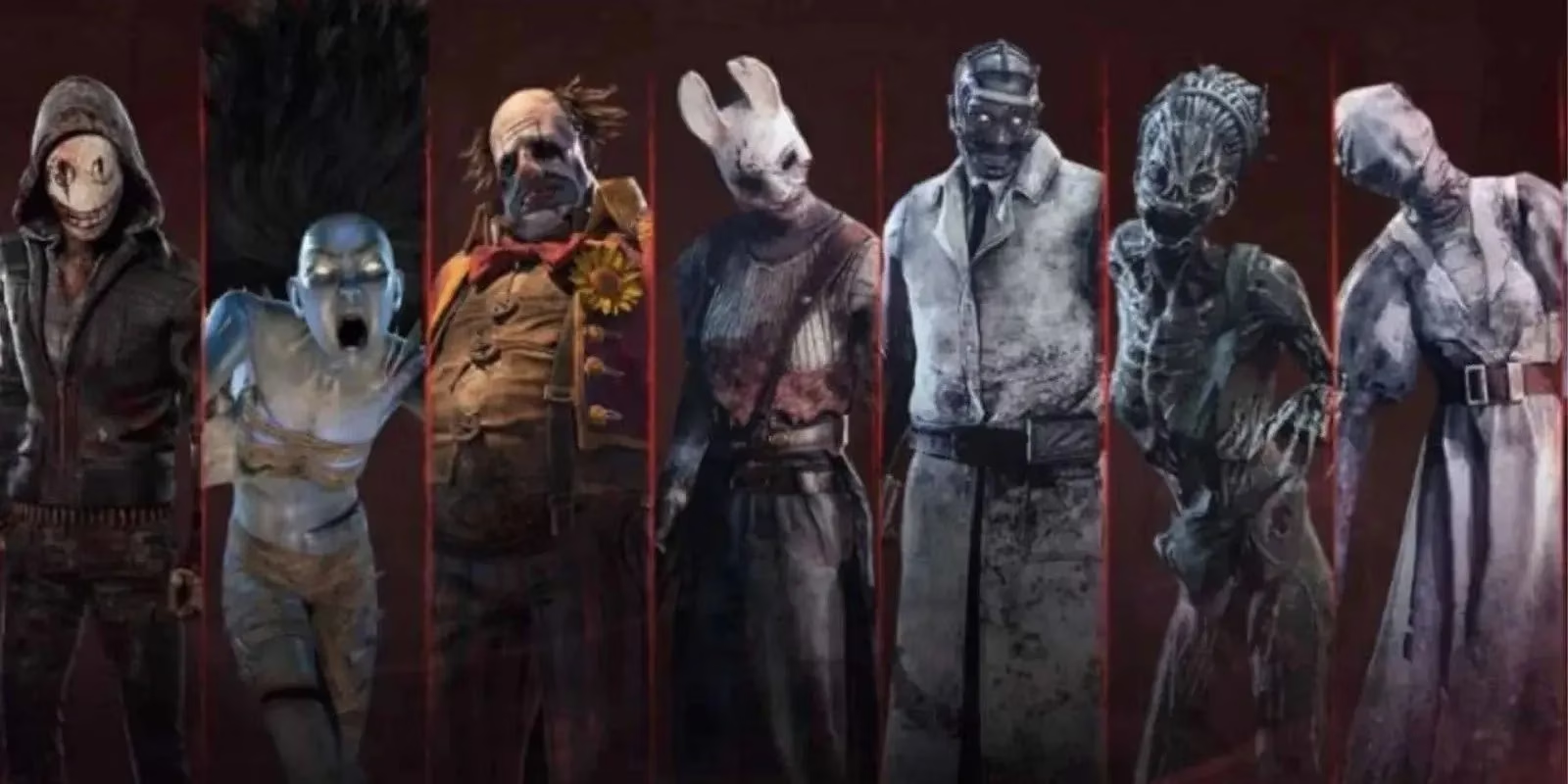
So, which game reigns supreme? The answer, as it often is, depends on what you seek. Dead By Daylight is the refined, strategic grandfather of the genre—a game about mastering systems, perks, and mind games. It's a horror-themed sport with deep, if sometimes rigid, mechanics. The Texas Chain Saw Massacre is its wild, chaotic cousin. It's faster, messier, and more immediately tense. It prioritizes moment-to-moment action, environmental interaction, and team dynamics over strict meta adherence. For me, in 2026, The Texas Chain Saw Massacre offers a jolt of adrenaline that feels more unpredictable and, therefore, more authentically horrifying. Its multi-faceted chases, team-based Family gameplay, and variety in objectives make each match feel like a unique story of desperation, a far cry from the sometimes formulaic generator repairs of its predecessor. In the end, the genre is richer for having both, but if you're looking for a horror experience that feels less like a calculated game and more like a fight for your life in a waking nightmare, the Sawyer family is waiting.
Comments