Picture this: a vibrant, ever-changing digital island where Darth Vader might be building a fortress next to Goku, while Ariana Grande parachutes in for a concert. No, it's not the latest fever dream of a pop culture fanatic—it's just another Tuesday in Fortnite. Since its explosive rise to fame, Fortnite has transformed from a simple battle royale into a sprawling, kaleidoscopic museum of modern entertainment, where the boundaries between franchises blur faster than a player getting sniped from 200 meters away. But while Fortnite has perfected the art of the rapid-fire crossover, there's another game in the horror neighborhood that takes a decidedly different, more integrated approach: Dead by Daylight. Let's dive into how these two gaming titans handle their pop culture partnerships, and why one feels like a blockbuster event while the other sometimes resembles a well-stocked souvenir shop.
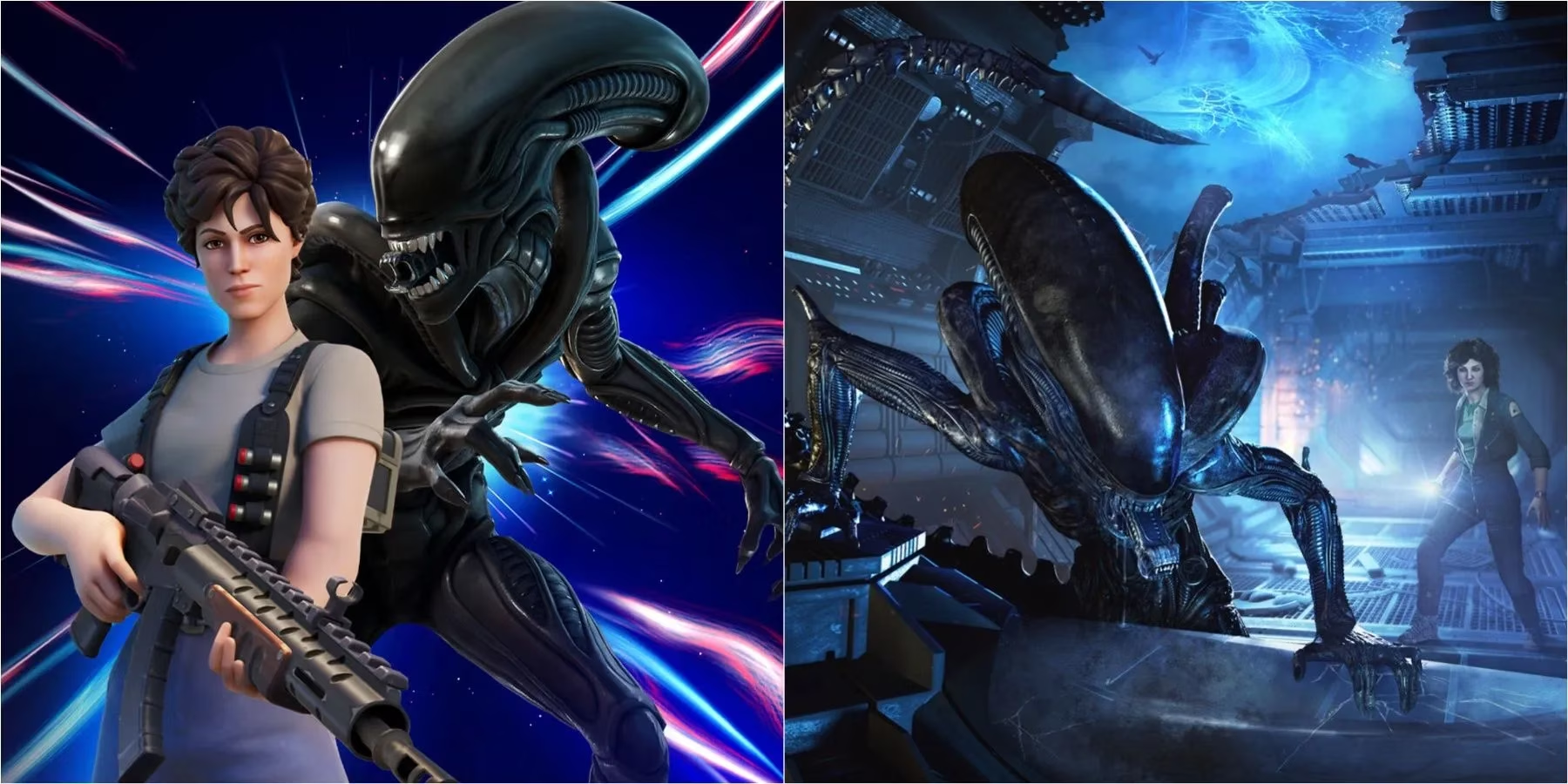
Fortnite: The Pop Culture Buffet 🍽️
Fortnite's crossover journey began with a bang—or rather, a snap—when Marvel's Avengers: Infinity War descended upon the island. That event didn't just add a few skins; it introduced Thanos as a playable character with his own special abilities, turning the battle royale into a cosmic showdown. From that moment, the floodgates burst open, and Fortnite became the go-to destination for entertainment crossovers. The game's approach can be summarized in three key characteristics:
Speed & Frequency: Fortnite operates on crossover overdrive. In any given season, players might encounter:
-
2-3 major franchise collaborations
-
5-10 individual character skins
-
Limited-time modes themed around movies, shows, or games
-
In-game concerts and events featuring real-world artists
Presentation & Polish: When Fortnite commits to a crossover, they don't hold back. Recent collaborations have featured:
| Crossover Type | Typical Features | Example Franchises |
|---|---|---|
| Premium Collaborations | Separate mini Battle Passes, exclusive rewards, themed quests, Mythic weapons | Marvel, Star Wars, Dragon Ball |
| Standard Collaborations | Character skins, back bling, harvesting tools, emotes | Walking Dead, Futurama, My Hero Academia |
| Event Collaborations | In-game concerts, interactive experiences, temporary map changes | Travis Scott, Ariana Grande, J Balvin |
Accessibility: Perhaps Fortnite's greatest crossover strength is that most of these events remain completely free to experience. You don't need to spend a single V-Buck to see Darth Vader patrolling the island or to participate in a Dragon Ball-themed tournament. This democratic approach means everyone gets to enjoy the spectacle, even if they're just there for the free popcorn.
The Fortnite Fatigue Factor 😴
However, there's a downside to this constant crossover churn. With new collaborations arriving almost weekly, some players have started experiencing what might be called "crossover fatigue." The sheer volume means that:
-
Individual collaborations can feel less special
-
Many crossovers are reduced to cosmetic bundles without gameplay impact
-
The constant influx makes it hard for any single collaboration to stand out
It's like visiting a museum where they change the entire collection every week—after a while, even the Mona Lisa might start to blend in with the rest. This is where Dead by Daylight takes a dramatically different approach.
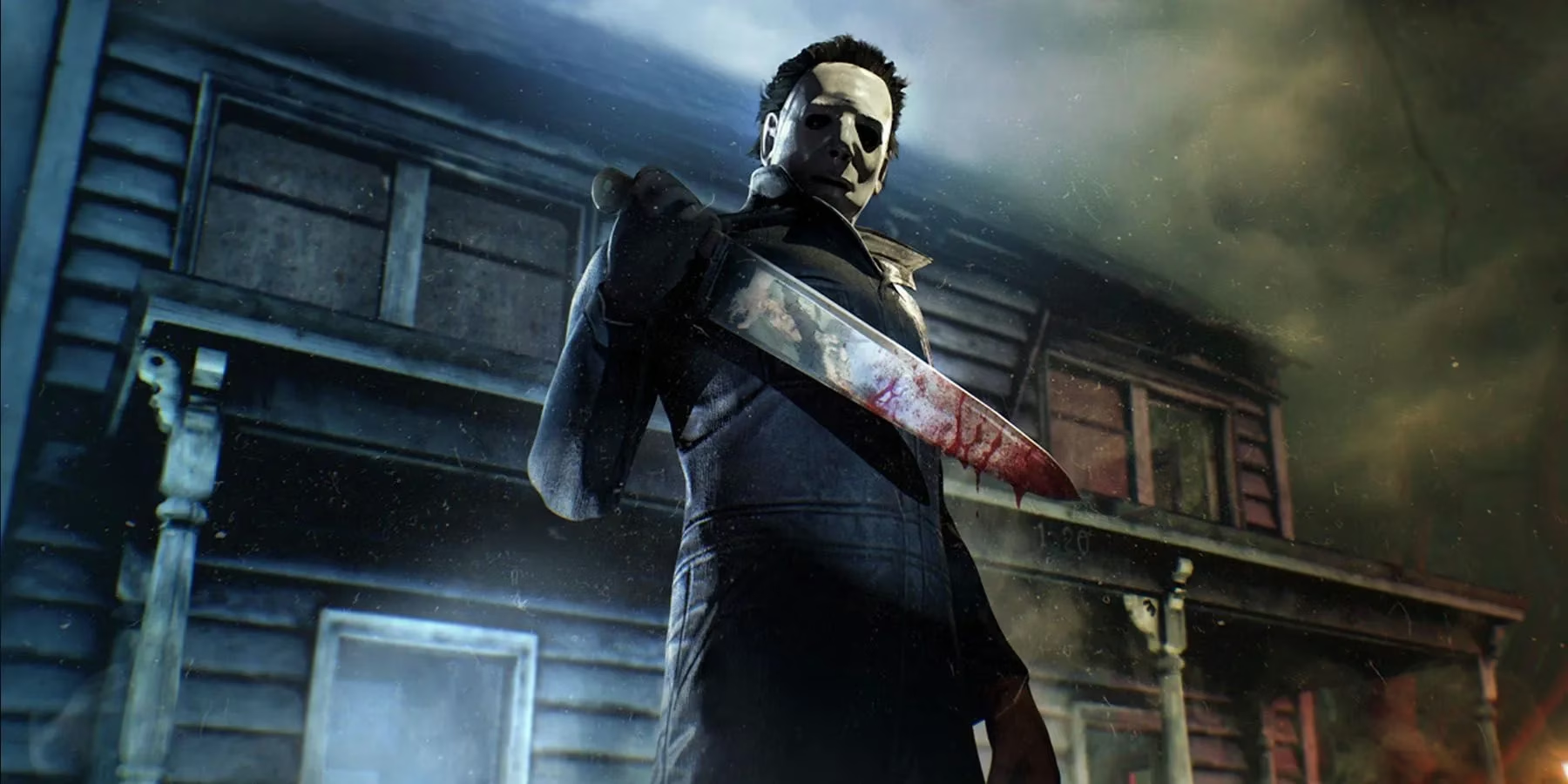
Dead by Daylight: The Horror Symphony 🎻
While Fortnite operates like a pop culture supermarket, Dead by Daylight functions more like a carefully curated horror gallery. Since introducing Michael Myers from Halloween just months after launch in 2016, Dead by Daylight has built its crossover strategy on three pillars that couldn't be more different from Fortnite's approach:
Deep Integration: Every Dead by Daylight crossover fundamentally changes the game. When a new horror franchise arrives, it doesn't just bring cosmetics—it brings:
-
A completely new Killer with unique abilities and mechanics
-
At least one new Survivor with their own backstory and perks
-
Often a new map designed around the franchise's aesthetic
-
Lore and story elements that expand both the crossover and Dead by Daylight's universe
Gameplay Transformation: The brilliance of Dead by Daylight's crossovers lies in how they affect actual gameplay. The Xenomorph from Alien doesn't just look cool—it introduces the Runner Mode and facehuggers that completely change how both Killers and Survivors approach matches. Similarly, Resident Evil's collaborations brought not just characters like Leon Kennedy and Jill Valentine, but also gameplay mechanics like the virus infection system that added new strategic layers to every match.
Infrequency Equals Importance: Dead by Daylight releases crossovers at a much slower, more deliberate pace. This scarcity creates genuine excitement and anticipation. When a new collaboration is announced, the community treats it like a major event—because it is! Each crossover represents months of development time and careful integration with the game's mechanics.
The Passion Project vs. The Pop Culture Machine 🔄
The fundamental difference between these approaches comes down to philosophy. Dead by Daylight's developers treat each license as a passion project, pouring love and attention into every detail:
-
Killer abilities directly reference iconic moments from the source material
-
Maps are packed with Easter eggs and environmental storytelling
-
Character perks reflect their personalities and stories from their original franchises
Fortnite, by contrast, often treats crossovers as delightful additions rather than transformative experiences. While there are exceptions (like the Mythic weapons from Marvel or the Kamehameha from Dragon Ball), many Fortnite collaborations remain surface-level—beautifully designed skins without deeper gameplay implications.
Value Beyond the Moment 💎
Here's where Dead by Daylight's approach creates lasting value. Because each crossover introduces new gameplay mechanics and perks, their impact extends far beyond the initial release:
-
New Killer perks can be used by all Killers
-
Survivor perks become part of the meta for months or years
-
Maps remain in rotation permanently
-
Gameplay innovations from crossovers often inspire future original content
This creates a compounding effect where each crossover makes the entire game richer, not just during the event period but indefinitely. Fortnite's collaborations, while spectacular in the moment, often vanish without leaving a gameplay legacy once their limited-time mode ends.
The Future of Crossovers in 2026 and Beyond 🚀
As we look to the future, both games continue to evolve their crossover strategies. Fortnite has begun experimenting with deeper integration, like the recent Final Fantasy collaboration that introduced magic spells as usable items. Meanwhile, Dead by Daylight has expanded beyond horror, venturing into franchises like Attack on Titan while maintaining their signature depth of integration.
The gaming landscape in 2026 has made one thing clear: players want both spectacle and substance. They want the thrill of seeing their favorite characters in new contexts, but they also want those appearances to matter beyond cosmetic appeal. The most successful crossovers going forward will likely blend elements from both approaches:
-
Fortnite's accessibility and visual polish
-
Dead by Daylight's gameplay integration and lasting impact
-
Both games' respect for source material
Conclusion: Different Strokes for Different Folks 🎨
At the end of the day, both Fortnite and Dead by Daylight have perfected crossover strategies that serve their unique audiences and gameplay styles. Fortnite delivers the instant gratification of seeing pop culture icons collide in a colorful, chaotic playground. Dead by Daylight offers the deeper satisfaction of experiencing beloved horror franchises through gameplay mechanics that honor their essence.
Perhaps the real winner here is us, the players. We get to enjoy both approaches—the spectacular, ever-changing carnival of Fortnite and the carefully crafted, deeply integrated horror experiences of Dead by Daylight. In a gaming world increasingly defined by collaborations, it's refreshing to see that there's more than one way to bring our favorite characters to virtual life. Whether you prefer your crossovers fast and flashy or slow and substantial, there's a game out there doing it just right for you. Now, if you'll excuse me, I need to go practice my Kamehameha before the next storm circle closes in. 👾
Comments