As a dedicated player of Dead by Daylight, the recent conclusion of the Legion's comic series published by Titan Comics in 2026 has left a profound mark on my understanding of the game's most unsettling lore. While the surface-level plot faithfully retells the gang's descent into the Fog after their first murder at Mount Ormond, a deeper examination reveals a far more sinister and manipulative narrative orchestrated by the Entity itself. The ending isn't just a transition from troubled teens to masked killers; it's a meticulous psychological unraveling, a symphony of corruption where each member's deepest fears and desires are the instruments played by a malevolent conductor.
The Recurring Nightmare: More Than Just Dreams
Looking back across all four issues, the most significant, unifying element is the dream sequences that preface each killer's story. These aren't mere nightmares or flashbacks; they are the Entity's direct line of communication, its surgical theater for implanting violent suggestions. In Frank's issue, he butchers passengers on a train. Julie's dream sees her and Frank hunting students in her school. Joey confronts a monstrous version of himself, and Susie is ultimately driven to kill her abusive father. Each sequence is punctuated by the same chilling visual: the spider-like legs of the Entity creeping into the frame, like a seamstress threading a needle through the fabric of their sanity, inching closer as the dreamer succumbs to their darkest impulses.
This thematic thread establishes a crucial foundation: the Entity's influence begins long before the physical Fog envelops them. It's an insidious psychological grooming process. Joey's resistance, shown through his literal struggle against the Entity's limbs bursting from his mascot uniform, highlights that some are more aware of the manipulation than others. Yet, the outcome is tragically inevitable. The shared act of murdering the convenience store clerk, Frank Morrison, is the final, bloody signature on a contract they never knowingly signed—a contract drafted in the language of their own dreams.
The Whisper in the Dark: Direct Communication Confirmed
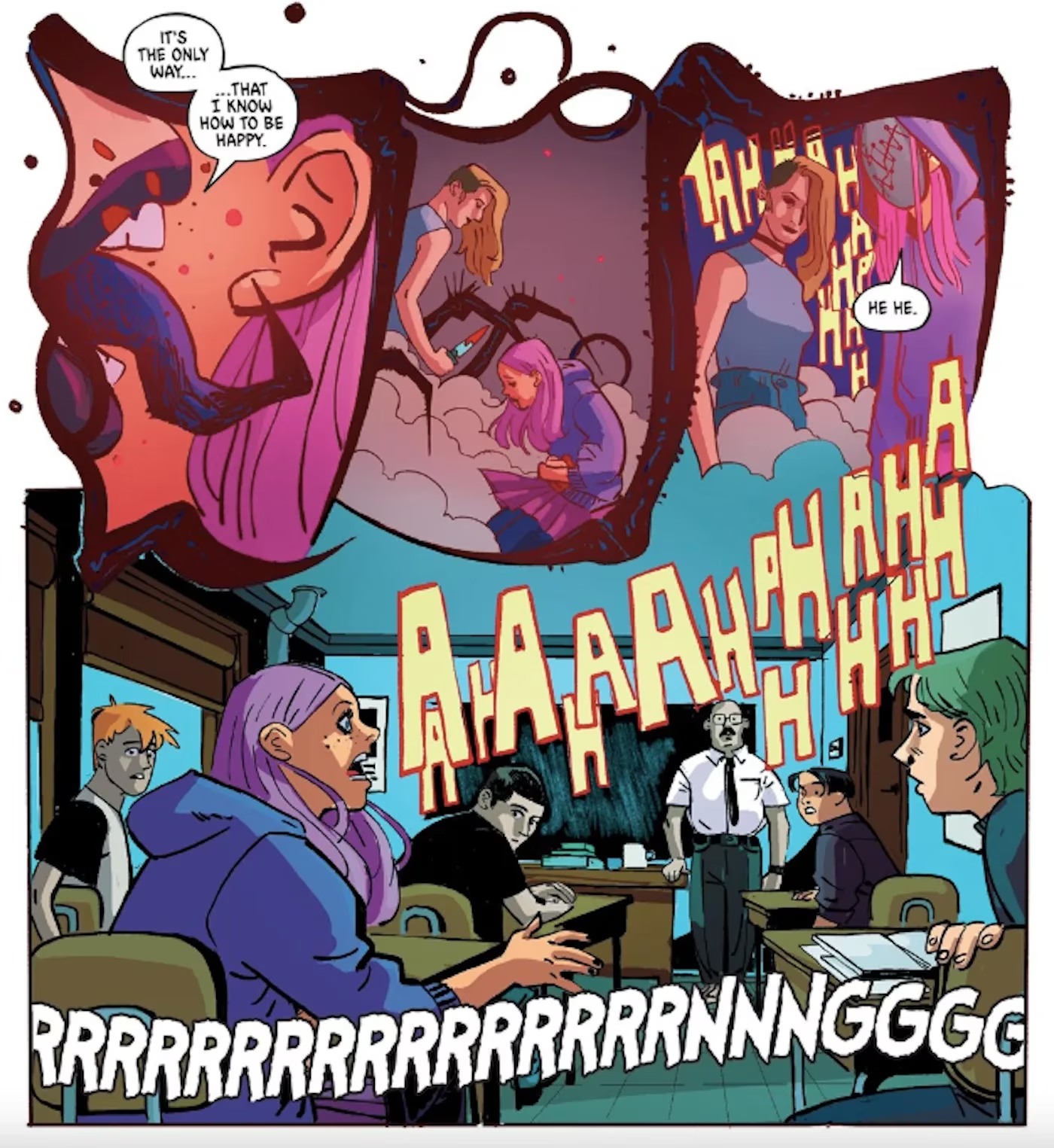
The fourth issue, focusing on Susie, removes any ambiguity about the nature of these dreams. In her nightmare, Julie stabs her, but before she wakes, dream-Julie whispers into her ear with a grotesque, Entity-shaped tongue, saying, "It's the only way... that I know how to be happy." This single, horrifying image is the master key to the entire series. It confirms that every dream was the Entity speaking directly through the visage of their friends, a ventriloquist using familiar dummies to deliver its script. The surreal dreamspace became its whispering gallery, coaxing each member down a path that felt like their own choice but was paved by an external, hungry will.
Later, when Susie enters the Fog and finds her friends already masked, Julie hands Susie her own mask and repeats the dream-whisper verbatim: "It's the only way... that I know how to be happy." This echo isn't coincidence; it's proof of programming. The Entity planted the phrase and then triggered it in reality, creating a feedback loop of manufactured desire as precise and cold as a algorithm locking into place. The violent act at the convenience store was merely the physical culmination; the real corruption happened in the subjective, vulnerable space of their sleep.
The Final Illusion: A Fate Worse Than Death
Perhaps the most devastating revelation of the finale is the true fate awaiting Susie—and by extension, every Legion member. The final panels show her reuniting with her masked friends in the Fog, who speak in unison and promise, "you'll never be alone." Susie embraces them, choosing to stay. This seems like a twisted, tragic reunion. However, the established lore of Dead by Daylight shatters this illusion. Killers in the Entity's realm are solitary creatures; they do not interact or coexist, unlike survivors who gather at the campfire. The Frank, Julie, and Joey that Susie sees are not her friends. They are phantoms, perfectly crafted marionettes animated by the Entity to exploit her deepest terror: loneliness.
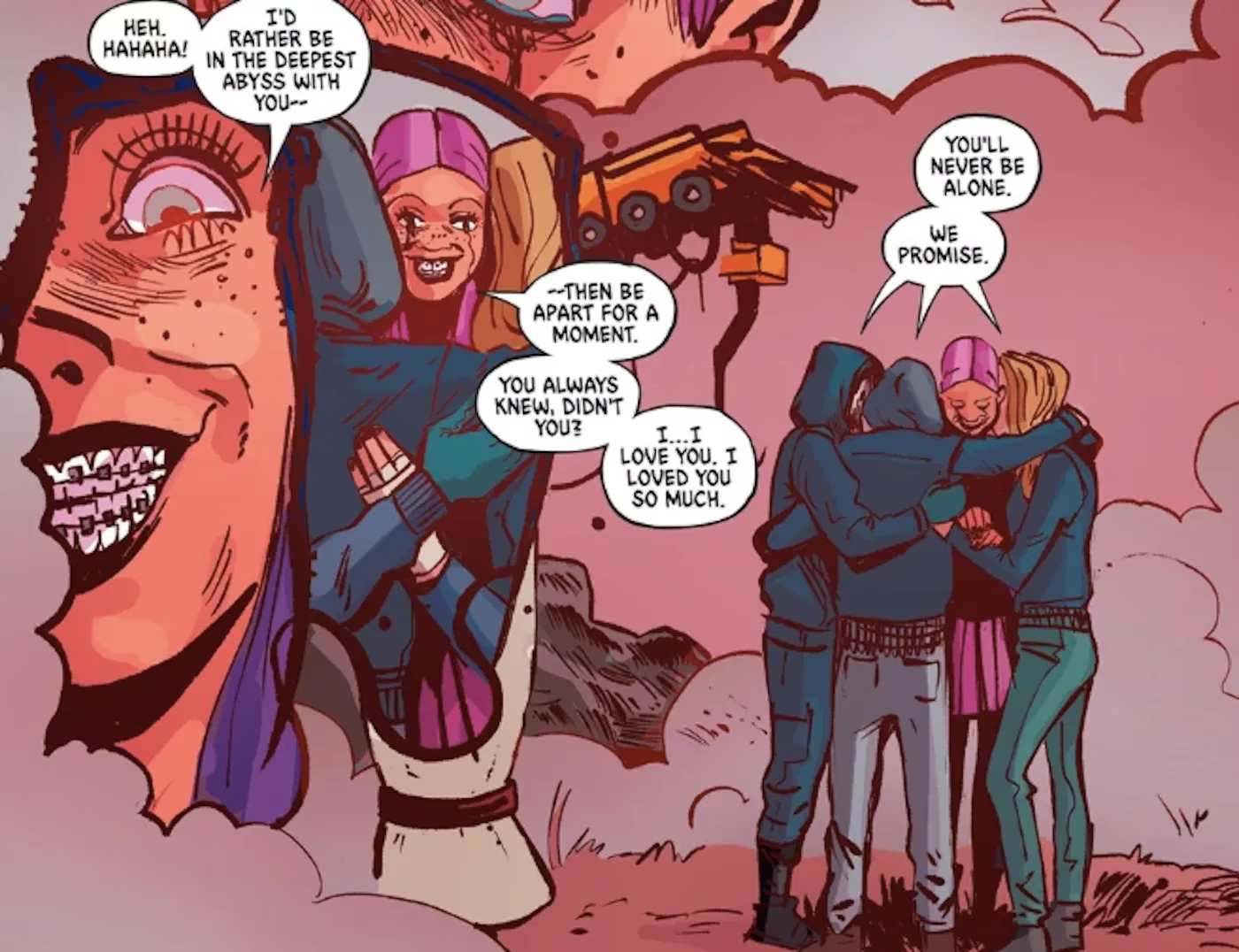
Susie will never see her real friends again. From the moment they vanished individually into the Fog, they were forever separated, becoming individual instruments of the Entity. The comforting circle of friends is a prison of perception, designed to keep her compliant and killing. This mirrors the fates of other killers lured by illusion:
| Killer | Lured By | The Illusion |
|---|---|---|
| The Deathslinger | Vengeance | A vision of Henry Bayshore |
| The Twins | Familial Bond | A figure grabbing Victor |
| Chucky | Rivalry | A manifestation of Andy Barclay |
| The Legion (Susie) | Fear of Abandonment | Manifestations of her friends |
The Entity is a master psychologist and a consummate liar. It doesn't just claim bodies; it claims narratives, rewriting personal histories into preludes for its endless feast on hope. The Legion's story, therefore, is not one of a gang staying together. It's a story of profound, eternal isolation disguised as unity. Each member is now alone in a crowd of one, forever performing for an audience of phantoms that look like the people they loved, trapped in a snow globe of their own shattered psyches, shaken by the Entity for its amusement.
In conclusion, the Dead by Daylight comic series elevates the Legion's origin from a simple crime-of-passion tale to one of the franchise's most psychologically complex and disturbing narratives. It masterfully demonstrates the Entity's methodology: it is a farmer sowing seeds of violence in the fertile soil of human trauma, a puppeteer whose strings are woven from dream-stuff, and an architect building prisons from the very bricks of its victims' desires. The ending is a chilling, brilliant testament to the fact that in the Entity's realm, the most terrifying monster isn't the one with the knife—it's the empty promise whispered in the dark, and the eternal solitude that follows when you believe it.
Comments