The chilling allure of the serial killer has long been a cornerstone of horror cinema, but over the past two decades, this dark fascination has found an even more immersive and interactive home within the realm of video games. 🎮 In 2026, the landscape of serial-killer-themed games has evolved far beyond simple survival horror, branching into narrative-driven investigations, psychological thrillers, and even darkly comedic simulations. Players are no longer relegated to the role of helpless victim; they can now step into the shoes of determined detectives, desperate survivors, or, in some cases, orchestrate the mayhem themselves from a unique vantage point. This genre thrives on its ability to craft deeply unsettling atmospheres, weave complex stories, and challenge players with moral dilemmas and intricate puzzles, all while exploring the darkest corners of human psychology.
The Multiplayer Arena: Where Killers Become Playable Icons
One of the most significant shifts in recent years has been the rise of asymmetric multiplayer experiences that put players directly in control of infamous killers. The undisputed king of this subgenre remains Dead by Daylight, a title that has grown into a cultural phenomenon by 2026. This multiplayer horror game pits four Survivors against a single, player-controlled Killer in a deadly game of cat and mouse. While its competitive balance is a constant topic of debate, its strength lies in its expansive roster of licensed horror icons. The game has successfully transformed cinematic serial killers like Michael Myers (Halloween), Ghostface (Scream), and the diminutive terror Chucky into playable characters, allowing fans to live out their darkest fantasies. The game's longevity is a testament to the powerful appeal of embodying these legendary antagonists.
Narrative Adventures and Interactive Drama
For players seeking a more story-rich, single-player experience, the interactive drama genre has delivered some of the most memorable serial killer narratives. Supermassive Games' The Dark Pictures Anthology: The Devil in Me stands as a prime example. Inspired by the real-life "Murder Castle" of H.H. Holmes, this game places a documentary film crew in a terrifyingly authentic replica hotel. Players make crucial choices through quick-time events and dialogue options that directly determine which characters survive the night. The tension is palpable as a vicious killer stalks the group, forcing players into genuinely difficult moral decisions.
Similarly, the point-and-click adventure Still Life offers a classic detective experience, following FBI agent Victoria McPherson in 2004 and her grandfather in the 1920s as they investigate connected murders. With a killer visually inspired by Jack the Ripper, the game is packed with environmental puzzles and requires meticulous exploration to uncover clues and push the haunting story forward.
Historical and Fictional Investigations
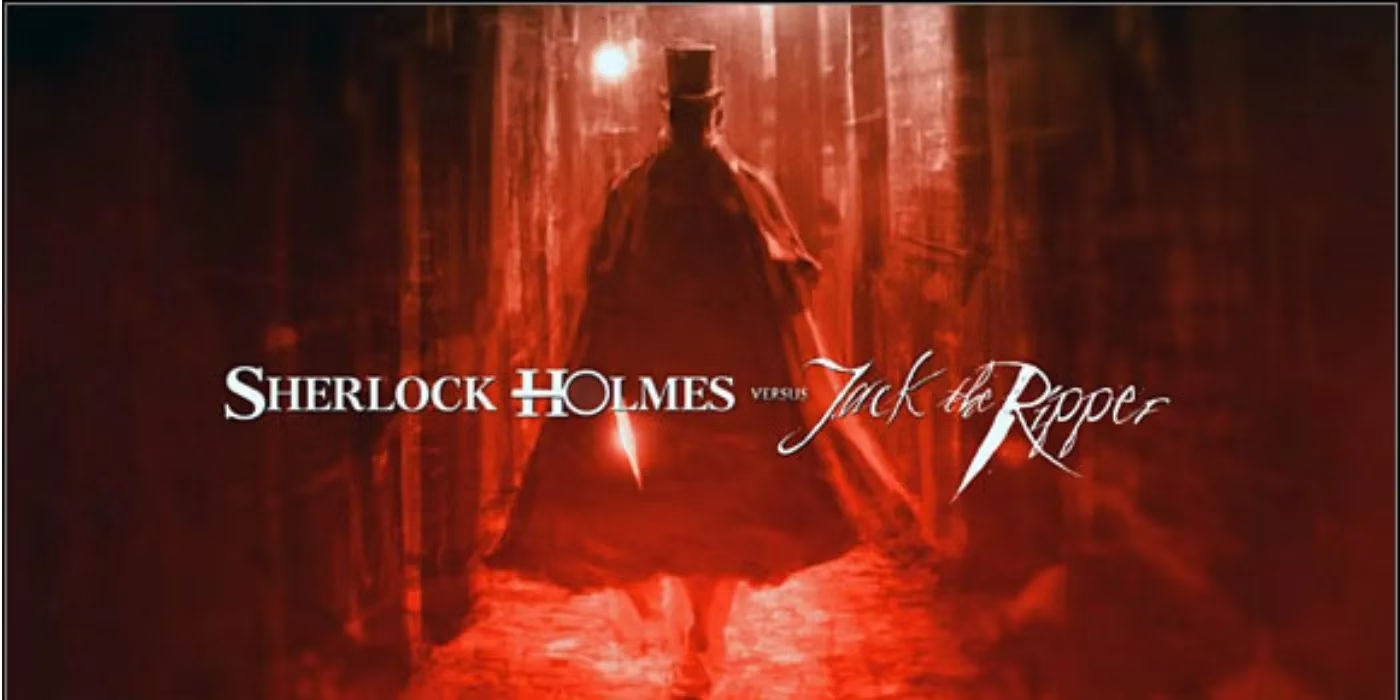
The line between history and fiction is often blurred in these games, offering fresh perspectives on infamous cases. Sherlock Holmes vs. Jack the Ripper allows players to rectify a historical "what-if" by putting literature's greatest detective on the trail of London's most notorious killer. Navigating the foggy, dangerous streets of Whitechapel in 1888, players search for clues, interview witnesses, and use brilliant deduction to solve the mystery—a must-play for both Holmes enthusiasts and amateur Ripperologists.
Venturing into ancient China, Detective Di: The Silk Rose Murders provides a unique historical and cultural setting. As the famous magistrate Di Renjie during the reign of Empress Wu Zetian, players investigate a series of brutal murders in a beautifully rendered 2D pixel world. The game cleverly integrates political intrigue and historical detail into its detective gameplay, requiring players to examine crime scenes, interrogate suspects, and solve logic-based puzzles.
Psychological Horror and Unconventional Perspectives
The genre also excels at psychological terror, where the threat is as much internal as it is external. Silent Hill 4: The Room, while a departure from the series' main setting, delivers a deeply personal horror story. Protagonist Henry Townshend is trapped in his apartment, witnessing grisly murders through supernatural portals. The killer, Walter Sullivan, is on a ritualistic murder spree, and Henry is his final target. The game masterfully subverts the concept of a "safe room," as Henry's own apartment becomes haunted, creating a pervasive sense of dread.
Offering a completely different tone is Killer Frequency, a first-person comedy-horror game set in a 1987 radio station. Players assume the role of DJ Forrest Nash, who suddenly becomes the town's emergency dispatcher when a legendary serial killer, the "Whistling Man," returns. The gameplay revolves around taking frantic calls from potential victims and solving puzzles to guide them to safety over the airwaves. The player's choices directly determine who lives and who dies, blending tension with a quirky, nostalgic atmosphere.
Sci-Fi Twists and Noir Fairy Tales
Innovative genres have also embraced the serial killer framework. The neo-noir detective game AI: The Somnium Files introduces a sci-fi twist. Detective Kaname Date investigates a series of murders where victims lose their right eye. The gameplay splits between traditional crime scene investigation and a unique "psync" mechanic, where Date enters suspects' dreamscapes (Somniums) to uncover hidden memories through surreal puzzle-solving. The branching narrative paths encourage multiple playthroughs to unravel the full mystery.
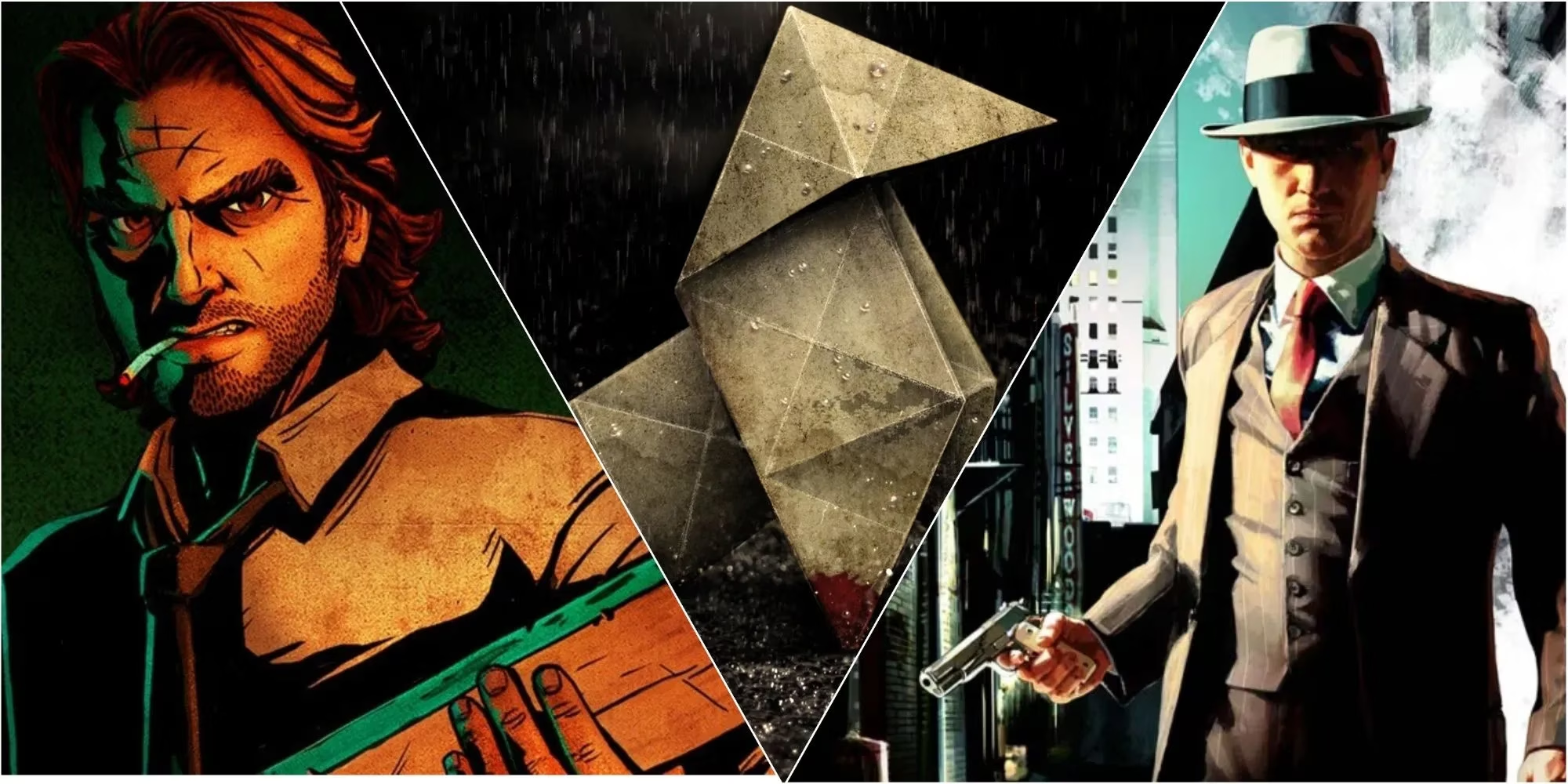
Perhaps one of the most creatively executed concepts is The Wolf Among Us, a narrative adventure from Telltale Games. This gritty noir story is set in a hidden community of fairy tale characters (Fables) living in New York City. Players, as Sheriff Bigby Wolf (the Big Bad Wolf), investigate a series of gruesome murders. The game brilliantly subverts childhood icons, presenting them as flawed, desperate individuals in a hardboiled detective story. Player choices in dialogue and action have significant consequences, shaping relationships and story outcomes, and building a rich world that has garnered a massive cult following.
Gritty Action and Forensic Investigation
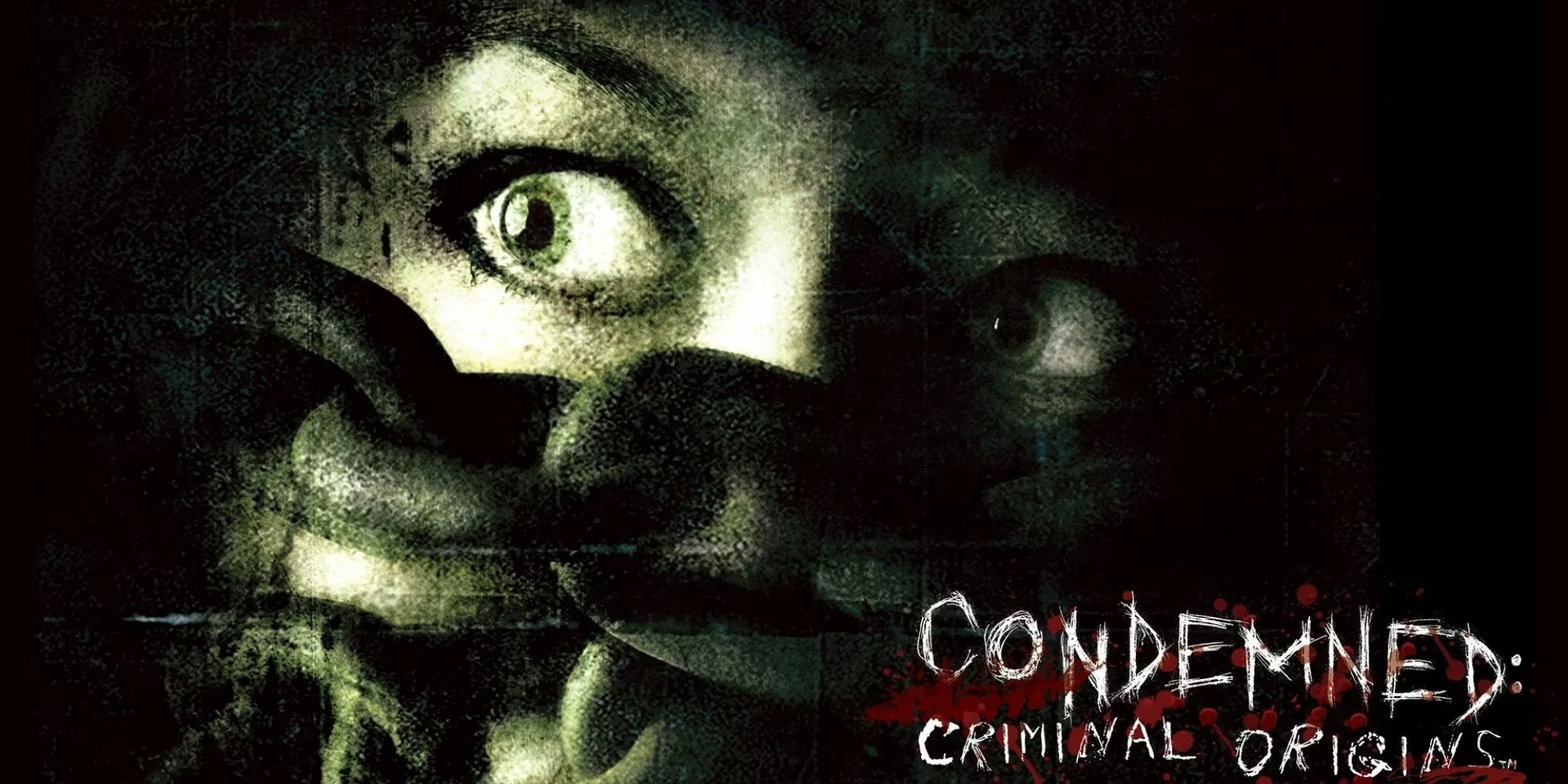
For those craving a more visceral, action-oriented experience, Condemned: Criminal Origins remains a landmark title. This first-person psychological thriller blends forensic investigation with brutal, close-quarters melee combat. Players are FBI Agent Ethan Thomas, an investigator specializing in serial killers who becomes framed for the very murders he is trying to solve. The game's strength lies in its oppressive atmosphere and the tactile, desperate feel of its combat, where players wield pipes, planks, and other environmental objects against deranged enemies. It perfectly captures the gritty, desperate feel of hunting a killer while being hunted oneself.
A Comparative Look at Notable Titles
| Game Title | Primary Role | Key Feature | Setting/Inspiration |
|---|---|---|---|
| Dead by Daylight | Killer/Survivor | Asymmetric Multiplayer | Various Licensed Horror Icons |
| The Devil in Me | Documentary Crew Member | Branching Narrative Choices | H.H. Holmes' "Murder Castle" |
| Sherlock Holmes vs. Jack the Ripper | Detective | Historical Investigation | Victorian London (Jack the Ripper) |
| Killer Frequency | Radio DJ | Puzzle-Solving via Caller Guidance | 198s Comedy-Horror |
| The Wolf Among Us | Sheriff (Bigby Wolf) | Choice-Driven Noir Narrative | Fairy Tale Characters in Noir Setting |
| Condemned: Criminal Origins | FBI Agent (Framed) | Forensic Analysis & Melee Combat | Gritty Urban Psychological Thriller |
As of 2026, the serial killer video game genre continues to be a vital and diverse part of the gaming ecosystem. It successfully caters to a wide range of player desires:
-
For the Competitive Player: High-stakes multiplayer in Dead by Daylight.
-
For the Storyteller: Narrative depth in The Devil in Me and The Wolf Among Us.
-
For the Puzzle-Solver: Logical challenges in Detective Di and AI: The Somnium Files.
-
For the Historian: Investigative journeys in Sherlock Holmes vs. Jack the Ripper.
-
For the Thrill-Seeker: Atmospheric horror in Silent Hill 4 and Condemned.
The genre's power lies in its ability to make players think like a detective, feel the panic of a survivor, and, controversially, understand the methodology of a killer—all within the safe confines of a digital world. By exploring these dark narratives, games provide a unique lens on fear, justice, and the complexities of evil, ensuring that the digital hunt for the serial killer will continue to captivate and terrify audiences for years to come. 🔪🕵️♂️📻
Comments