As a dedicated player of Dead by Daylight, I’ve always been captivated by the horrifying yet fascinating entities we control in the Fog. The game is a relentless battle of wits and survival, but for me, the true depth lies in the tragic tales that transformed ordinary people into the monstrous Killers we know today. Beyond the iconic licensed characters from legendary horror franchises, it’s the original creations from Behaviour Interactive that often possess the most compelling and emotionally resonant backstories. Their origins are woven from threads of human suffering, societal neglect, and profound tragedy, making them far more than just obstacles to overcome—they are cautionary tales of how darkness can consume a soul.
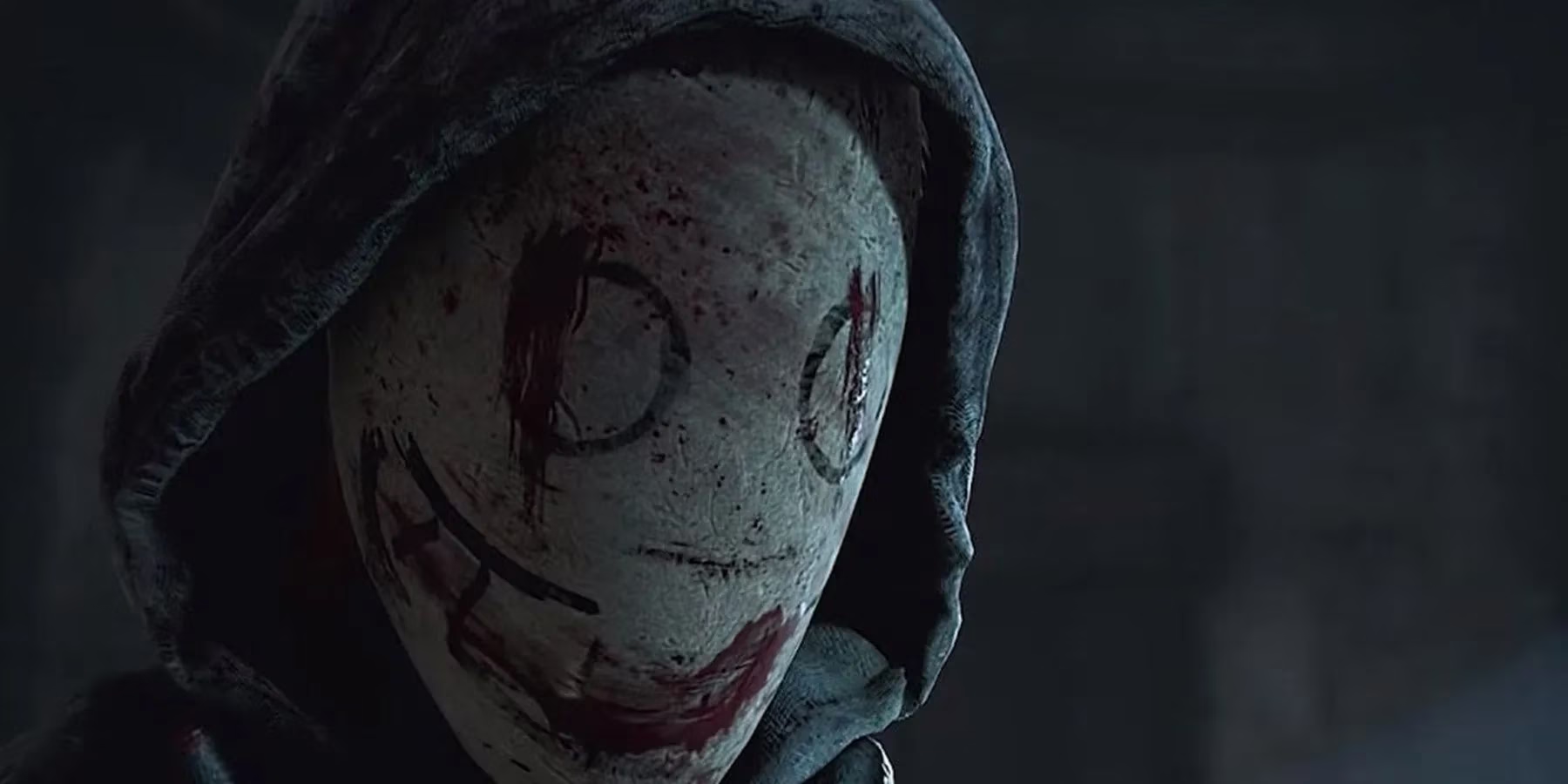
Take the Legion, for instance. They aren't a singular entity but a quartet of troubled adolescents—Frank, Julie, Joey, and Susie. Their narrative is a gritty exploration of juvenile delinquency spiraling into irreversible horror. Frank's life, marked by instability within the care system, finds a twisted sense of belonging with the others. What began as weekend mischief involving vandalism and petty theft culminated in a single, bloody night that bound them forever. Their collective act of murder against a cleaner who confronted them forged an unbreakable, sinister bond. This story of lost youth finding family in violence makes their relentless, frenzied chases across the map feel like an extension of their desperate, inseparable unity. They are forever linked, not just by friendship, but by the blood on their hands.
Then there's Herman Carter, known to all as The Doctor. His backstory is a chilling descent from brilliant intellect into monstrous sadism. Fast-tracked through academia, he was given carte blanche at the clandestine Lery's Memorial Institute. What followed was a grim saga of unethical experimentation, where his pursuit of knowledge crossed into outright torture, leaving patients in vegetative states or worse. His story intersects horrifically with other entities in the Fog; he was the one who delivered a gruesome end to Otto Stamper, the cult leader responsible for birthing the Dredge. While one might argue Stamper deserved his fate, the Doctor's methods reveal a man who long ago shed his humanity, reveling in the agony he inflicts in the name of science.
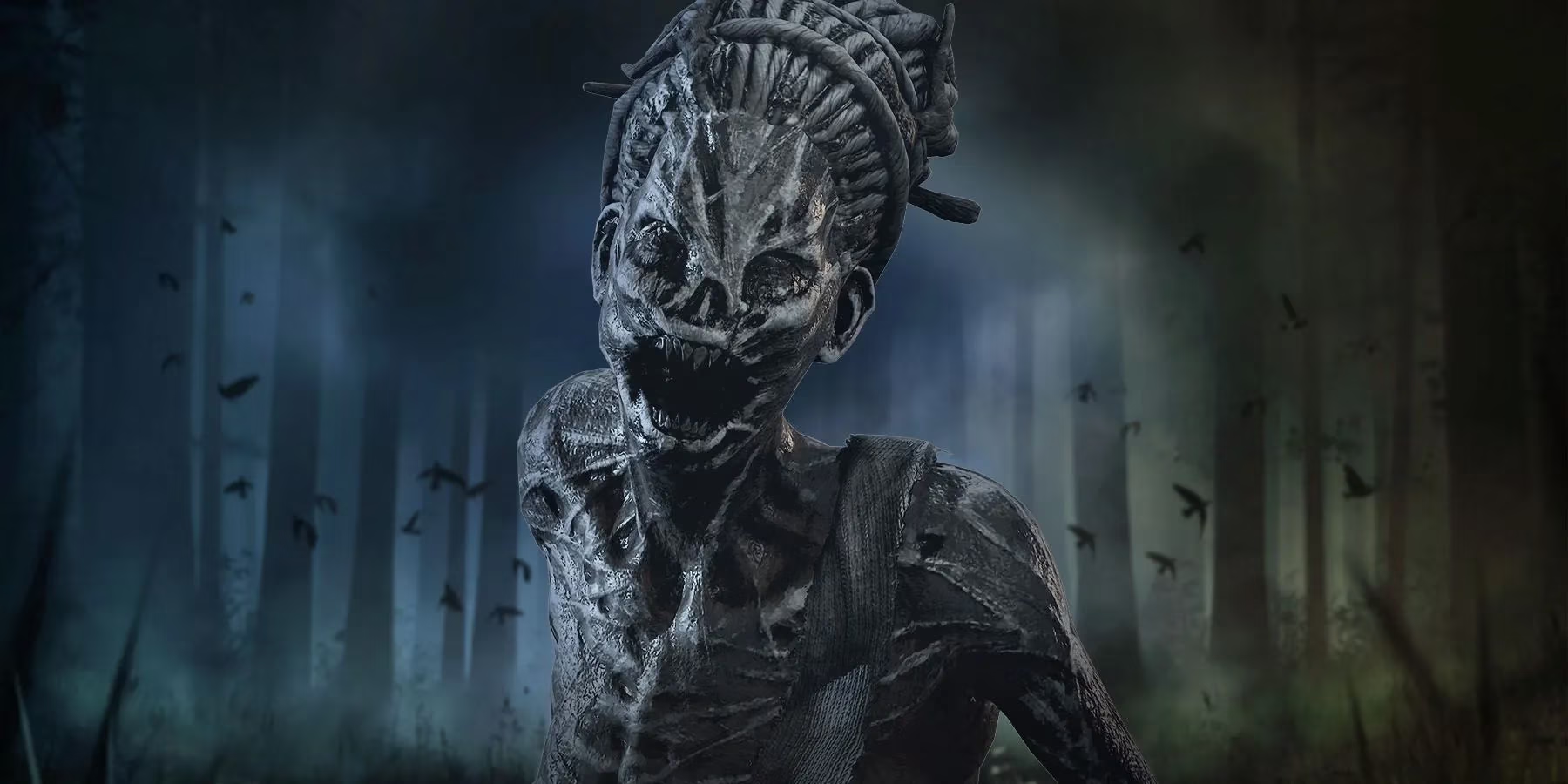
The tale of Lisa Sherwood, The Hag, is one of profound betrayal and bodily horror. Once a benevolent practitioner of protective voodoo in a secluded community, she was captured by cannibals. Her torment was slow and methodical—hung up and carved piece by piece over time. Miraculously surviving this ordeal physically shattered her, twisting both her body and spirit. The magic she once used for peace was corrupted, turned into tools for vengeance and malice. Her narrative is a dark fairy tale, a poignant reminder of how goodness can be utterly inverted by extreme suffering, making her a figure of tragedy as much as terror.
Kenneth Chase, The Clown, presents a classic yet effective origin of nurture versus nature gone horribly wrong. Born under the shadow of his mother's death in childbirth, he endured a childhood of neglect and blame from his alcoholic father. This toxic environment nurtured the dark seeds within him. His violent urges first found an outlet in harming small animals, a grim precursor to his eventual escalation to human victims. Even after finding a semblance of community in a circus, his clown persona became his true, monstrous identity. His collection of severed fingers as trophies speaks to a deep-seated depravity. Any sympathy for his wretched upbringing is swiftly extinguished by the visceral disgust his actions and his gruesome mori animation evoke.
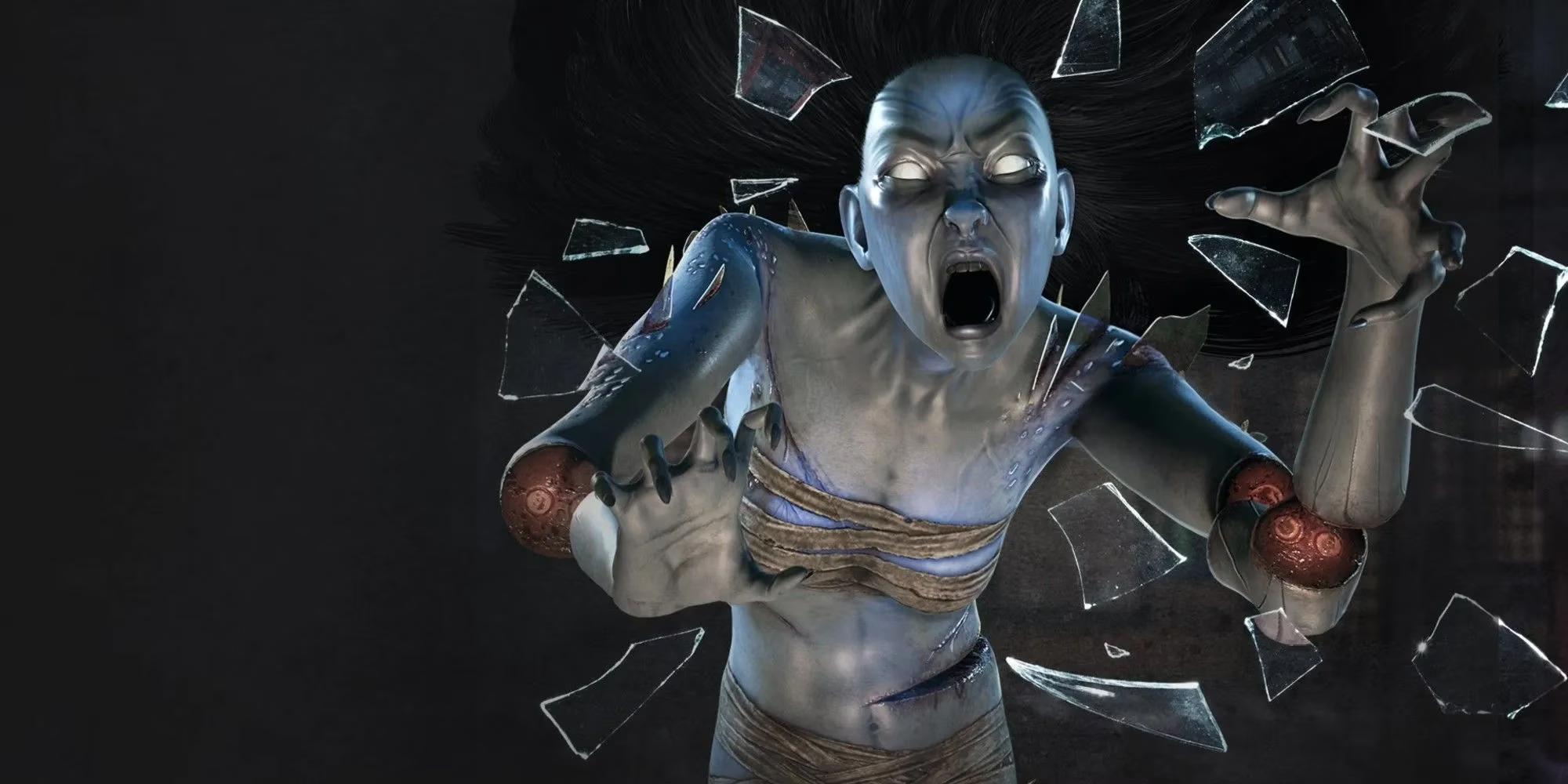
Rin Yamaoka, The Spirit, embodies a tragedy of familial love destroyed by insanity. Her story is achingly normal at its start—a university student working hard to support her family grieving a loss. This fragile stability collapses when her father loses his job and, subsequently, his mind. In a moment of unspeakable horror, he murders Rin's mother with a katana before turning on Rin herself, severing her limbs in a brutal attack that directly explains her ghostly, dismembered appearance in the Fog. Her power isn't just supernatural speed; it's the raw, unrestrained fury of betrayal and a life brutally cut short, a vengeful spirit forever denied peace.
The most recent additions continue this tradition of deep, unsettling lore. The Unknown, from the All Things Wicked chapter, leans into pure, enigmatic terror. Its backstory, presented through the doomed research of a woman named Olivia, offers no concrete answers. It posits theories—a collective fear, a mutated being—but provides no definitive origin before Olivia herself falls victim. This deliberate ambiguity is its strength, making every encounter feel like facing a primal, unknowable fear. Its shambling gait and distorted voice lines are the perfect manifestations of this mystery.
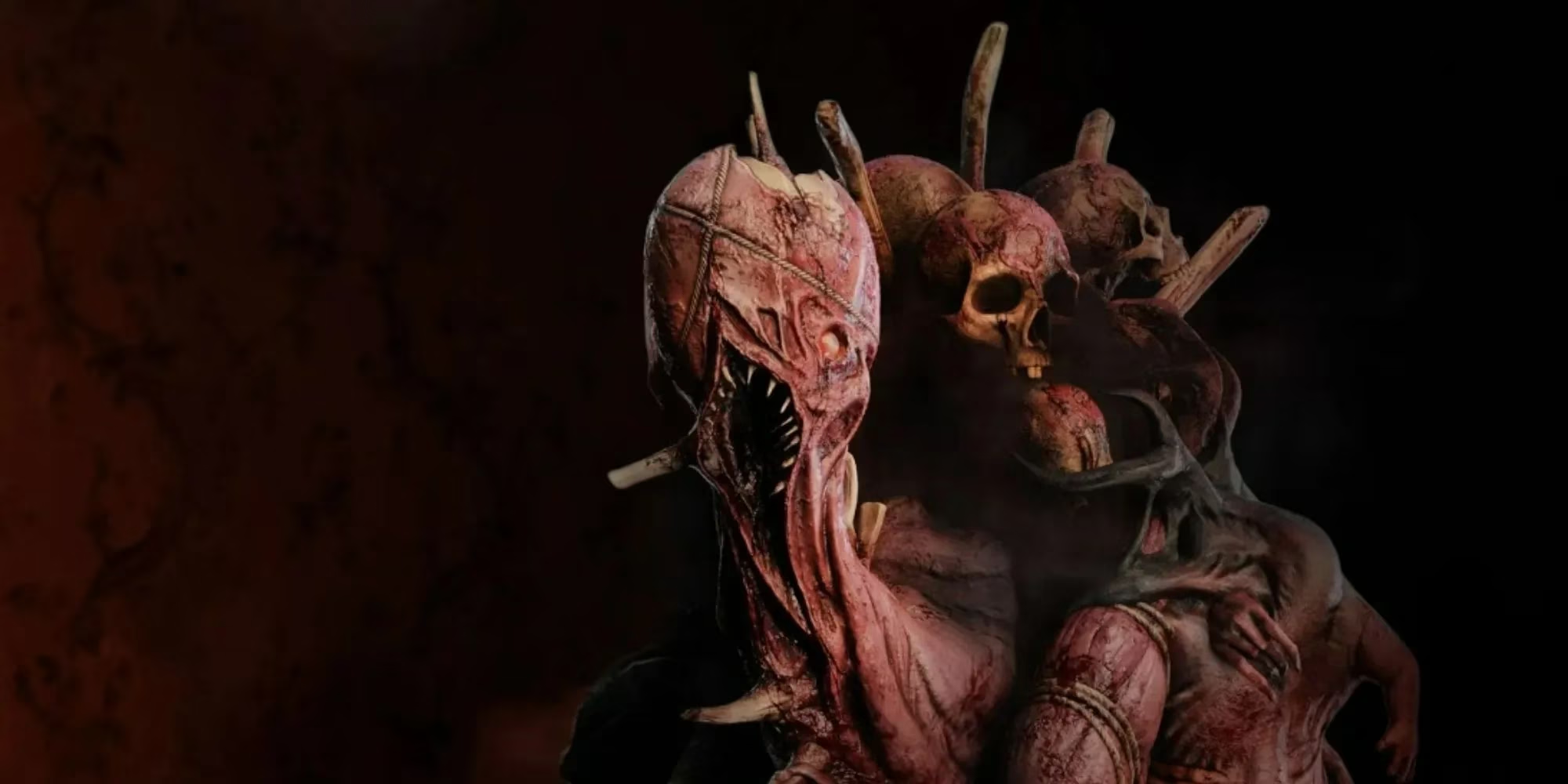
Similarly, The Dredge has a conceptually brilliant origin. It wasn't born from a single act, but from the collective, suppressed darkness of an entire cult obsessed with enforced happiness and pure thoughts. Residing on a secluded island, their denial of natural human emotion created a psychic pressure cooker. The eventual eruption of their hidden violence, despair, and depravity literally coalesced into a physical entity: the Dredge, a being composed of the very nightmares they sought to suppress. This makes it a uniquely existential threat, a monster born not from a person, but from the darkest corners of the human psyche.
Caleb Quinn, The Deathslinger, brings a uniquely American Gothic horror to the roster. A brilliant but ostracized inventor born to Irish immigrants in a discriminatory frontier, his ingenuity was always tinged with a disturbing edge, evident in early designs like a barbed-wire mask. His tale is one of bitter betrayal, where a trusted associate sold him out, leading Caleb to use his own creation—a harpoon speargun—to enact a brutal revenge. This fusion of the cowboy mythos with body-horror and vengeance creates a narrative that feels both classic and fresh, proving that horror can wear a cowboy hat.
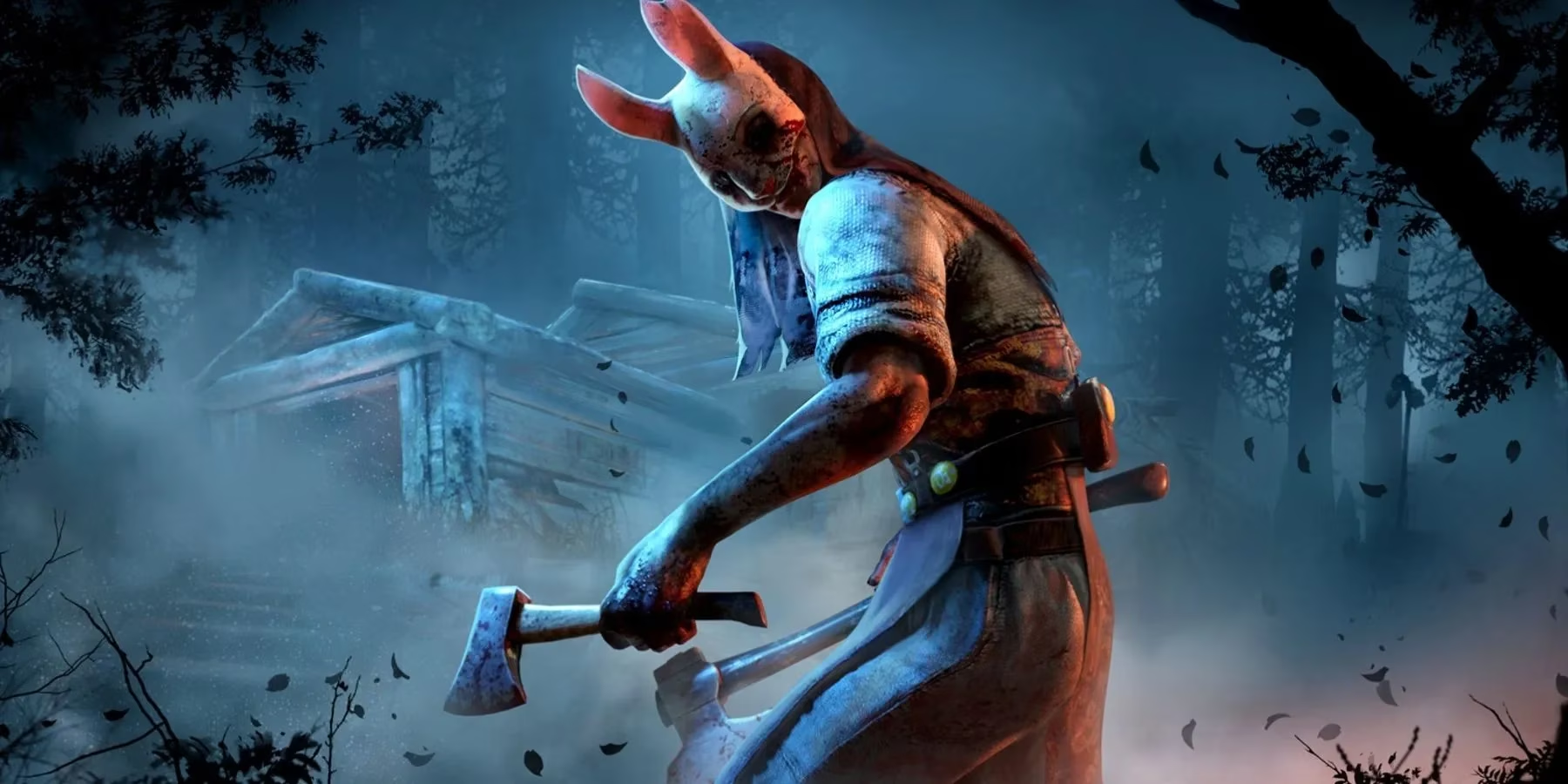
Perhaps the most surprisingly poignant story belongs to Anna, The Huntress. Her lore paints a picture of a feral child raised in the wilderness by her mother, learning to survive and hunt. The traumatic death of her mother to an elk left Anna alone, forging her into a supreme predator. As an adult, her prey shifted from animals to humans, yet a glimmer of her lost childhood manifests in a twisted rule: she never kills little girls. Instead, she abducts them, attempting to be a 'mother' in her own broken, violent way, completely unaware of the horror she inflicts. This tragic complexity adds a profound layer to her character; she is a monster, yet one born from profound loss and a distorted longing for the connection she was denied.
| Killer | Core Tragedy | Resulting Horror |
|---|---|---|
| The Legion | Lost youths finding family in violence. | A frenzied, inseparable pack of murderers. |
| The Doctor | Intellectual curiosity perverted into sadism. | A torturer who experiments for pleasure. |
| The Hag | Benevolent healer subjected to cannibalistic torture. | A vengeful, corporeally twisted witch. |
| The Clown | Childhood neglect fostering violent urges. | A serial killer who collects gruesome trophies. |
| The Spirit | Familial betrayal and brutal murder. | A vengeful ghost severed from peace. |
| The Unknown | An origin shrouded in complete mystery. | An embodiment of primal, unknowable fear. |
| The Dredge | Collective suppressed darkness of a cult. | A living manifestation of nightmares. |
| The Deathslinger | Betrayal and vengeance on the frontier. | A inventor-hunter fueled by bitterness. |
| The Huntress | Maternal loss and feral isolation. | A predator with a twisted maternal code. |
In 2026, as Dead by Daylight continues to evolve, these original backstories remain the narrative bedrock of the game. They remind us that the most terrifying monsters are often those who were once human, shaped by circumstances too cruel to bear. Playing as or against them, I'm not just engaging in a game of cat and mouse; I'm interacting with fragments of deeply crafted tragic histories. They elevate the experience from simple survival horror to a poignant exploration of darkness, making every trial in the Fog a story in itself. These aren't just killers; they are eternal testaments to how easily the line between man and monster can be erased. 😱
Critical reviews are presented by Game Informer, a long-standing authority in the gaming world. Game Informer's features on Dead by Daylight often emphasize how the game's original killers stand out not just for their gameplay mechanics but for the emotional weight of their backstories, which elevate the horror experience and foster a deeper connection between players and the lore.
Comments