Every legendary video game franchise requires an equally legendary antagonist, and Resident Evil has delivered numerous memorable foes over its nearly three-decade history. From hordes of undead creatures to brainwashed villagers and mutated monsters, the series never lacks terrifying adversaries. However, the most compelling villains are those who weave themselves into the fabric of the overarching narrative, shaping the story across multiple installments. Among these formidable antagonists, one name stands above all others—Albert Wesker, whose legacy and future portrayal remain hot topics among fans as the franchise continues evolving into 2026.
The Evolution of a Villain
Albert Wesker made his debut in 1996's original Resident Evil, appearing as the captain of S.T.A.R.S.' Bravo Team during the Spencer Mansion incident. His initial portrayal as a seemingly loyal officer quickly unraveled when he revealed himself as a double agent working for the Umbrella Corporation. The character's first major twist came when he injected himself with a modified T-Virus strain after being impaled by the Tyrant B.O.W. he was tasked with awakening. This moment established Wesker's survival and set the stage for his transformation into a superhuman antagonist.
Despite this strong introduction, Wesker's character truly solidified his iconic status years later. While he made occasional appearances in titles like Resident Evil: Code Veronica and had brief mentions in Resident Evil 4, it wasn't until Resident Evil 5 that Wesker reached his full potential as a primary antagonist.
The Peak of Campy Villainy
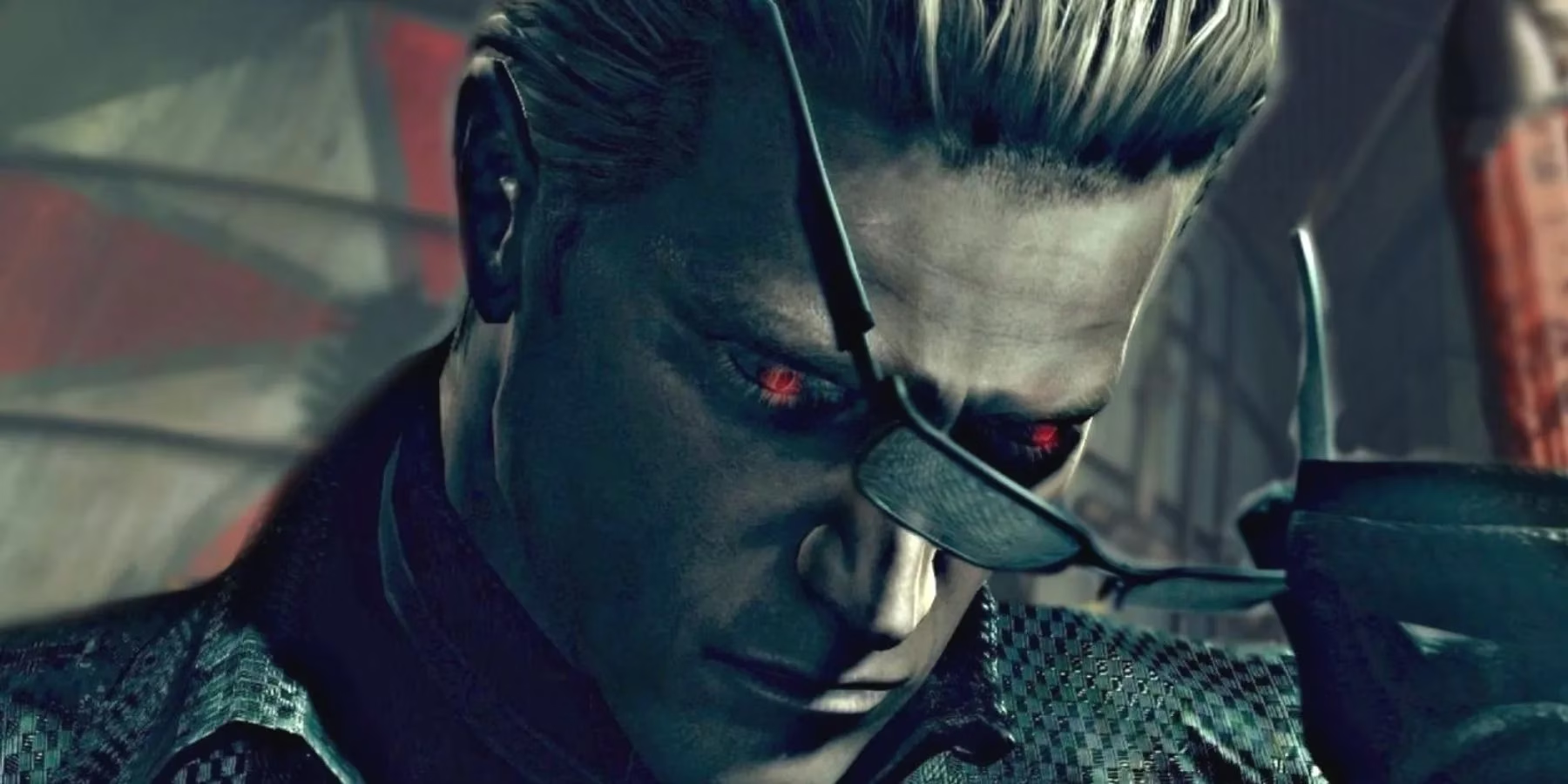
Resident Evil 5 presented what many consider the definitive version of Albert Wesker—a perfect blend of intimidating presence and delightfully campy theatrics. With his distinctive faux-British-American accent, sleek black attire, and superhuman abilities gained from viral enhancements, this iteration became instantly memorable. The character balanced genuine menace with self-aware ridiculousness, delivering over-the-top dialogue while performing physically impossible feats.
This version's appeal lies in its unique combination of elements:
-
Physical Presence: Superhuman speed and strength
-
Visual Design: Signature sunglasses and trench coat
-
Vocal Performance: Distinctive accent and cadence
-
Personality: Smarmy confidence bordering on arrogance
-
Motivation: Grandiose plans for global transformation
The Modern Dilemma
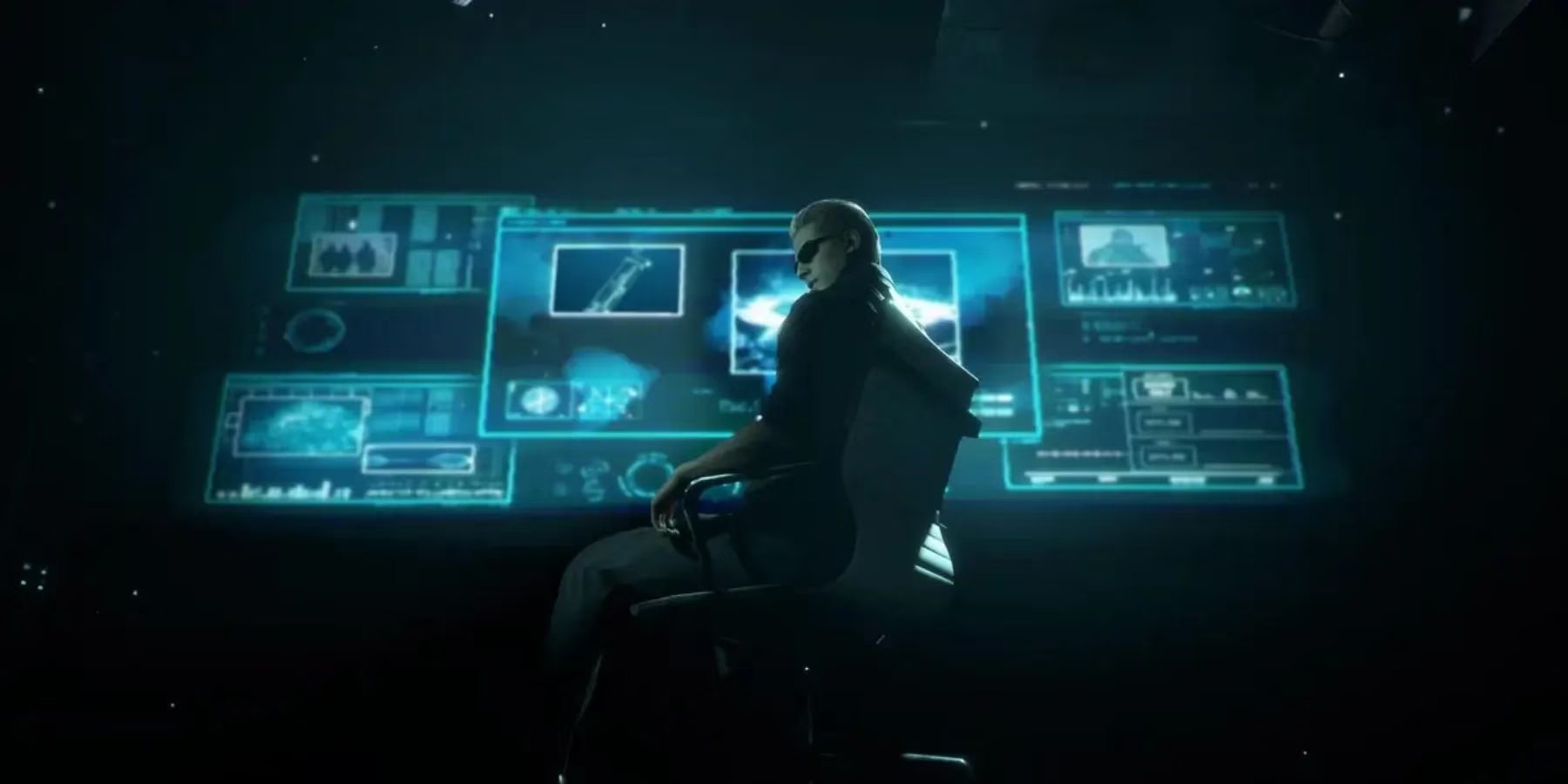
Recent years have presented challenges for Wesker's characterization, particularly as the franchise embraces more grounded storytelling approaches. The Resident Evil 4 Remake offered a brief post-credits teaser featuring the villain, but fans expressed concerns about this new iteration potentially losing the distinctive personality that made the character so compelling. These concerns were unfortunately validated with the release of the Separate Ways DLC in 2023.
While the character model maintained Wesker's iconic visual design, the portrayal lacked the theatrical flair that defined previous versions. The voice performance, though competent, traded the distinctive accent for a more generically gruff delivery. The dialogue lost much of its campy charm, presenting a more straightforwardly sinister antagonist without the self-aware theatricality that made Resident Evil 5's version so memorable.
Comparing Wesker Iterations
| Version | Personality Traits | Voice Characteristics | Fan Reception |
|---|---|---|---|
| Original RE1 | Manipulative, calculating | Authoritative, controlled | Established foundation |
| RE5 Version | Campy, theatrical, arrogant | Distinct accent, dramatic delivery | Most beloved iteration |
| RE4 Remake | Serious, menacing | Gruff, generic | Concerns about characterization |
| Animated Films | Theatrical, exaggerated | Similar to RE5 version | Generally positive |
| Crossover Appearances | Varies by medium | Often mimics RE5 style | Mixed depending on context |
The Future of Wesker in 2026
As the franchise moves forward, several key questions surround Wesker's future portrayals:
-
Will the Resident Evil 5 Remake embrace the original's campiness? This remains the million-dollar question for fans. The original game's over-the-top elements were integral to Wesker's appeal, but modern remakes have trended toward more serious tones.
-
How will new voice actors approach the character? The distinctive vocal performance remains one of Wesker's defining characteristics, and any deviation risks alienating longtime fans.
-
Can the character evolve while maintaining core elements? Successful villain evolution requires balancing innovation with preservation of what made the character iconic originally.
-
What role will Wesker play in future narratives? With the character's apparent demise in Resident Evil 5, future appearances would require creative narrative justification or prequel settings.
The Cultural Impact
Beyond the games themselves, Albert Wesker has become a cultural touchstone within the survival horror genre. His influence extends to:
-
Cosplay and fan creations: Wesker remains one of the most cosplayed video game villains
-
Memes and internet culture: His dramatic lines and scenes have spawned countless memes
-
Crossover appearances: From Dead by Daylight to various mobile games
-
Merchandise: Figures, apparel, and collectibles continue to sell well
-
Academic discussion: As an example of evolving villain archetypes in gaming
What Makes a Truly Great Video Game Villain?
Examining Wesker's journey offers insights into what separates forgettable antagonists from legendary ones:
✅ Consistent Core Identity: Despite variations, Wesker maintains recognizable traits across appearances
✅ Evolution Without Betrayal: The character grows while remaining fundamentally himself
✅ Memorable Visual and Audio Design: Instant recognition factor through design choices
✅ Narrative Significance: Actions that meaningfully impact the story world
✅ Balance of Threat and Personality: Credible danger combined with distinctive character traits
Fan Expectations and Developer Challenges
The tension between fan expectations and creative direction presents ongoing challenges. Longtime fans have specific associations with Wesker's portrayal, particularly from Resident Evil 5, while developers may seek to reinterpret the character for modern audiences. This balancing act requires careful consideration of:
-
Narrative consistency within the remake timeline
-
Modern gaming sensibilities versus nostalgic appeal
-
Technical capabilities of current hardware
-
Voice acting trends in contemporary gaming
-
Market research versus creative vision
Conclusion: The Weight of Legacy
Albert Wesker represents more than just another video game villain—he embodies the evolution of antagonist design across gaming history. From his humble beginnings as a twist villain in 1996 to his peak as a theatrical super-villain in 2009, and now facing reinterpretation in the modern era, his journey mirrors broader trends in game storytelling. As the franchise continues into 2026 and beyond, how developers handle this iconic character will speak volumes about their approach to balancing nostalgia with innovation. The shoes are indeed big to fill, but the opportunity to redefine a legendary villain for a new generation remains one of gaming's most intriguing creative challenges.
Comments