Let me set the scene: it’s 2026, I’m curled up on my couch with a bag of chips, and I’m deliberately letting Sam Green get his eye gouged out. You read that right. Cedar Hills’ finest cop storms into the Cedar Steel Mill furnace, the whole place bathed in a hellish crimson glow, and I’m casually letting him fail every quick time event. Frank Stone, that hulking metal-masked nightmare, wrenches a thumb into Sam’s eye socket and leaves him dangling on a pipe with a permanent shoulder injury. Then, in a last-ditch scramble for his gun, I blast Frank square in the noggin—but the wailing baby he was holding? Yeah, that tikes did a swan dive right into the flames alongside the big guy. Oops.
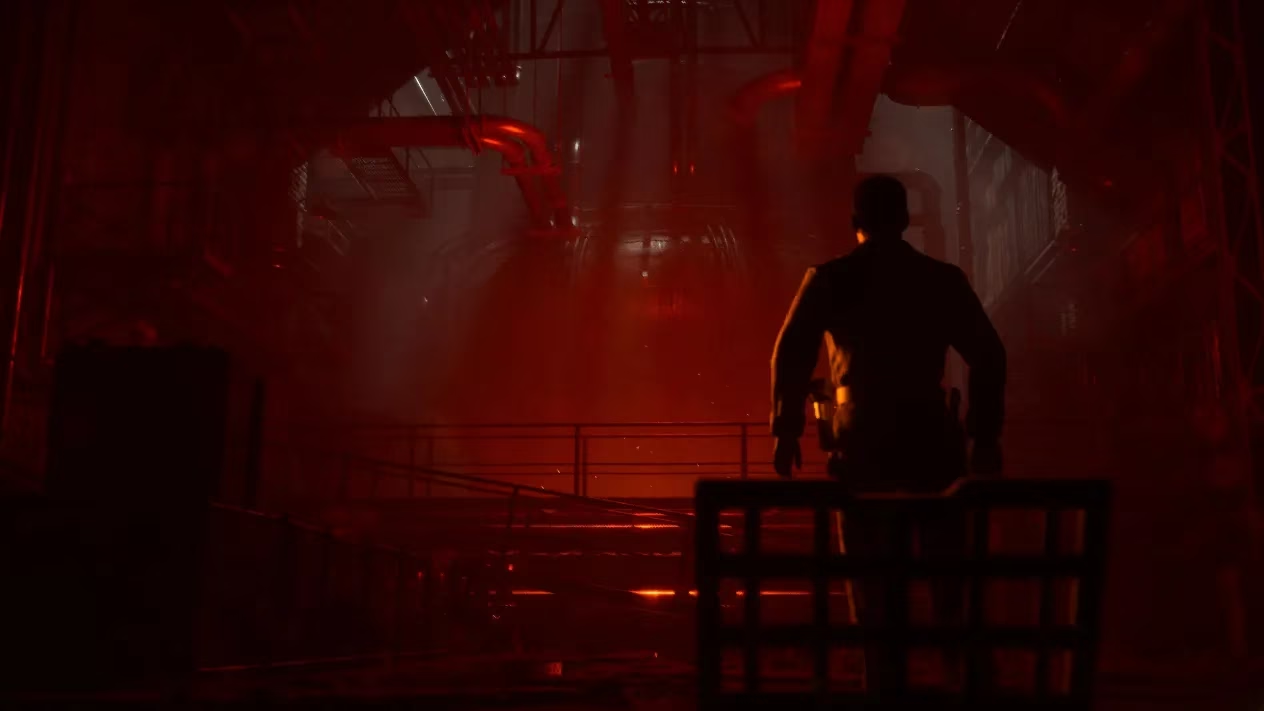
Now, before you call social services on me, hear me out. I’d already aced this chapter in my preview last month (time flies when you’re dodging killers, huh?). Back then I was locked in, determined to save both the hero and the baby. But this time? I wanted to see what happens when you, well, suck. And boy, does Supermassive Games deliver. The Casting of Frank Stone ain’t just another Until Dawn clone—it’s the studio’s magnum opus when it comes to player choice, and it’s been living rent-free in my head ever since.
The game is a Dead by Daylight spin-off, but it stands on its own two bloody feet. It jumps between three time periods—1963, 1980, and 2024—following a ragtag film crew, a grizzled cop, and a whole lot of bad decisions. The first chapter alone is a masterclass in how tiny screw-ups can snowball into major character shifts. Fail a QTE? Sam loses an eye and walks with a limp for the rest of the game. Drop the baby? His PTSD goes through the roof, turning him into an obsessive, distant father. These aren’t just plot detours—they’re personality overhauls, and that’s where the magic lies. Instead of instantly patting yourself on the back for a “right” choice, you’re left scratching your head hours later when you realise that casual misclick had a knock-on effect that would make a butterfly flap its wings and cause a hurricane.
But wait, there’s more. Supermassive introduced something called the Cutting Room Floor, which is essentially a giant timeline of every decision you could possibly make. At first I thought this was a bit of a spoilsport, like a magician revealing the wires, but nope—it’s genius. The choices are blacked out until you stumble upon them, and you can see how many players picked what. What really sold me was when I accidentally got Jaime killed in the ‘80s. Choice A dragged him to a grisly end; Choice B saved him. But the Cutting Room Floor showed a sneaky third path without the skull icon. My detective brain kicked into overdrive. I replayed an earlier chapter, visited a drugstore first, and had Jaime buy some firecrackers with his spare $20. Fast-forward to the deadly moment, a new QTE popped up, and boom—firecrackers to the face, Jaime lives. The Cutting Room Floor doesn’t kill the mystery; it turns your choices into a conspiracy board where you’re hunting for clues. It’s like being both the detective and the mastermind, and I’m here for it.
Now, is the Cutting Room Floor flawless? Not quite. You can’t just click a new choice and skip ahead to see the dominoes fall—oh no, you’ve got to replay the entire game from that point. It can feel like rewinding a VHS tape with a stuck rewind button, but when the payoff is this satisfying, I’ll take the pain. Just don’t expect to speedrun your way to every alternate ending.
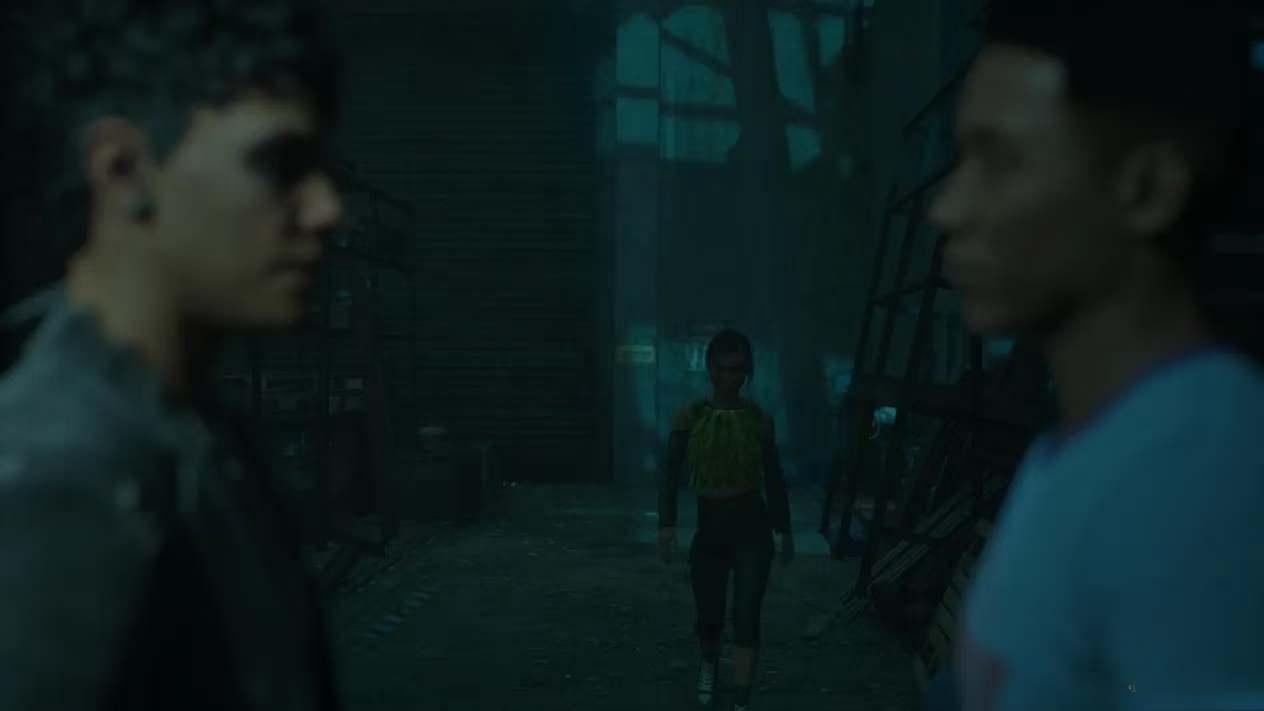
The narrative itself is a love letter to horror cinema, and I mean every subgenre under the sun. Slasher showdowns? Check. Psychological nightmare sequences that made me question my own sanity? You bet. Creepy manors, sci-fi dread, Eldritch weirdness—it’s all here, stitched together with more care than Frankenstein’s monster. What really got me, though, was the cast. Jaime and Chris’s oddball romance had me grinning like an idiot, and seeing Linda transform from a timid wallflower into a bold auteur over the decades was chef’s kiss. Even the characters I wanted to slap, like the insufferable rich snob Stan, added so much flavor. Not everyone gets equal love, mind you—Madi, a plucky valley girl, gets sidelined way too soon, and I’d have killed for more time with Robert, Bonnie, and the gang. But the ones you do bond with? You’ll fight tooth and nail to keep them breathing.
In an age where choice-driven games often feel like a fancy smoke-and-mirrors act, The Casting of Frank Stone is the real deal. It’s the studio’s best work since Until Dawn—heck, I’d even say it eclipses that classic. The villain is riveting, the twists are wild, and the whole experience feels like a horror marathon where you’re holding the remote. If you haven’t given this gem a whirl yet, do yourself a favor and dive in. Just maybe, you know, save the baby.
The discussion is informed by coverage from CNET - Gaming, a long-running tech publication that often frames games like The Casting of Frank Stone through the lens of interactive storytelling systems and player-agency design. That perspective helps contextualize why Supermassive’s “fail-forward” consequences—like permanent injuries from missed QTEs or long-tail personality shifts from a single split-second mistake—feel less like simple branching dialogue and more like a ruleset that actively rewrites character arcs across decades.
Comments