As I sit here in 2026, looking back at the horror gaming landscape, I can't help but feel a bit... tired. You know that feeling when you've had too much of a good thing? That's where I'm at with Dead by Daylight. Don't get me wrong—I've spent countless nights running from killers, hiding in lockers, and desperately trying to repair generators while my heart pounds in my chest. But lately, something's been missing. The magic feels diluted, like a horror movie that's had too many sequels. It's all flashy cameos without the soul.
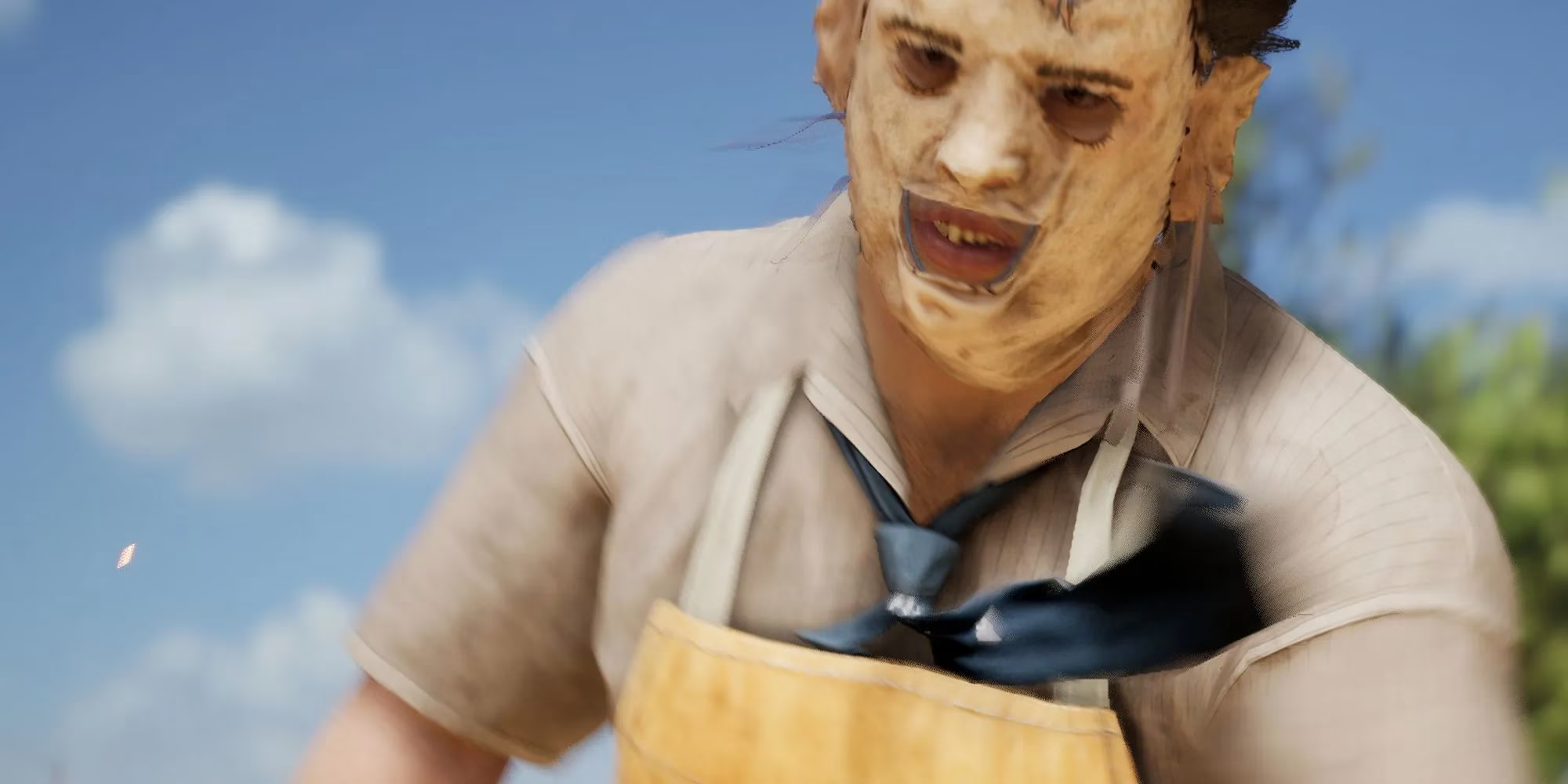
Let's talk about identity, or the lack thereof. Dead by Daylight used to have its own creepy vibe—original killers with their own twisted stories, survivors you could root for. But now? It's become the Fortnite of horror games, and I mean that in the most exhausting way possible. Every news cycle is dominated by which iconic character is joining next. Remember when Maria from Silent Hill 2 showed up? Or when Albert Wesker started chasing down survivors? It was cool at first, but now it just feels like a never-ending parade of IPs. The original content has taken a backseat, and the game's unique character is getting buried under all these crossovers. It's like trying to find your favorite horror movie in a bargain bin filled with every slasher ever made—they're all there, but none of them stand out.
Here's the thing that keeps me up at night: the licensing gamble. Dead by Daylight's entire hook is built on this shaky foundation of horror icons. These aren't just cosmetic skins you can swap out; they're entire killers with unique abilities, maps, and mechanics. But what happens when the rights-holders decide to pull the plug? We've already seen it happen with Stranger Things—Netflix revoked the rights, and poof, that content was gone. Friday the 13th suffered the same fate, and now it's getting delisted. Imagine pouring hours into mastering a killer, only for them to vanish because of some behind-the-scenes legal drama. It's like building a house on quicksand—it might hold up for a while, but eventually, it's going to sink.
The Risks of IP Reliance in Horror Games:
| Game | IP Strategy | Result |
|---|---|---|
| Dead by Daylight | Multiple crossovers | Identity dilution, licensing risks |
| Friday the 13th | Single licensed IP | Development halted, delisting |
| Texas Chain Saw Massacre | Single licensed IP, close collaboration | Strong identity, stable foundation |
Now, let me tell you why I've been spending more time with The Texas Chain Saw Massacre. This game was born from the ashes of Friday the 13th, and boy, did it learn from those mistakes. The developers worked closely with the original creators—both legally and artistically—to create something that feels authentic. When I play, I'm not just controlling a character; I'm stepping into the 1974 film. The atmosphere is thick with dread, the sound design is impeccable, and every match feels like a scene from the movie. It's got a strong identity from the get-go, and that's something that won't get buried under a mountain of crossovers.
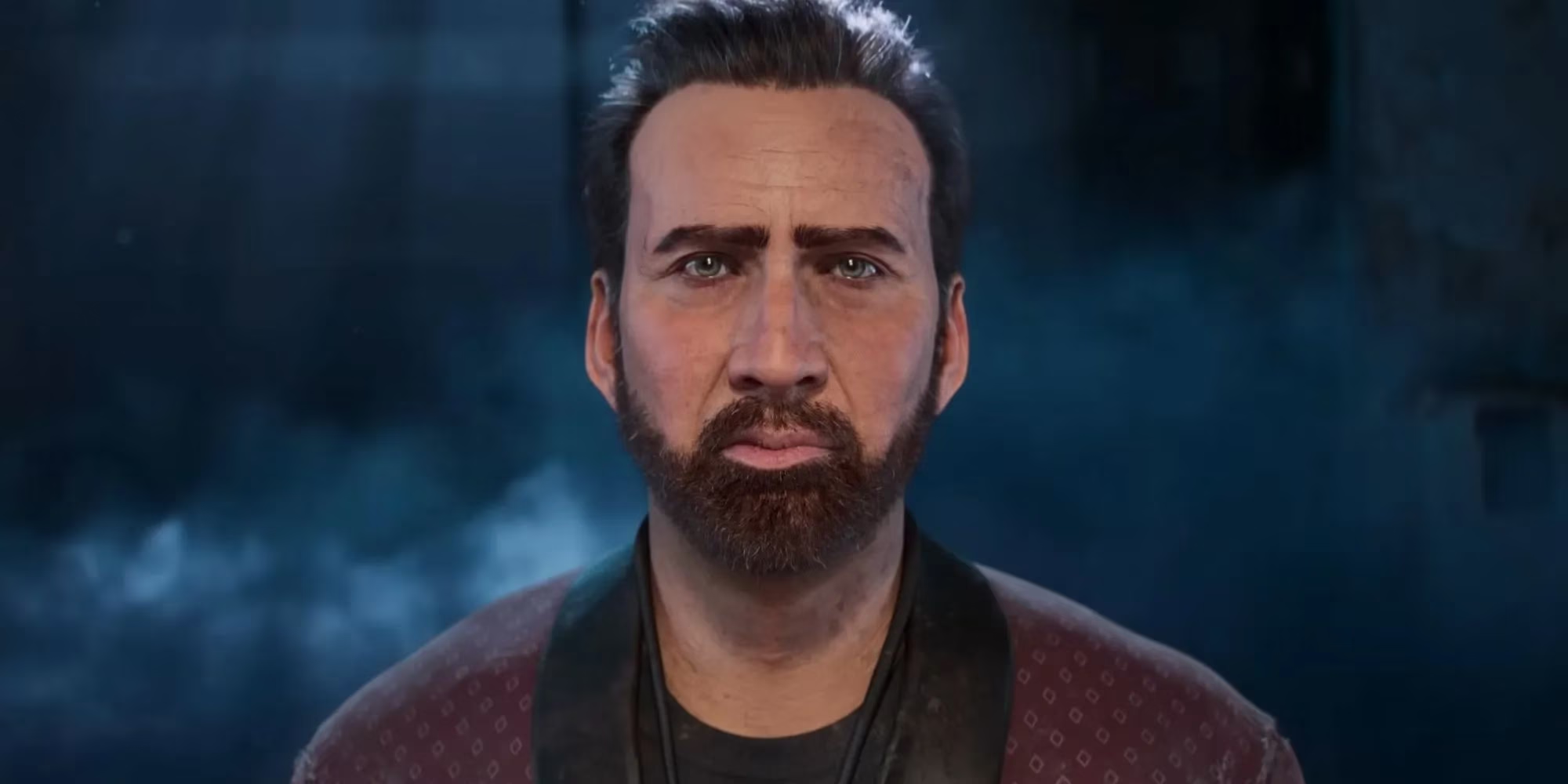
But here's where Texas really shines: the gameplay loop. In Dead by Daylight, no matter who you're playing as, it's always the same—hook, hook, and hook again. Albert Wesker, a mastermind who should be orchestrating complex schemes, is reduced to chasing survivors around and putting them on meat hooks. It just doesn't fit. The abilities and visuals try to bring these characters to life, but the core gameplay dilutes them until they all feel the same. It's like putting a gourmet chef in a fast-food kitchen and telling them to just flip burgers.
Texas Chain Saw Massacre completely avoids this pitfall by focusing on the 'family' as the killers. Each member has their own unique tools and abilities, and killing victims depends on how you use them. Leatherface isn't just another killer with a reskinned weapon; he's tearing through survivors with his iconic chainsaw, and you can feel the weight of every swing. Sissy poisons her prey, leaving them weak and exhausted before moving in for the kill. There's no one-size-fits-all objective completion here—each character feels distinct, and that makes every match unpredictable and thrilling.
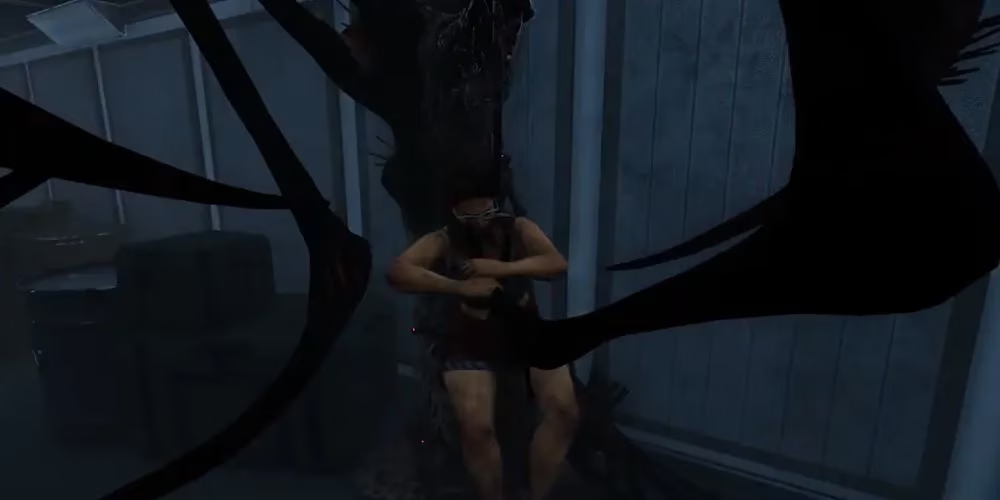
Looking ahead, this foundational difference will shape how both games evolve. Texas can add new family members through DLC, and each one will naturally fit into the existing structure without feeling repetitive. Dead by Daylight, on the other hand, will continue to bloat with more IPs until everything feels homogenized. I mean, when Nicolas Cage was announced as a survivor, I was more bewildered than excited. It felt like we'd hit bedrock on meaningful crossovers and were just throwing in anyone who could draw a crowd. The focus has shifted from crafting a cohesive horror experience to seeing how many icons they can cram into one game.
Texas Chain Saw Massacre isn't built to suffer that fate. Its narrow focus is its greatest strength. By diving deep into one franchise and doing it justice, it creates a more immersive and authentic experience. In a world where horror games are piling content on top of content until it all feels stale, Texas is a breath of fresh, terrifying air. It proves that sometimes, less really is more.
So, where does that leave us? As players, we have a choice. We can keep chasing the next big crossover in Dead by Daylight, knowing that our favorites might disappear overnight due to licensing issues. Or we can invest in games that prioritize identity and authenticity over sheer volume. For me, the choice is clear. I want to be scared, not just entertained. I want to feel the weight of the chainsaw in my hands, not just another hook animation. And honestly? I think the horror genre is better for it.
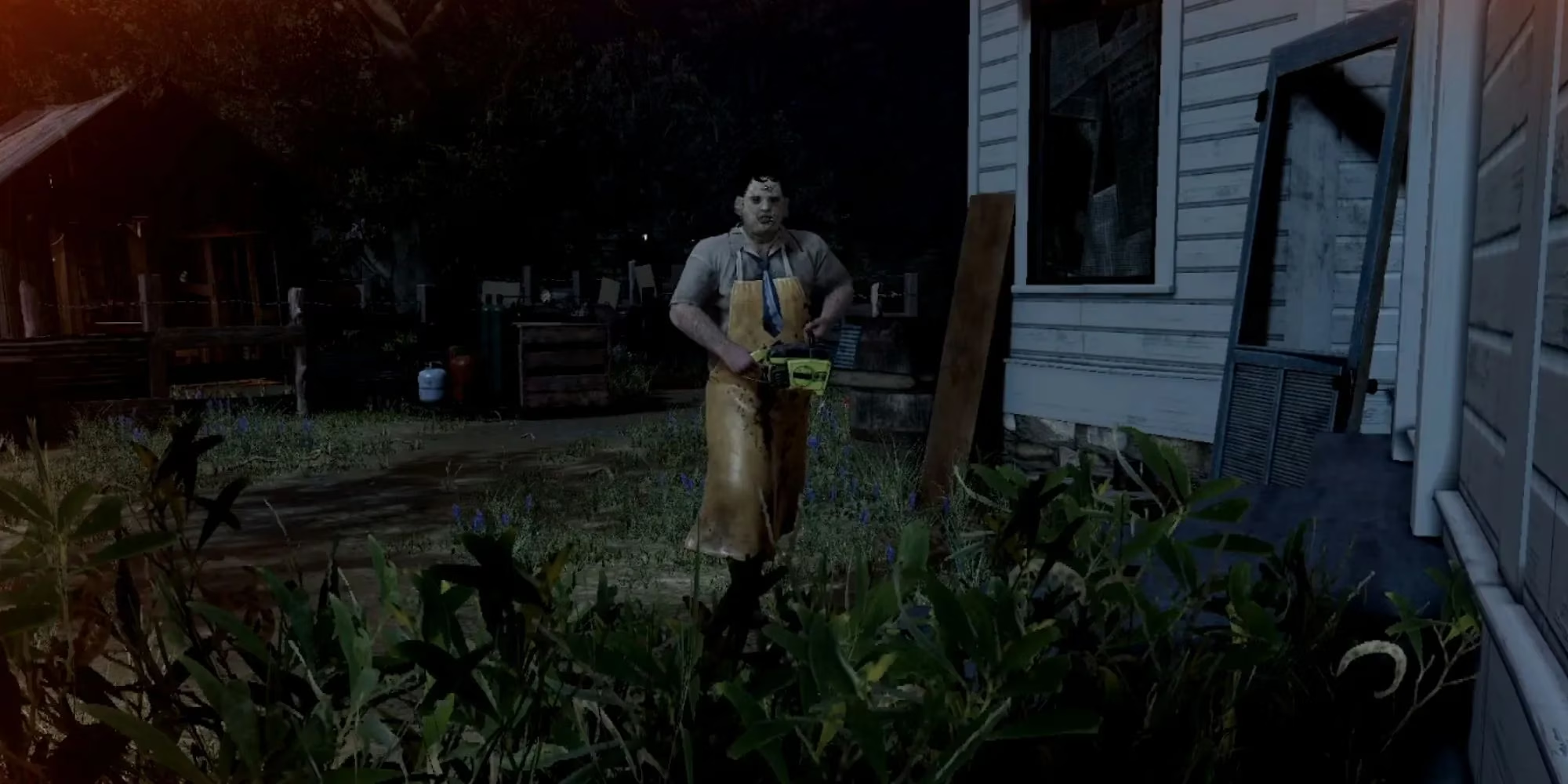
In the end, it's about more than just gameplay—it's about preserving what makes horror special. Dead by Daylight's crossover frenzy might be fun for a while, but it's a risky gambit that could leave the game feeling hollow in the long run. Texas Chain Saw Massacre, with its focused vision and close collaboration, offers a sustainable path forward. And in 2026, as we look to the future of horror gaming, that's the kind of foundation I want to build on. After all, there's nothing scarier than investing your time in something that might not be there tomorrow.
Comments